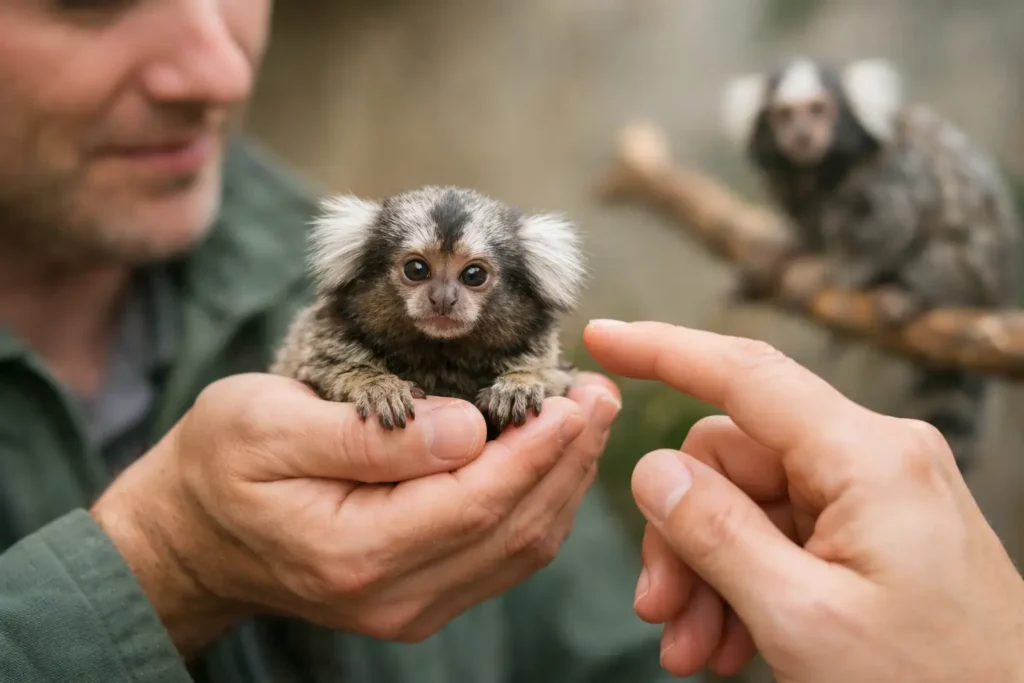
A baby marmoset may fit in the palm of your hand, but the decision to bring one home will shape your household for years. Choosing a marmoset monkey breeder is not simply about finding an available infant. It is about finding a knowledgeable, transparent partner who places the animal’s welfare, your legal responsibilities, and your family’s long-term readiness at the center of the process.
Marmosets are bright, social, sensitive primates. They need daily interaction, a carefully designed environment, specialized nutrition, experienced veterinary support, and an owner who understands that a tiny infant will not remain a low-maintenance pet. A responsible placement begins well before a homecoming date.
What a Responsible Marmoset Monkey Breeder Should Provide
The best breeders do more than introduce you to an adorable baby. They can explain how each infant has been raised, what socialization it has received, what its current routine looks like, and what will be expected of you after placement. You should feel comfortable asking direct questions, and you should receive direct, consistent answers.
Start with licensing and documentation. A breeder should be open about applicable federal, state, and local requirements and should encourage you to confirm what is legal where you live. USDA licensing, when applicable to the breeder’s operation, is one meaningful sign that an operation is subject to established oversight requirements. It does not replace your own due diligence, but it is an essential part of the larger picture.
Health information should also be handled with care. Ask whether the infant has received a veterinary examination, what records will accompany the placement, and how the breeder approaches known genetic or health concerns. Ethical breeders do not make careless promises that no living animal can support. Instead, they communicate their health protocols, guarantees, and recommendations clearly so you can make an informed decision.
Just as important is the breeder’s willingness to discuss the hard parts. If someone says a marmoset needs little more than affection and a small cage, step back. Responsible guidance includes conversations about permits, costs, noise, biting, scent marking, enrichment, dietary preparation, veterinary access, and the years of commitment ahead.
Look Beyond the Baby’s Appearance
Many prospective owners begin by asking about sex, age, coloring, or current size. Those details matter, but temperament and early care matter just as much. A baby raised with thoughtful, consistent human interaction may transition more comfortably into an approved home, provided the new family continues appropriate routines and boundaries.
Ask how the breeder gets to know each infant. Can they describe whether a particular baby is curious, gentle, energetic, observant, or especially people-oriented? Individual personality is not a guarantee of future behavior, since marmosets develop and respond to their environment over time. Still, personal knowledge of each animal suggests that the breeder is actively involved in daily care rather than treating infants as inventory.
You should also ask about weaning, feeding schedules, handling practices, and social needs. Marmosets are primates, not pocket pets. Their diet is specialized and may include a carefully managed combination of primate nutrition, appropriate produce, insects, and other veterinarian-recommended components. Their environment must support movement, climbing, safety, cleanliness, and meaningful enrichment.
A good breeder will explain what the baby knows now and what you will need to learn next. That education is part of responsible placement, not an optional extra.
Legal Readiness Comes Before a Deposit
Private primate ownership is regulated differently across the United States. Rules can vary by state, county, city, neighborhood association, and even rental agreement. Some locations prohibit private ownership entirely. Others require permits, inspections, specific enclosure standards, liability coverage, or documentation before an animal can enter the home.
Never assume that a friend in another state, an online post, or a breeder’s general statement about legality applies to your address. Verify the rules with the agencies that govern your location. If a permit is required, understand the timeline, renewal obligations, inspection process, and enclosure requirements before moving forward.
A reputable breeder can offer permit-research guidance and help you understand common preparation steps, but the final responsibility remains with the owner. This is one reason serious breeders screen prospective families carefully. A placement should not proceed when legal readiness is uncertain.
Prepare the Home for a Lifetime Companion
A marmoset’s enclosure is not a decorative accessory or a temporary nursery setup. It is a primary living space that must be secure, spacious, cleanable, enriched, and appropriate for a small, active primate. Depending on local rules and your household layout, preparation may involve substantial planning before the animal arrives.
Think about the practical rhythm of your day. Who will prepare meals? Who will provide supervised interaction and enrichment? What happens during work travel, family emergencies, or holidays? Is there a qualified exotic veterinarian within a reasonable distance, and have you spoken with that clinic about its primate-care capabilities?
Financial readiness matters, too. The initial placement cost is only one part of ownership. Families should plan for enclosure construction, food, routine wellness care, diagnostics, emergency veterinary treatment, enrichment supplies, permits, transport, and long-term care. The right household sees these costs as part of providing a stable life, not as surprises to manage later.
Why Ongoing Support Matters
The first week at home often brings questions that no brochure can fully answer. A new owner may need reassurance about settling in, feeding transitions, daily routines, behavior changes, or how to create enriching activities without overwhelming a young primate.
That is why breeder support should extend beyond delivery day. A knowledgeable team can help an approved owner prepare for homecoming, coordinate safe transport, review care expectations, and remain available as questions arise. At Premier Primates, this relationship is framed as lifetime mentorship because responsible primate ownership does not end when the paperwork is complete.
Support should never be used to make ownership sound easy. Rather, it should make preparation more organized and help owners respond thoughtfully when challenges arise. The goal is a stable bond built on consistent care, patience, and realistic expectations.
Questions Worth Asking Before You Commit
Before selecting a breeder, make space for a full conversation. Ask about licensing, veterinary examinations, health documentation, early socialization, feeding routines, current temperament, transport arrangements, and post-placement support. Ask what happens if your permit is delayed or your home is not yet prepared. A responsible professional will prefer to wait rather than place an infant into an uncertain situation.
You should also ask what the breeder expects from you. Strong screening is a positive sign. It shows that the breeder is considering whether your home, schedule, experience, and legal status are appropriate for a marmoset’s needs.
Be cautious if you feel pressured to make a fast payment, discouraged from asking questions, or told that permits and specialized care are unnecessary. The right breeder welcomes careful buyers because careful buyers are more likely to become committed, successful owners.
The Right Match Is Built With Care
There is no single “best” marmoset for every household, and there is no shortcut around the preparation involved. Some families may be legally eligible but lack the time, veterinary access, or home setup needed to provide an exceptional life. Choosing to wait in that situation is responsible, not disappointing.
For families who are prepared, the relationship can be deeply rewarding. Marmosets bring intelligence, personality, curiosity, and extraordinary connection into the homes of people willing to meet them with patience and consistency. Choose a breeder who treats that future with the seriousness it deserves, then give your new family member the steady, loving care that makes a home truly worthy of them.