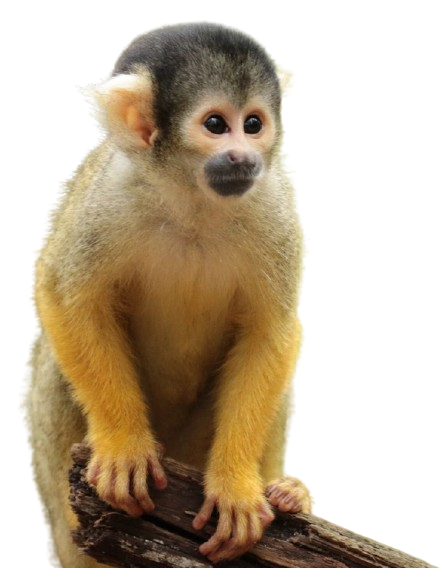
Primates for Sale in Indiana
Primates for Sale in Indiana - Research Capuchin, Marmoset and Squirrel Monkeys while reviewing Indiana exotic-mammal restrictions, local ordinances, responsible care, veterinary planning and transportation requirements.
View Available Primates Submit an Indiana InquiryResearching Primates for Sale in Indiana
Premier Primates provides educational information for residents researching primates for sale in Indiana. Depending on availability, featured species may include Capuchin Monkeys, Marmoset Monkeys and Squirrel Monkeys.
Indiana primate law should be verified carefully before any reservation or payment. Indiana regulates certain exotic mammals by taxonomic family, and the state’s ordinary Wild Animal Possession Permit should not be assumed to authorize every monkey species.
Regulations may differ based on the exact primate’s family, scientific classification, conservation status, source, intended use and the type of federal license held by the seller or receiving facility.
County and municipal governments may also prohibit or regulate exotic animals. Prospective owners should obtain written confirmation for the exact species and destination address before proceeding.
Browse our available Primates for Sale in Indiana , but understand that online availability does not establish legal eligibility for placement in Indiana.
Primates for Sale in Indiana
Exact taxonomic classification matters because state rules may regulate an entire primate family rather than only the example species named in parentheses.
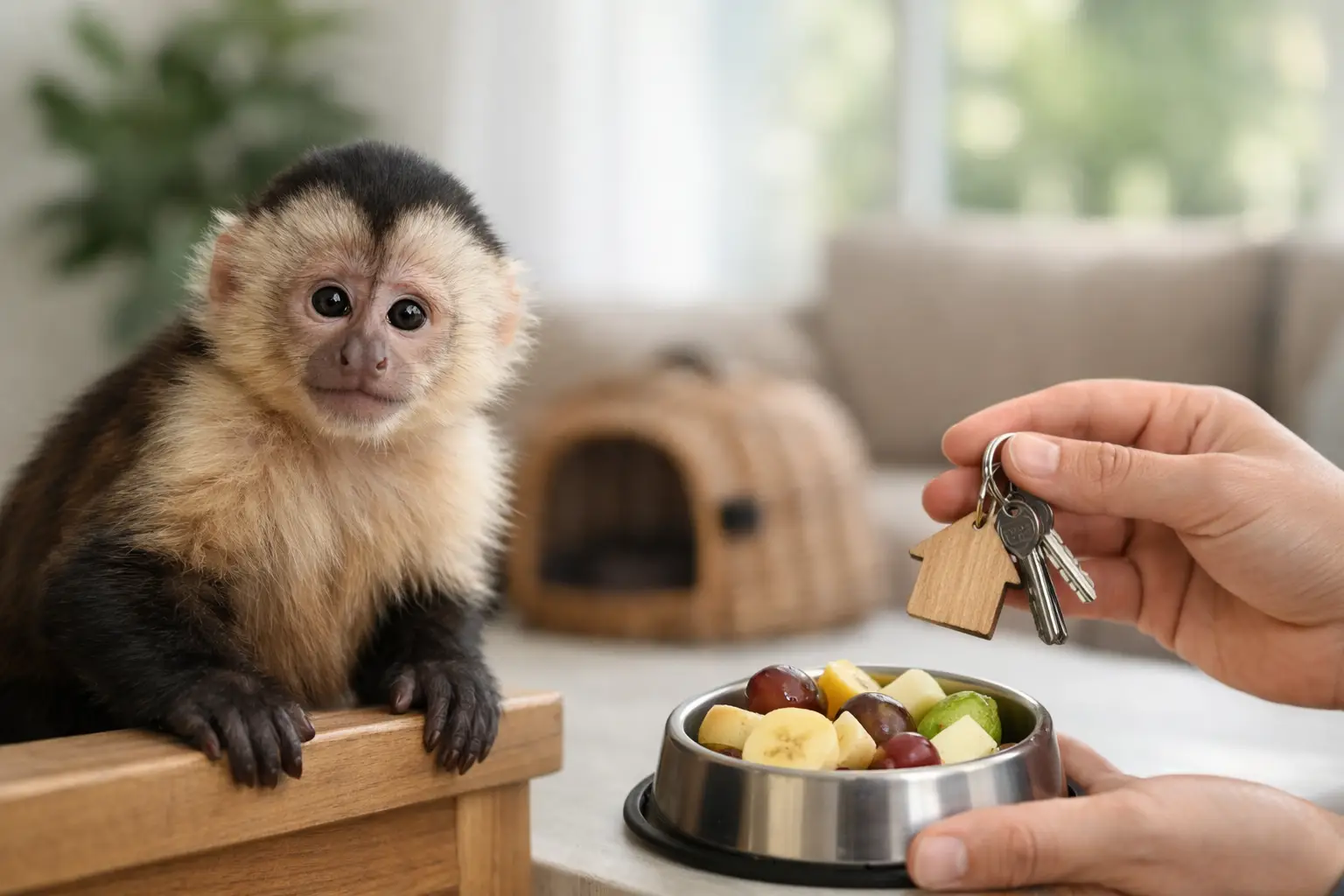
Capuchin Monkeys
Capuchins are intelligent, active and physically capable New World monkeys. Their legal status should be confirmed directly with Indiana DNR using the animal’s exact scientific name.
Available Capuchin Monkeys →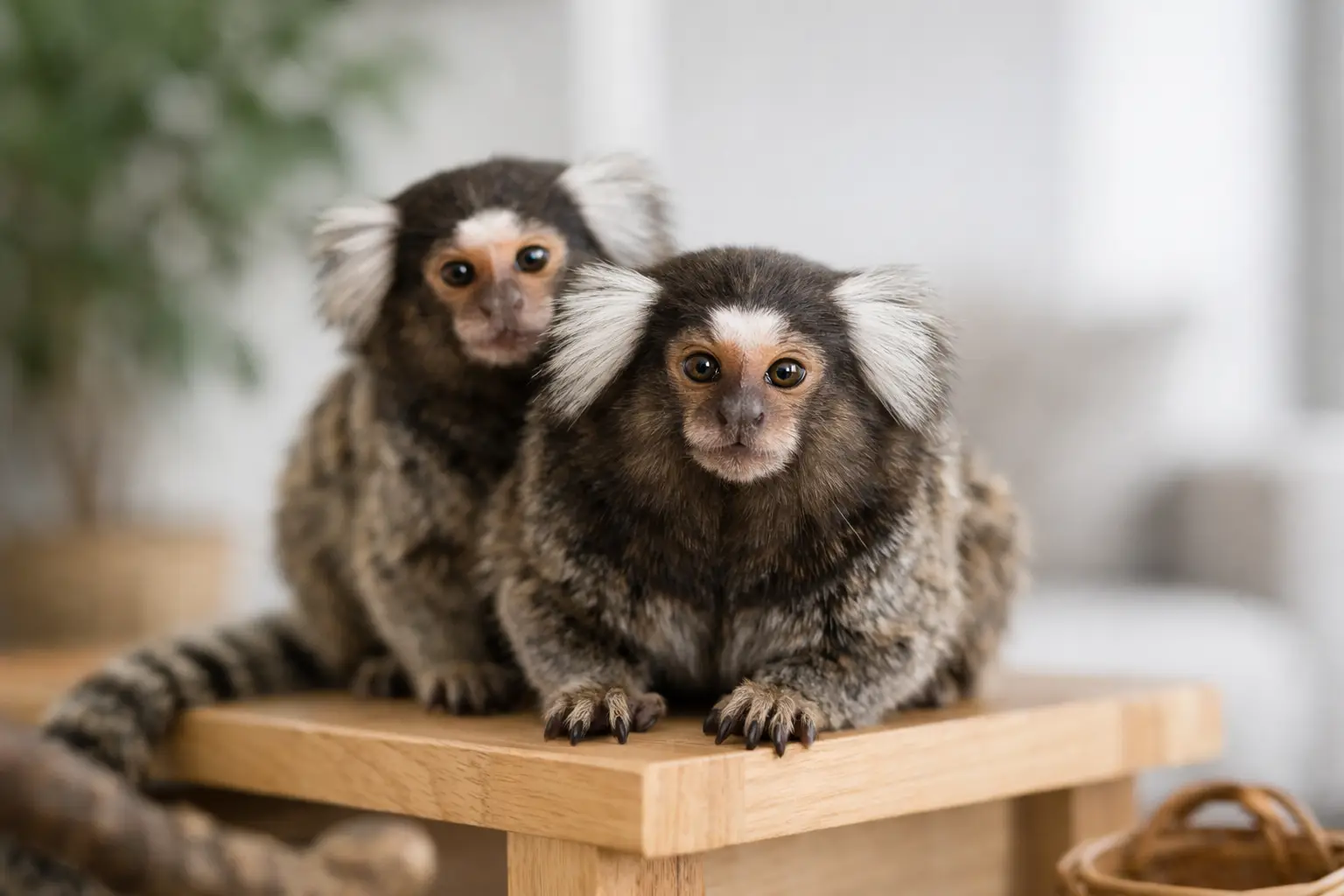
Marmoset Monkeys
Marmosets are small nonhuman primates with specialized social, nutritional and environmental needs. Their smaller size does not automatically exempt them from Indiana exotic-mammal rules.
Available Marmoset Monkeys →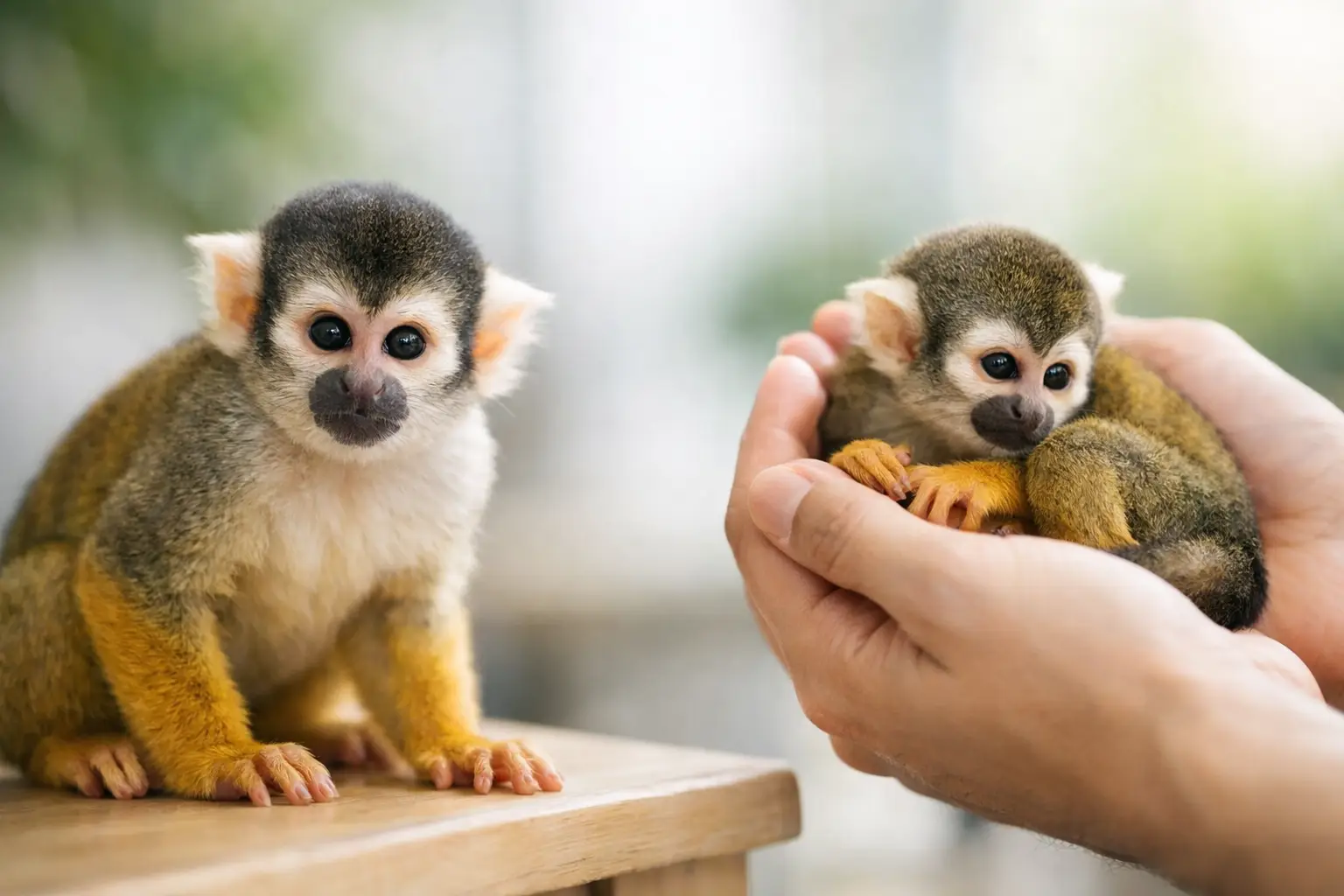
Squirrel Monkeys
Squirrel Monkeys are highly social, agile and energetic. Buyers must verify their exact classification, applicable state restrictions, local ordinances and federal requirements.
Available Squirrel Monkeys →Are Monkeys Legal to Own in Indiana? - Primates for Sale in Indiana
Indiana does not provide a simple answer that applies equally to every monkey species.
Indiana Administrative Code contains an exotic-mammal rule that regulates several mammal families. The rule includes Cebidae, with marmoset shown as an example. Because primate taxonomy can be complex and legal classifications may not match common advertising names, buyers should obtain an agency determination for the exact species.
Indiana’s Wild Animal Possession Permit system covers specifically listed Class I, Class II and Class III animals, along with certain endangered or threatened species. The current state guidance does not list ordinary Capuchins, Marmosets or Squirrel Monkeys as normal permit categories.
Therefore, prospective owners should not assume that submitting a standard wild-animal application will legalize possession of a primate that is otherwise restricted.
Official Indiana wildlife resources
Review the Indiana Administrative Code, Title 312, Article 9 for current fish and wildlife regulations.
Also review the Indiana DNR permits and commercial licenses page .
Contact the Indiana DNR Permit Coordinator and provide the exact common name, scientific name, origin, intended use and destination address.
Indiana Wild Animal Possession Permits
Indiana DNR issues Wild Animal Possession Permits for specifically regulated species. State guidance currently organizes these animals into three classes.
Class I includes certain rabbits and squirrels. Class II includes animals such as coyotes, foxes, raccoons, skunks and several smaller wild cats. Class III includes wolves, bears, wild cats, venomous reptiles and large crocodilians.
Ordinary monkeys are not specifically identified in these standard Class I, II or III lists. Endangered or threatened primates may be subject to separate classification and additional federal restrictions.
A separate permit is generally required for each animal covered by the Wild Animal Possession Permit rule, and the permit applies only to the approved location.
How to Verify Indiana Primate Requirements
Complete every verification step before making a payment or arranging transportation.
Identify the Species
Obtain the complete common name, scientific name, genus, species and taxonomic family.
Contact Indiana DNR
Request written confirmation stating whether possession, purchase and transportation are allowed.
Check Local Ordinances
Contact city or county animal control, zoning and the local clerk for the exact property.
Verify Transportation
Confirm Indiana animal-health and federal transport requirements before scheduling movement.
Indiana County and City Exotic-Animal Ordinances
Indiana counties and municipalities may adopt rules that are stricter than state wildlife regulations.
A local ordinance may prohibit nonhuman primates, require registration, create an exotic-animal permit process or impose enclosure, inspection and insurance requirements.
Contact the city clerk, county clerk, animal-control department and zoning office responsible for the exact street address.
Ask whether the ordinance regulates all primates or only specified monkeys, apes, prosimians or dangerous animals. Provide the exact scientific name rather than only using the word “monkey.”
Lease, HOA, Zoning and Insurance Requirements
Government authorization does not override a lease, homeowners-association restriction, deed covenant or insurance exclusion.
Renters should obtain written permission identifying the exact species. Homeowners should review HOA rules, zoning restrictions, enclosure setbacks and building requirements.
Ask an insurance provider whether keeping a nonhuman primate affects liability or property coverage. Obtain confirmation in writing whenever possible.
Indiana Animal-Entry and Veterinary Requirements
Indiana’s published general animal-entry page primarily addresses domestic animal species. Nonhuman primates do not fit neatly within the listed domestic-animal categories.
Before moving a primate into Indiana, contact the Indiana State Board of Animal Health and explain the exact species, origin state, destination, purpose and method of transportation.
Ask whether a Certificate of Veterinary Inspection, entry permit, laboratory testing, identification or special health statements are required.
Review the Indiana Entry Health Requirements and obtain species-specific instructions before travel.

Secure Primate Housing in Indiana
Housing should be designed for the animal’s adult strength, intelligence, climbing ability and social behavior.
Doors, feeding openings, windows, mesh and locks must prevent escapes and unauthorized contact. A double-entry system can provide additional security.
Indiana experiences hot, humid summers, severe storms, freezing temperatures, snow and occasional power outages.
A suitable plan should include heated indoor housing, cooling, ventilation, backup power, emergency transportation and safe shelter during tornado or severe-weather warnings.
Responsible Indiana Primate Ownership Checklist
- Exact scientific name and family confirmed
- Written Indiana DNR response obtained
- Local animal ordinance reviewed
- Zoning and property approval obtained
- Landlord or HOA permission documented
- Liability insurance reviewed
- Secure adult-size enclosure prepared
- Heating, cooling and backup power arranged
- Experienced primate veterinarian located
- Emergency and escape plan completed
Review our Health Guarantee and learn more about our program on the About Premier Primates page.
Primate Nutrition and Enrichment
Capuchins, Marmosets and Squirrel Monkeys have different nutritional requirements. Their diets should be planned with an experienced veterinarian or qualified primate-care professional.
Feeding only fruit, table scraps or human snack foods may cause serious nutritional imbalance.
A suitable diet may include species-appropriate commercial primate food, vegetables, controlled fruit portions and other veterinarian-approved items.
Daily enrichment may include climbing systems, puzzle feeders, safe foraging opportunities, rotating objects and supervised problem-solving activities.
Find an Indiana Primate Veterinarian Before Arrival
Not every exotic-animal clinic treats nonhuman primates. Locate a veterinarian who accepts the selected species before making a reservation.
Ask whether the clinic offers routine examinations, diagnostic testing, nutritional consultation, preventive care and emergency treatment.
Discuss safe handling, restraint, quarantine procedures, zoonotic-disease precautions and after-hours emergencies.
Maintain copies of legal-acquisition records, agency correspondence, local approvals, health examinations, laboratory results and transportation documents.
Visit our Frequently Asked Questions page for more information about primate health, care and availability.
Primate Transportation to Indiana
Transportation should be considered only after the exact species has been approved by the responsible state and local authorities.
Travel arrangements may depend on the animal’s species, origin, destination, weather, veterinary documentation, transporter qualifications and applicable federal rules.
Visit our Primate Delivery page for general information about travel preparation, ground transportation, pickup and arrival procedures.
Commercial transportation of nonhuman primates may be regulated by USDA APHIS under the Animal Welfare Act. Review the USDA APHIS transportation guidance before arranging travel.
Indiana Areas Receiving Primate Inquiries
Premier Primates may receive inquiries from residents throughout Indiana, subject to state law, local ordinances and responsible-placement requirements.
- Indianapolis
- Fort Wayne
- Evansville
- South Bend
- Carmel
- Fishers
- Bloomington
- Hammond
- Gary
- Lafayette
- Noblesville
- Muncie
- Greenwood
- Terre Haute
- Kokomo
- Anderson
- Elkhart
- Mishawaka
- Lawrence
- Jeffersonville
Frequently Asked Questions About Primates in Indiana
Are monkeys legal to own in Indiana?
The answer depends on the exact species, taxonomic family, conservation status, intended activity and local jurisdiction. Obtain written confirmation from Indiana DNR before acquiring any primate.
Does Indiana require a monkey permit?
Indiana’s ordinary Wild Animal Possession Permit list does not specifically provide a general permit category for ordinary monkeys. Another restriction or authorization may apply to the exact species.
Can I own a Capuchin Monkey in Indiana?
Do not assume that a Capuchin is legal. Capuchins have previously been addressed under Indiana’s exotic-mammal rule. Request a current written determination from Indiana DNR.
Are Marmoset Monkeys legal in Indiana?
Marmosets are specifically relevant to Indiana’s exotic-mammal classification. Contact Indiana DNR before making a reservation or arranging transport.
Can I own a Squirrel Monkey in Indiana?
Verify the animal’s exact scientific classification with Indiana DNR and check all local exotic-animal ordinances.
Does a USDA license make ownership legal?
A USDA license does not automatically override Indiana wildlife law, endangered-species rules, zoning or local ordinances.
Can an Indiana city prohibit monkeys?
Yes. Local governments may prohibit or regulate exotic animals even when state law does not provide a simple statewide prohibition.
Do I need a veterinary health certificate?
Requirements should be confirmed directly with the Indiana State Board of Animal Health for the exact species, origin and transportation plan.
Can a primate be delivered to my Indiana home?
Transportation may be considered only after state legality, local ordinances, zoning, veterinary documents and housing have been verified.
What should I include in my Indiana inquiry?
Include your city, county, ZIP code, selected species, scientific name, written agency response, enclosure plan, veterinary arrangements and ownership experience.
Explore Premier Primates
- Premier Primates Home
- Available Primates for Sale
- Capuchin Monkey Information
- Marmoset Monkey Information
- Squirrel Monkey Information
- Primate Delivery
- Primate Health Guarantee
- About Premier Primates
- Primate Care Blog
- Frequently Asked Questions
- Contact Premier Primates
- Primates for Sale in Ohio
- Primates for Sale in Michigan
- Primates for Sale in Wisconsin
- Primates for Sale in Missouri
- Primates for Sale in Tennessee
Ask About Primates in Indiana
Before contacting Premier Primates, confirm the exact species with Indiana DNR, review your local ordinance, verify zoning and locate a qualified primate veterinarian.
Submit an Indiana Inquiry Browse Available Primates