Primates for Sale in Wisconsin
Primates for Sale in Wisconsin - Explore information about Capuchin, Marmoset and Squirrel Monkeys while reviewing Wisconsin wildlife regulations, local exotic-animal ordinances, veterinary documentation, responsible care and safe transportation.
View Available Primates Submit a Wisconsin InquiryPrimates for Sale in Wisconsin for Prepared Owners
Premier Primates provides availability information and responsible-care guidance for individuals researching primates for sale in Wisconsin. Depending on current availability, featured species may include Capuchin Monkeys, Marmoset Monkeys and Squirrel Monkeys.
Nonhuman primates are intelligent, active and socially complex animals. They need secure housing, species-appropriate nutrition, daily enrichment, specialized veterinary care and preparation for a substantial long-term commitment.
Wisconsin has state captive-wildlife and animal-import requirements. Cities, villages, towns and counties may also regulate nonhuman primates through separate exotic or harmful-wild-animal ordinances.
Prospective owners should identify the exact species and verify state and local requirements before reserving an animal. Begin by visiting our Available Primates for Sale page.
Availability on our website does not guarantee that an animal may be legally placed at every Wisconsin address.
Primate Species Featured by Premier Primates -Primates for Sale in Wisconsin
Compare adult behavior, lifespan, housing, nutrition and social requirements before selecting a species.
Capuchin Monkeys
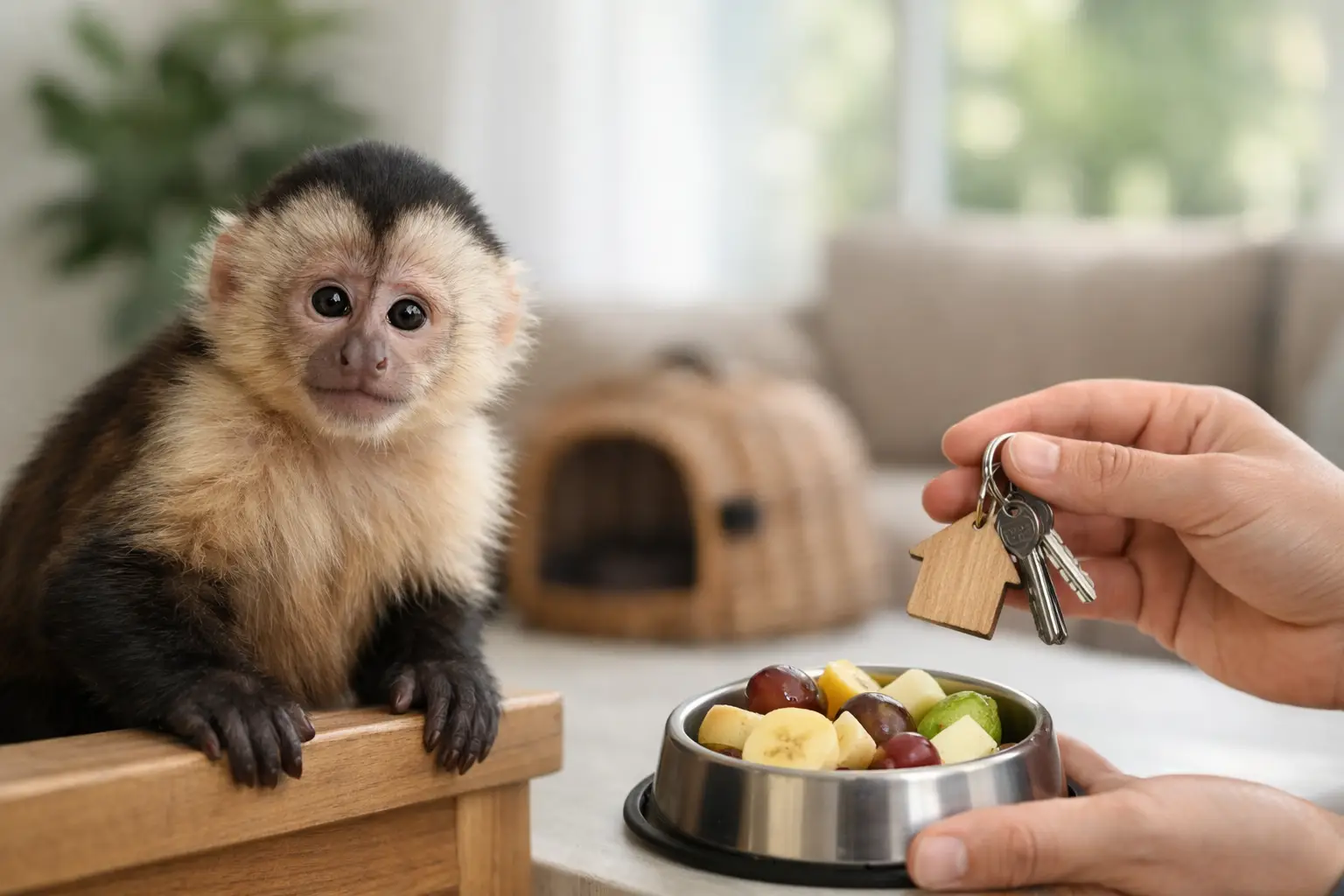
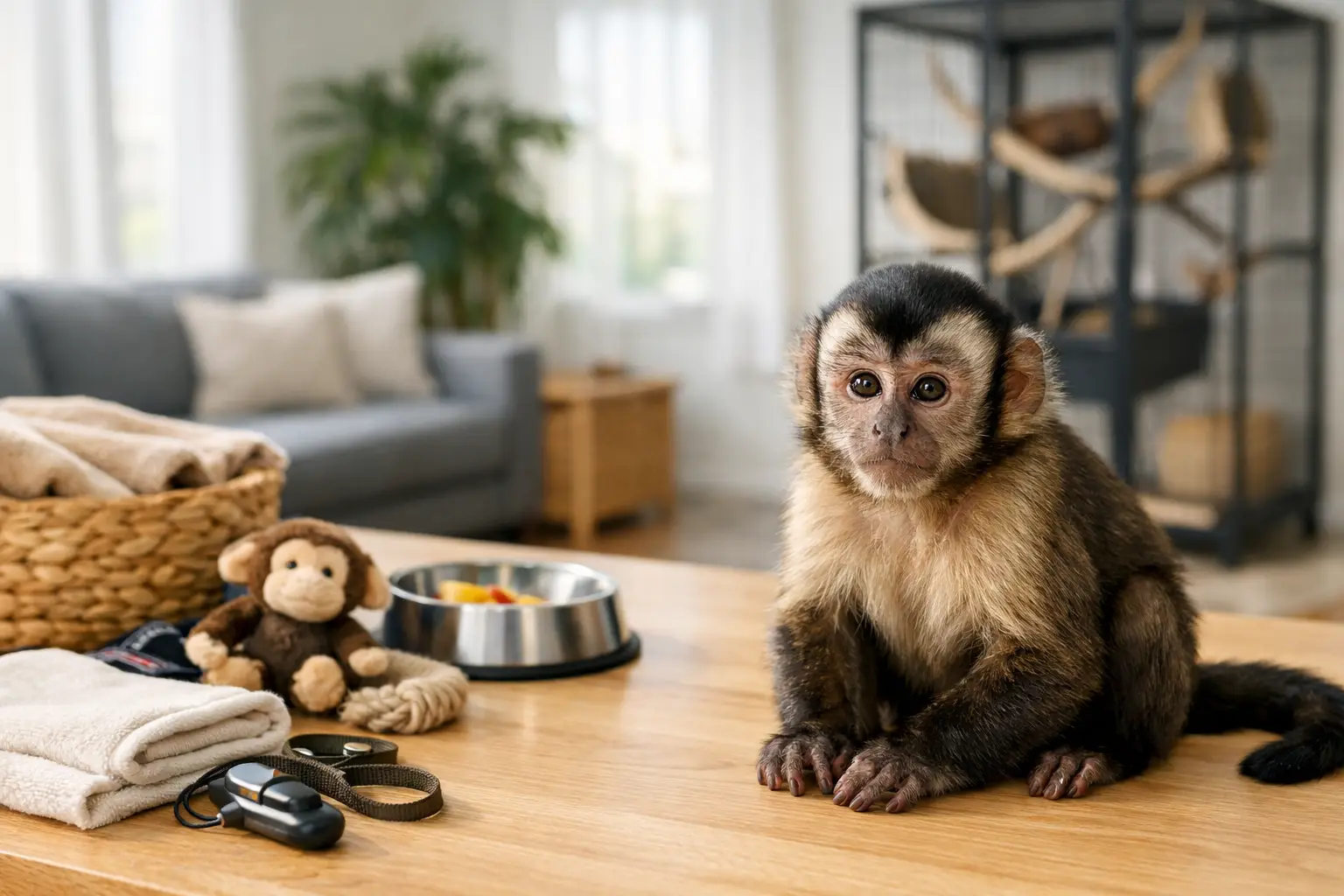
Capuchins are intelligent, curious and physically capable primates. They require strong enclosures, structured routines, climbing opportunities, foraging activities and challenging enrichment.
Explore Capuchin Monkeys →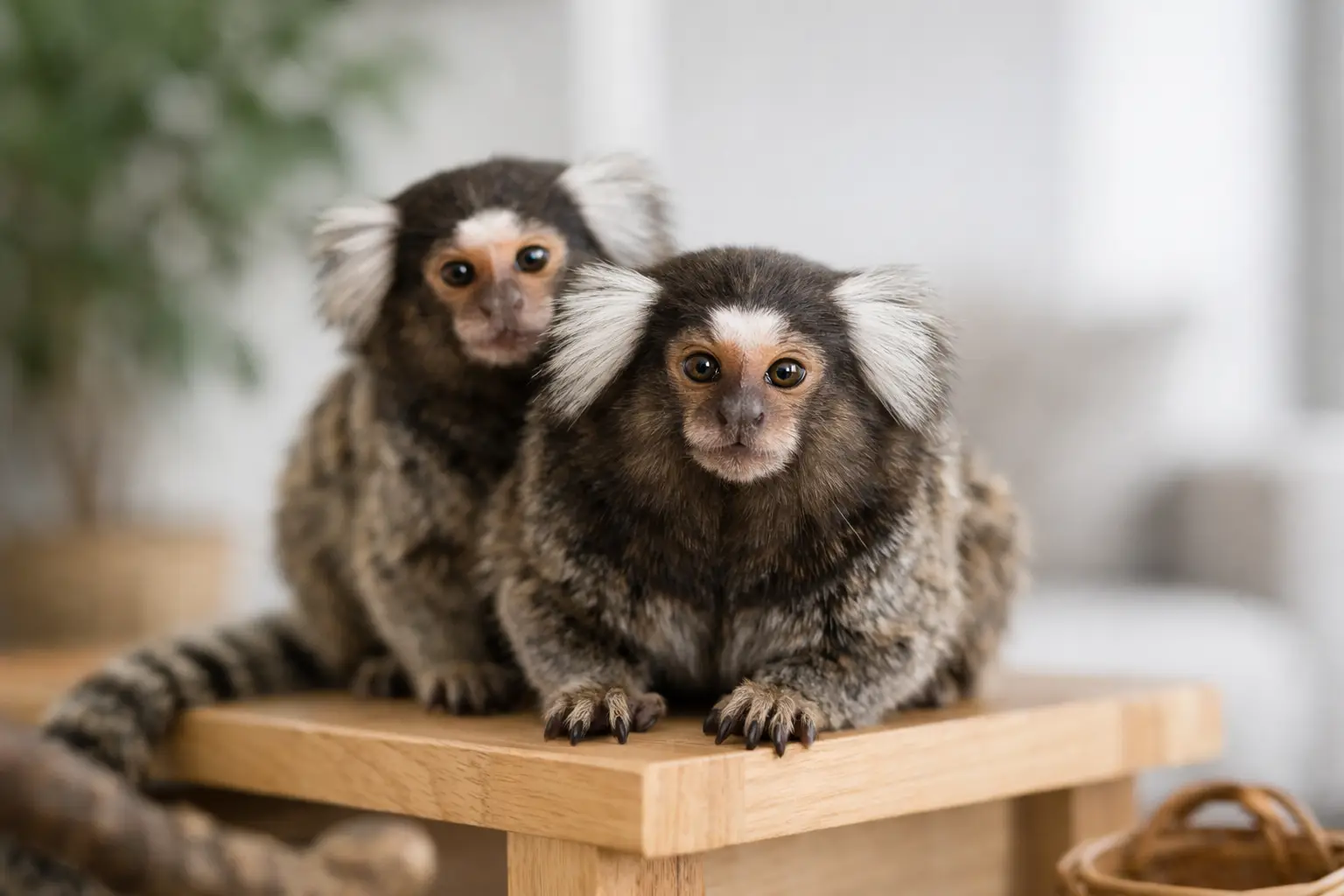
Marmoset Monkeys
Marmosets are small primates with specialized nutritional, social and environmental needs. Their smaller adult size does not make them simple or low-maintenance companion animals.
Explore Marmoset Monkeys →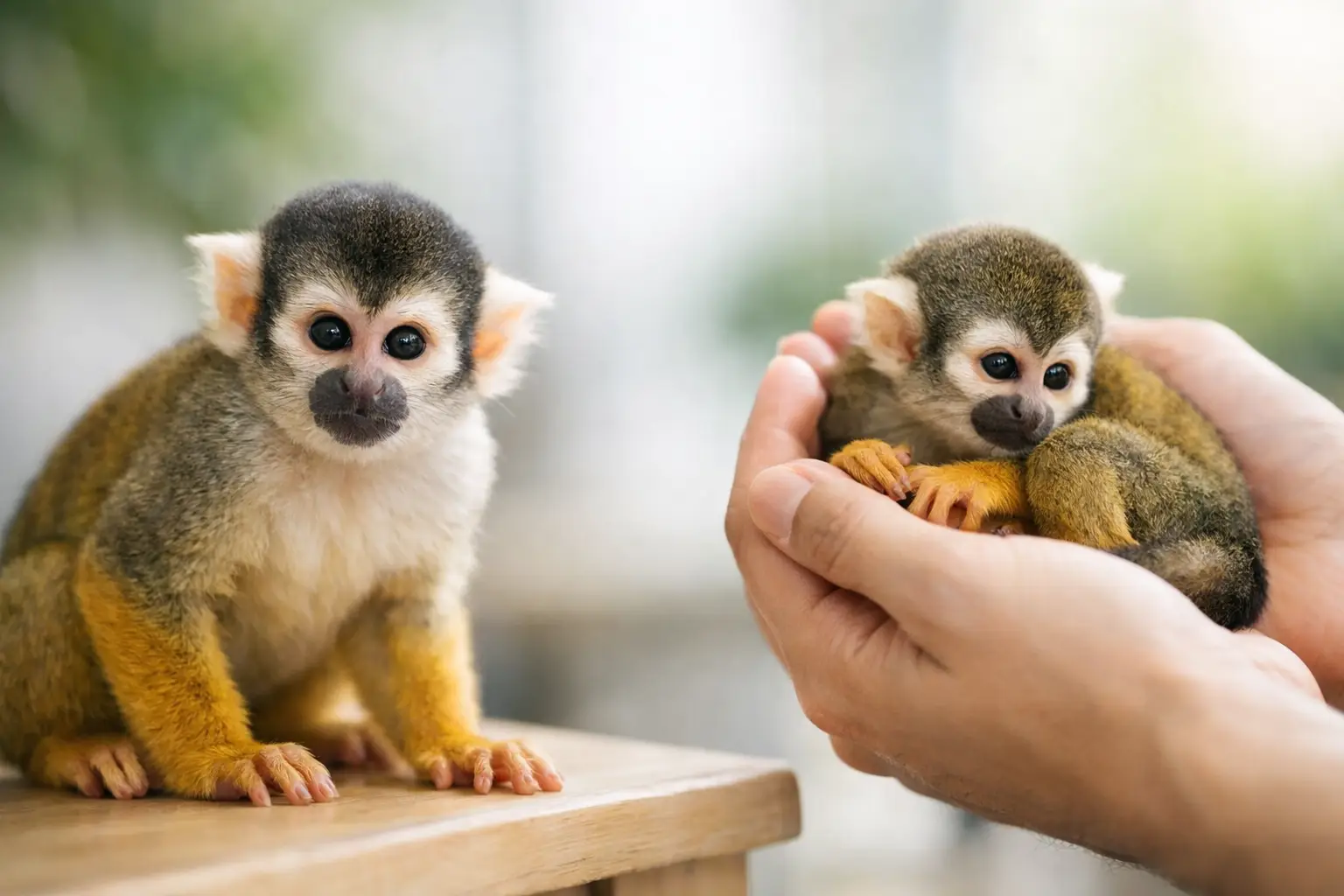
Squirrel Monkeys
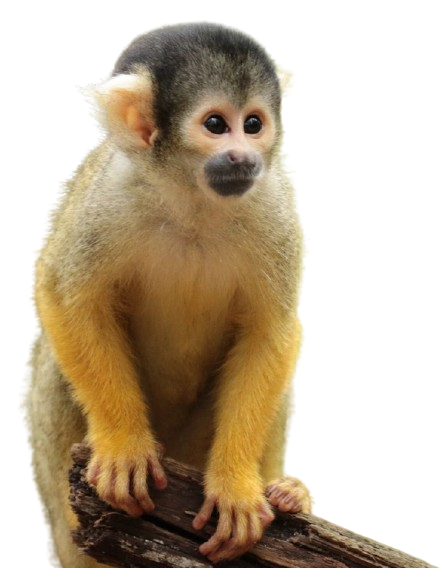
Squirrel Monkeys are energetic, agile and highly social. They require substantial vertical space, secure climbing structures and varied daily mental and physical stimulation.
Explore Squirrel Monkeys →Are Monkeys Legal to Own in Wisconsin? - Primates for Sale in Wisconsin
Wisconsin does not provide one simple statewide answer covering every nonhuman primate and every type of ownership activity.
Wisconsin Chapter 169 regulates certain activities involving live wild animals, including possession, purchase, sale, propagation, exhibition and transportation. Whether a particular license or approval applies can depend on the exact species, source of the animal and proposed activity.
Wisconsin municipalities may also adopt harmful or exotic-wild-animal ordinances. Some local definitions specifically include nonhuman primates and prosimians.
Prospective owners should therefore request species-specific written guidance from the Wisconsin Department of Natural Resources and the government responsible for the exact destination address.
Official Wisconsin captive-wildlife resources
Review the Wisconsin DNR captive-wildlife regulations and licenses page for current state information.
You may also review Wisconsin Statutes Chapter 169 concerning captive wildlife.
Provide the DNR with the exact common name, scientific name, source, intended use and destination before relying on any general information.
How to Verify Wisconsin Primate Requirements
Complete these checks before reserving, purchasing or transporting a primate.
Identify the Species
Obtain the exact common and scientific name of the Capuchin, Marmoset or Squirrel Monkey.
Contact Wisconsin DNR
Ask whether possession, purchase, sale or transport requires a captive-wildlife license or other approval.
Verify Local Rules
Contact the city, village, town or county responsible for the exact destination address.
Confirm Entry Documents
Ask Wisconsin DATCP what health certificate, import permit or identification is required before travel.
Wisconsin Captive-Wildlife Licensing
Wisconsin DNR administers captive-wildlife licenses, including Captive Wild Animal Farm Licenses. The correct authorization depends on the animal, its origin and the activities the owner intends to conduct.
A license that authorizes one activity should not be assumed to authorize every other activity. Possession, breeding, sale, purchase, public exhibition and commercial activity may be treated differently.
Ask the Wisconsin DNR whether the selected nonhuman primate falls within Chapter 169 or Chapter NR 16 and whether any statutory exemption applies.
Applicants should also ask about enclosure standards, inspections, acquisition records, animal identification, sanitation, escape prevention and renewal requirements.
Wisconsin Local Exotic-Animal Ordinances
Wisconsin cities, villages, towns and counties may impose restrictions that are more specific than state rules. Local ordinances may prohibit certain animals or require a permit, public hearing, inspection, enclosure plan, insurance or written emergency procedures.
Some Wisconsin model ordinance language defines exotic or wild animals to include nonhuman primates and prosimians. Actual requirements depend on the ordinance adopted by the responsible local government.
Contact the municipal clerk, animal-control department, police department and zoning office for the exact property. Ask whether Capuchins, Marmosets or Squirrel Monkeys are prohibited, restricted or permit eligible.
Confirm whether the property lies inside a city or village or is governed primarily by a town and county. A postal address alone may not identify the correct jurisdiction.
Property, Lease, HOA and Insurance Checks
Government permission is only one part of responsible verification. A landlord, homeowners association, deed restriction or insurance policy may prohibit exotic animals even when a permit process exists.
Renters should obtain written permission that identifies the exact species. Homeowners should review association rules, deed restrictions and property-use requirements before constructing an enclosure.
Ask an insurance provider whether keeping a nonhuman primate affects liability or property coverage. Some policies exclude injuries, escapes or damage involving exotic animals.
Wisconsin Primate Import and Veterinary Requirements
Wisconsin requires a Certificate of Veterinary Inspection when an exotic or wild animal is imported into the state. The requirement applies regardless of whether the animal arrives by automobile, airplane, rail or another form of transportation.
The certificate should be prepared by an appropriately licensed and accredited veterinarian and should accurately identify the animal, origin, destination and examination information.
Additional requirements may depend on the exact species, origin, health status and intended use. Contact Wisconsin DATCP’s animal-import coordinator before scheduling travel.
Review the Wisconsin DATCP exotic-species movement requirements and the Wisconsin wild-animal movement guidance .

Secure Primate Housing in Wisconsin
A primate enclosure should be designed for the animal’s adult strength, intelligence, climbing ability and social behavior. Housing suitable for a juvenile may become inadequate as the animal matures.
Doors, locks, mesh, feeding openings and climbing structures should be escape-resistant and inspected regularly. The enclosure should provide elevated resting areas, sheltered spaces, privacy and safe enrichment.
Wisconsin winters can bring freezing temperatures, snow, ice and dangerous wind chills. Summers may also become hot and humid.
Reliable heated indoor housing, ventilation, humidity management, backup power and emergency transportation are essential parts of a Wisconsin care plan.
Responsible Wisconsin Primate Ownership Checklist
- Exact common and scientific name confirmed
- Wisconsin DNR requirements verified
- Local exotic-animal ordinance checked
- Zoning and land-use approval obtained
- Landlord or HOA permission documented
- Insurance coverage reviewed
- Escape-resistant enclosure completed
- Heated indoor housing and backup power arranged
- Experienced primate veterinarian located
- Emergency and severe-weather plan prepared
Learn about our health standards on the Primate Health Guarantee page and read more about our program on the About Premier Primates page.
Primate Nutrition and Daily Enrichment
Capuchins, Marmosets and Squirrel Monkeys have different nutritional requirements. A feeding plan should be developed with an experienced veterinarian or qualified primate-care professional.
Feeding only fruit, table scraps or human snack foods can create nutritional imbalance. A suitable plan may include species-appropriate commercial primate food, vegetables, measured fruit portions and other veterinarian-approved foods.
Daily enrichment may include secure climbing structures, puzzle feeders, safe foraging opportunities, rotating objects and supervised problem-solving activities.
Enrichment equipment should be checked frequently. Remove damaged objects and anything that creates an ingestion, strangulation, entrapment or escape hazard.
Find a Wisconsin Primate Veterinarian Before Arrival
Not every veterinary clinic that treats exotic animals accepts nonhuman primates. Locate a suitable veterinarian before reserving an animal or arranging transportation.
Ask whether the clinic provides routine examinations, diagnostic testing, nutritional consultation, preventive care and emergency treatment for the selected species.
Provide the veterinarian with Wisconsin’s current animal entry instructions before the travel examination so the Certificate of Veterinary Inspection contains the required information.
Maintain organized copies of acquisition records, DNR correspondence, local approvals, veterinary examinations, laboratory results, identification documents and transportation certificates.
Visit our Frequently Asked Questions page for additional information about availability, responsible care, health and transportation.
Primate Transportation to Wisconsin
Transportation should be scheduled only after the applicant has confirmed Wisconsin DNR requirements, local ordinances, zoning, property approval, veterinary care and state animal-entry documentation.
Travel arrangements may depend on the exact species, origin, destination, route, weather, health documentation and qualified transporter availability.
Visit our Primate Delivery page to learn about travel preparation, specialized ground transportation, pickup and arrival procedures.
Commercial transportation of nonhuman primates may also be regulated under federal law. Review the USDA APHIS animal-transportation guidance before finalizing regulated travel.
Wisconsin Areas Receiving Primate Inquiries
Premier Primates may receive inquiries from residents throughout Wisconsin, subject to state requirements, local ordinances and responsible-placement standards.
- Milwaukee
- Madison
- Green Bay
- Kenosha
- Racine
- Appleton
- Waukesha
- Eau Claire
- Oshkosh
- Janesville
- West Allis
- La Crosse
- Sheboygan
- Wauwatosa
- Fond du Lac
- Brookfield
- New Berlin
- Wausau
- Menomonee Falls
- Sun Prairie
Frequently Asked Questions About Primates in Wisconsin
Is it legal to own a monkey in Wisconsin?
The answer depends on the exact species, source, intended activity and local jurisdiction. Applicants should verify Wisconsin DNR requirements and local exotic-animal ordinances before acquiring a primate.
Do I need a Wisconsin captive-wildlife license?
A license or other approval may apply depending on the species and activity. Contact Wisconsin DNR with the exact common and scientific name for a determination.
Can I own a Capuchin Monkey in Wisconsin?
Do not assume a Capuchin is automatically permitted. Confirm state licensing, municipal ordinances, zoning, property restrictions and import documentation first.
Are Marmoset Monkeys allowed in Wisconsin?
Requirements may vary by jurisdiction and activity. Contact Wisconsin DNR and the local government responsible for your exact property.
Can I own a Squirrel Monkey in Wisconsin?
Prospective owners must verify state requirements, local exotic-animal rules, zoning, housing and veterinary arrangements before reservation.
Can a Wisconsin town prohibit primates?
Local governments may regulate harmful or exotic wild animals and may specifically include nonhuman primates in their definitions.
Does Wisconsin require a health certificate?
A Certificate of Veterinary Inspection is required when importing an exotic or wild animal into Wisconsin. Additional conditions should be confirmed with DATCP.
Does a health certificate replace a wildlife license?
No. Veterinary documentation does not replace any applicable DNR license, local permit, zoning approval or federal authorization.
Can a primate be delivered to my Wisconsin home?
Transportation may be considered after state and local requirements, housing, veterinary care and import documentation have been confirmed.
What should I include in my Wisconsin inquiry?
Include your city, municipality, county, ZIP code, selected species, license status, enclosure plan, veterinary arrangements and specialized-animal experience.
Explore Premier Primates
- Premier Primates Home
- Available Primates for Sale
- Capuchin Monkeys for Sale
- Marmoset Monkeys for Sale
- Squirrel Monkeys for Sale
- Primate Delivery
- Primate Health Guarantee
- About Premier Primates
- Primate Care Blog
- Frequently Asked Questions
- Contact Premier Primates
- Primates for Sale in Nevada
- Primates for Sale in Arkansas
- Primates for Sale in Indiana
- Primates for Sale in Missouri
- Primates for Sale in Tennessee
- Primates for Sale in Alabama
- Primates for Sale in Texas
- Primates for Sale in Florida
- Primates for Sale in North Carolina
Ask About Available Primates in Wisconsin
After confirming Wisconsin DNR requirements, local ordinances, zoning, property approval and veterinary documentation, contact Premier Primates with your municipality, county, selected species, enclosure plan and ownership experience.
Submit a Wisconsin Inquiry Browse Available Primates