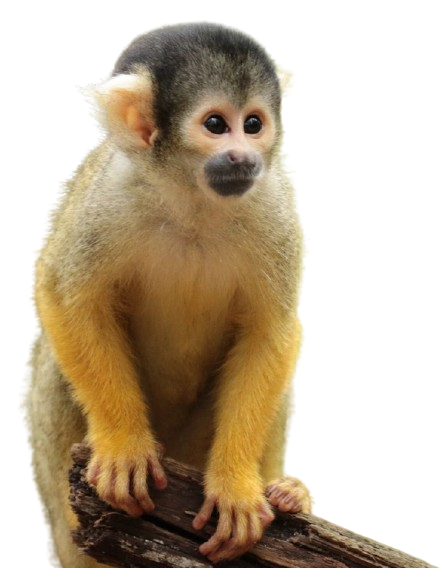
Primates for Sale in Michigan
Primates for Sale in Michigan - Explore information about available Capuchin, Marmoset and Squirrel Monkeys for eligible Michigan applicants. Learn about local ownership rules, veterinary preparation, secure housing, health documentation and responsible transportation.
View Available Primates Submit a Michigan InquiryHealthy Primates for Eligible Michigan Applicants - Primates for Sale in Michigan
Premier Primates provides availability information and educational guidance for people researching primates for sale in Michigan. Depending on current availability, featured species may include Capuchin Monkeys, Marmoset Monkeys and Squirrel Monkeys.
A primate should never be selected only because of its appearance or small size. Nonhuman primates are intelligent, active and socially complex animals. They require secure housing, specialized nutrition, structured enrichment, experienced veterinary support and a long-term care plan.
Michigan applicants must verify the current rules for their exact address before reserving an animal. Municipal, township, county, zoning, rental and homeowners-association requirements may affect whether a primate can be kept at a particular property.
Start by browsing our available primates for sale . Availability changes, so contact Premier Primates to confirm whether a particular animal remains available.
Primate Species Featured by Premier Primates - Primates for Sale in Michigan
Research each species carefully because adult behavior, housing, nutrition and enrichment requirements differ.
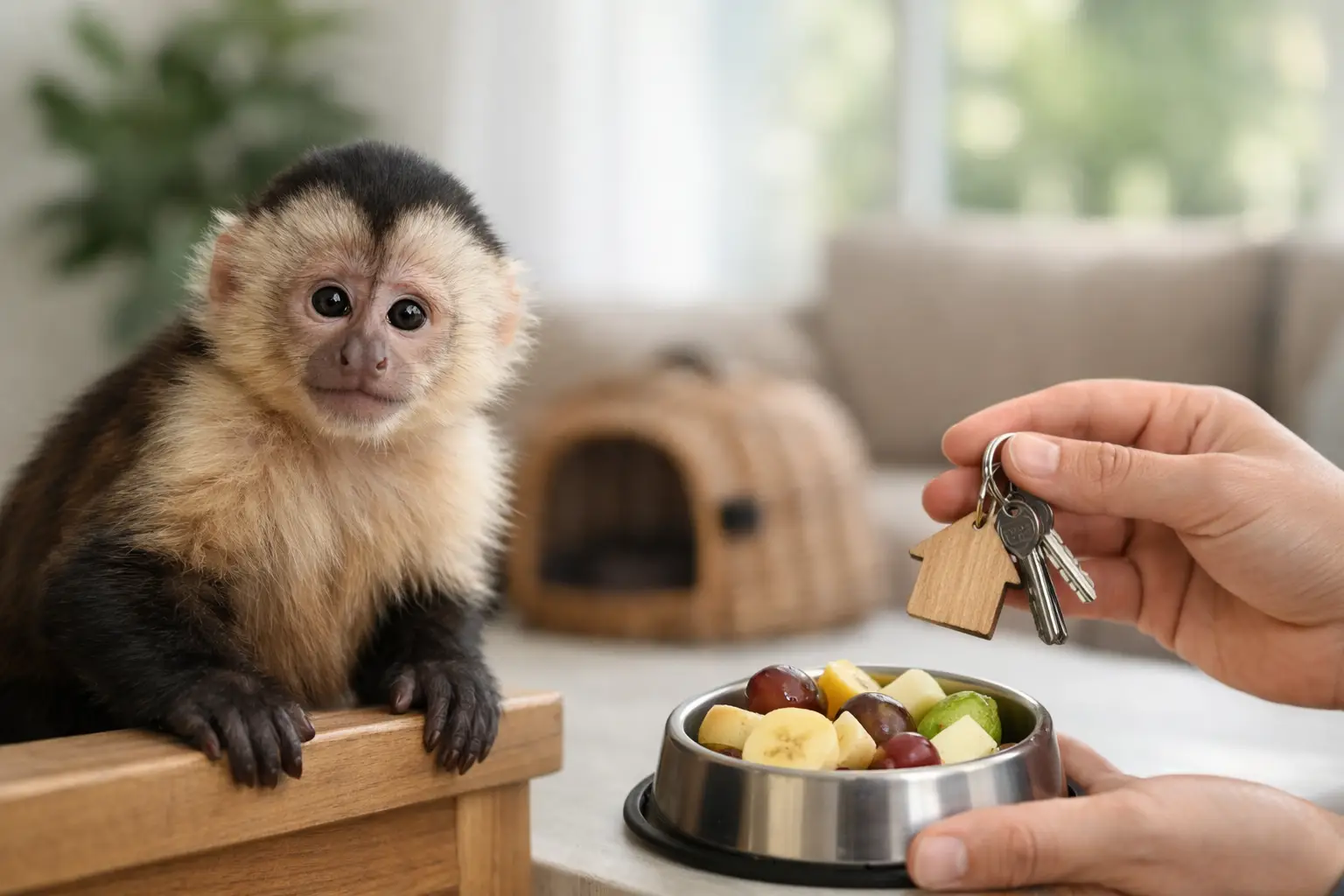
Capuchin Monkeys
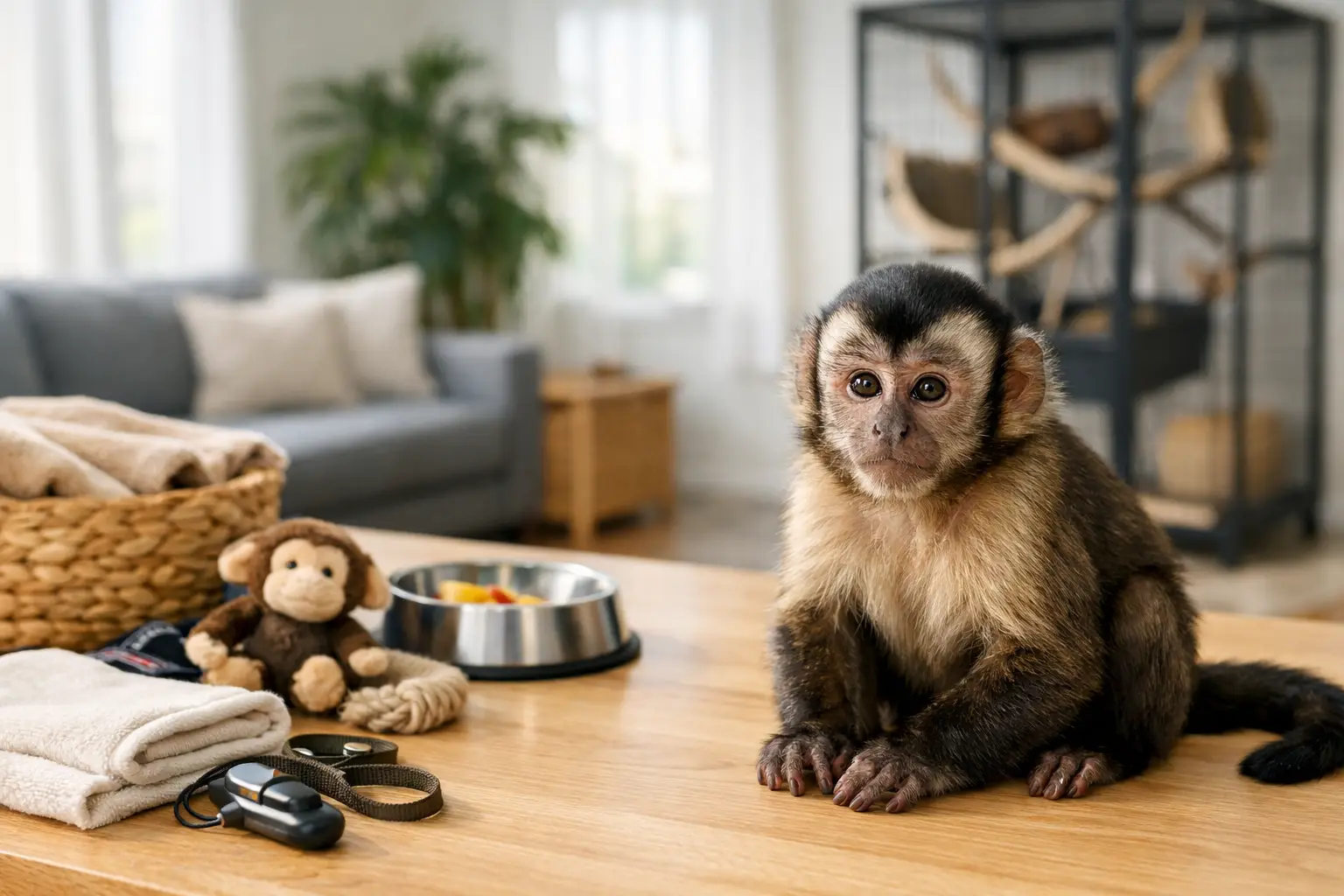
Capuchins are intelligent, physically capable and highly active. They require secure enclosures, climbing opportunities, structured routines, regular interaction and challenging enrichment.
Explore Capuchin Monkeys for Sale →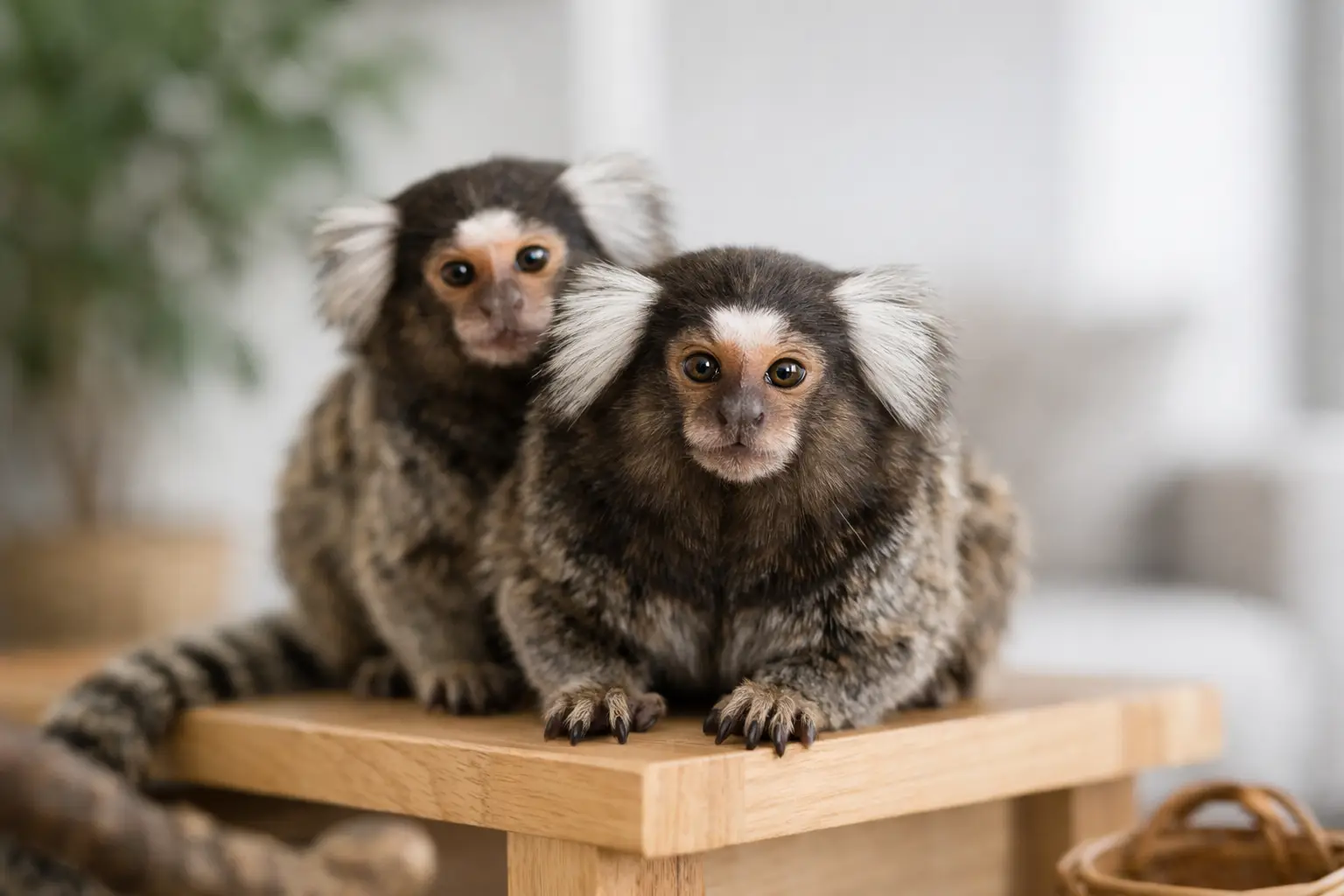
Marmoset Monkeys
Marmosets are small primates with specialized dietary, environmental and social requirements. Their small adult size does not make them simple or low-maintenance companion animals.
Explore Marmoset Monkeys for Sale →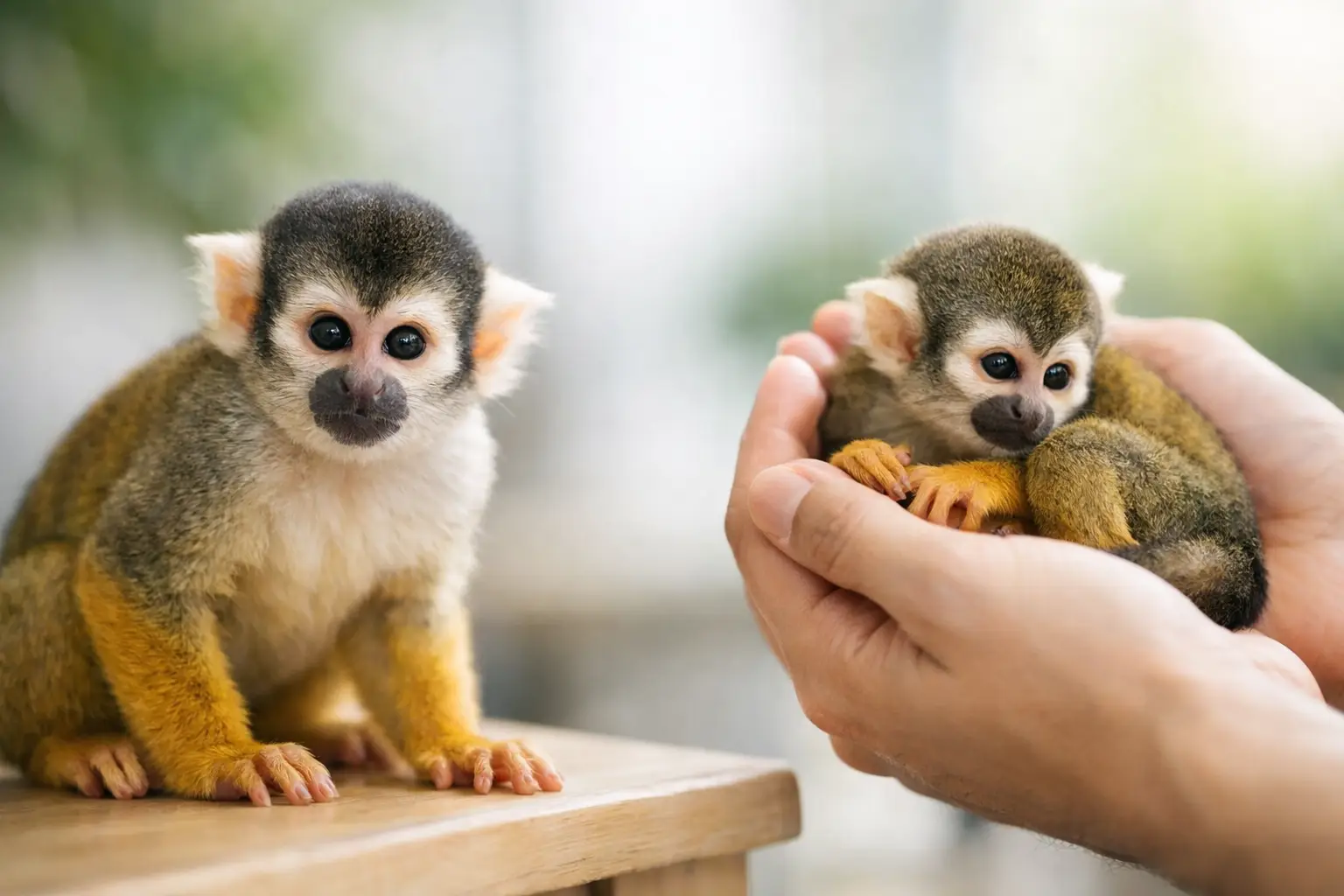
Squirrel Monkeys
Squirrel Monkeys are agile, energetic and social. They need substantial vertical space, climbing structures, daily movement and varied mental enrichment.
Explore Squirrel Monkeys for Sale →Are Primates Legal to Own in Michigan?
Prospective owners should not rely on a general statement that monkeys are legal or illegal throughout Michigan. The rules affecting possession may depend on the exact species, municipality, township, county, zoning district and intended use.
Local governments may maintain exotic-animal, dangerous-animal, nuisance-animal or zoning ordinances that restrict nonhuman primates. A landlord, homeowners association or insurance provider may also impose separate conditions.
Before reserving a primate, contact the animal-control agency, city or township clerk, county authority and zoning department responsible for your address. Provide the exact common and scientific name of the species you are considering.
Request written confirmation whenever possible. Verbal information from an unrelated business or online forum should not replace confirmation from the authority that enforces the rules where the animal will be housed.
Michigan animal-entry information
Review the Michigan Department of Agriculture and Rural Development guidance for exotic, circus and zoo animals . The state guidance explains the veterinary documentation required when qualifying exotic animals enter Michigan from another state.
How to Verify Michigan Primate Ownership Rules
Complete these checks before discussing a reservation or transportation date.
Identify the Species
Obtain the exact common and scientific name of the Capuchin, Marmoset or Squirrel Monkey being considered.
Contact Local Authorities
Ask animal control, the city or township clerk and the county whether nonhuman primates are restricted.
Check Property Rules
Review zoning, rental, homeowners-association and insurance requirements for the property.
Keep Written Records
Retain written approvals, permits, ordinance copies, veterinary documents and transportation records.
Michigan Veterinary and Entry Documentation
Animals transported into Michigan may require official health documentation. Michigan's guidance for exotic, circus and zoo animals states that an official interstate Certificate of Veterinary Inspection should be completed by a USDA-accredited veterinarian in the animal's state of origin.
The veterinary document should accurately identify the animal and demonstrate that the applicable movement requirements have been addressed. Additional records may be required by the transporter, veterinarian, local authority or receiving jurisdiction.
Michigan's animal-entry guidance should be reviewed again shortly before transportation because animal-health requirements can change in response to disease concerns.
Prospective owners can review the Michigan Animal Identification and Movement resources for current information.

Preparing for Michigan's Climate
Michigan's cold winters make reliable indoor, temperature-controlled housing essential. Tropical primates should not be exposed to freezing conditions, cold drafts, snow or unsafe outdoor temperatures.
The animal should have an escape-resistant indoor area that provides safe climbing opportunities, resting spaces, enrichment activities and appropriate ventilation.
Any outdoor enclosure should be treated as supplemental space for suitable weather rather than the animal's only year-round shelter. Owners should also prepare for power failures and severe winter weather.
Learn more about our standards by visiting the Primate Health Guarantee and About Premier Primates pages.
Responsible Primate Ownership Checklist
Responsible ownership requires preparation for the animal's adult behavior and long-term needs, not only its needs as a young primate.
- Written confirmation of local legality
- Secure, escape-resistant indoor enclosure
- Reliable year-round temperature control
- Backup heat and power-failure plan
- Experienced nonhuman-primate veterinarian
- Species-appropriate feeding program
- Daily physical and mental enrichment
- Safe climbing and resting structures
- Emergency caregiver arrangements
- Long-term financial preparation
Primates may display increasingly complex behavior as they mature. Prospective owners should research adult strength, territorial behavior, social needs, communication and potential bite or scratch risks before proceeding.
Arrange a Michigan Primate Veterinarian Before Arrival
Not every veterinary clinic that treats exotic pets accepts nonhuman primates. Contact potential clinics before bringing an animal home and ask whether they provide routine examinations, diagnostic testing, nutritional guidance and emergency care for the chosen species.
Owners should keep copies of health examinations, identification records, laboratory results and treatment information. They should also identify an emergency clinic and create a plan for transporting the animal safely.
Visit our Frequently Asked Questions page for additional information about care, health preparation, availability and transportation.
Primate Transportation to Eligible Michigan Locations
Transportation may be discussed after the recipient's legal eligibility, housing preparation, veterinary arrangements and placement suitability have been confirmed. Delivery is not automatically available to every Michigan address.
Travel arrangements depend on the final destination, distance, route, weather, documentation, animal health and transporter availability. Severe winter conditions or extreme temperatures may require a travel date to be postponed.
Visit our Primate Delivery page to learn about travel preparation, pickup, specialized ground transportation and arrival procedures.
Commercial animal transportation may also be subject to federal standards. Review the USDA APHIS animal transportation guidance for more information.
Michigan Areas Receiving Primate Inquiries
Premier Primates may receive inquiries from residents throughout Michigan, subject to local rules, eligibility and responsible placement requirements.
- Detroit
- Grand Rapids
- Warren
- Sterling Heights
- Ann Arbor
- Lansing
- Dearborn
- Livonia
- Troy
- Westland
- Farmington Hills
- Flint
- Southfield
- Kalamazoo
- Novi
- Rochester Hills
- Wyoming
- Royal Oak
- Traverse City
- Battle Creek
Frequently Asked Questions About Primates in Michigan
Is it legal to own a monkey in Michigan?
Eligibility can depend on the species and exact location. Applicants should verify city, township, county, zoning, housing and animal-control rules before reserving a primate.
Can I own a Capuchin Monkey in Michigan?
Do not rely on a general online answer. Provide the exact species to the authorities responsible for your address and request written confirmation.
Are Marmoset Monkeys legal in Michigan?
A Marmoset's small size does not automatically make ownership lawful. Local exotic-animal or zoning rules may apply to all nonhuman primates.
Can I own a Squirrel Monkey in Michigan?
Prospective owners must verify current local rules, property restrictions and health-document requirements before making a commitment.
Does a primate entering Michigan need a health certificate?
Michigan's exotic-animal entry guidance requires an official interstate Certificate of Veterinary Inspection for animals covered by that guidance. Confirm the current requirements directly with MDARD before transportation.
Can a primate be delivered to my Michigan home?
Transportation may be discussed only after legal eligibility, documentation, suitable housing, veterinary preparation and safe travel conditions have been confirmed.
What information should I include in my inquiry?
Include your name, city, township or municipality, county, ZIP code, selected species, relevant experience, legal-verification status and housing plan.
Explore Premier Primates
Continue your research using the following availability, care, delivery and ownership resources.
- Premier Primates Home
- Available Primates for Sale
- Capuchin Monkeys for Sale
- Marmoset Monkeys for Sale
- Squirrel Monkeys for Sale
- Primate Delivery
- Primate Health Guarantee
- About Premier Primates
- Primate Care Blog
- Frequently Asked Questions
- Contact Premier Primates
- Primates for Sale in Texas
- Primates for Sale in Florida
- Primates for Sale in North Carolina
Ask About Available Primates in Michigan
After verifying the rules for your exact Michigan address, contact Premier Primates with your city, county, ZIP code, selected species, housing preparations and questions about availability or transportation.
Contact Premier Primates Browse Available Primates