Primates for Sale in Alabama
Primates for Sale in Alabama - Explore information about Capuchin, Marmoset and Squirrel Monkeys while learning about Alabama ownership rules, animal entry requirements, responsible care, veterinary preparation and safe transportation.
View Available Primates for Sale in Alabama Submit an Alabama InquiryPrimates for Eligible Alabama Applicants
Premier Primates provides educational information and availability updates for people researching primates for sale in Alabama. Depending on current availability, featured species may include Capuchin Monkeys, Marmoset Monkeys and Squirrel Monkeys.
Nonhuman primates are not conventional household pets. They are intelligent, active and socially complex animals requiring secure housing, specialized nutrition, daily enrichment, experienced veterinary care and a long-term ownership plan.
Before making a reservation, an Alabama applicant should verify the rules affecting the exact species and delivery address. State wildlife restrictions, animal-entry rules, municipal ordinances, zoning, rental agreements, insurance policies and homeowners-association requirements may apply.
Begin by visiting our Available Primates for Sale in Alabama page. Appearance on that page does not guarantee that an animal can be legally or safely placed at every Alabama destination.
Primate Species Featured by Premier Primates - Primates for Sale in Alabama
Compare the adult behavior, lifespan, housing, nutrition and social requirements of each primate species before making an inquiry.
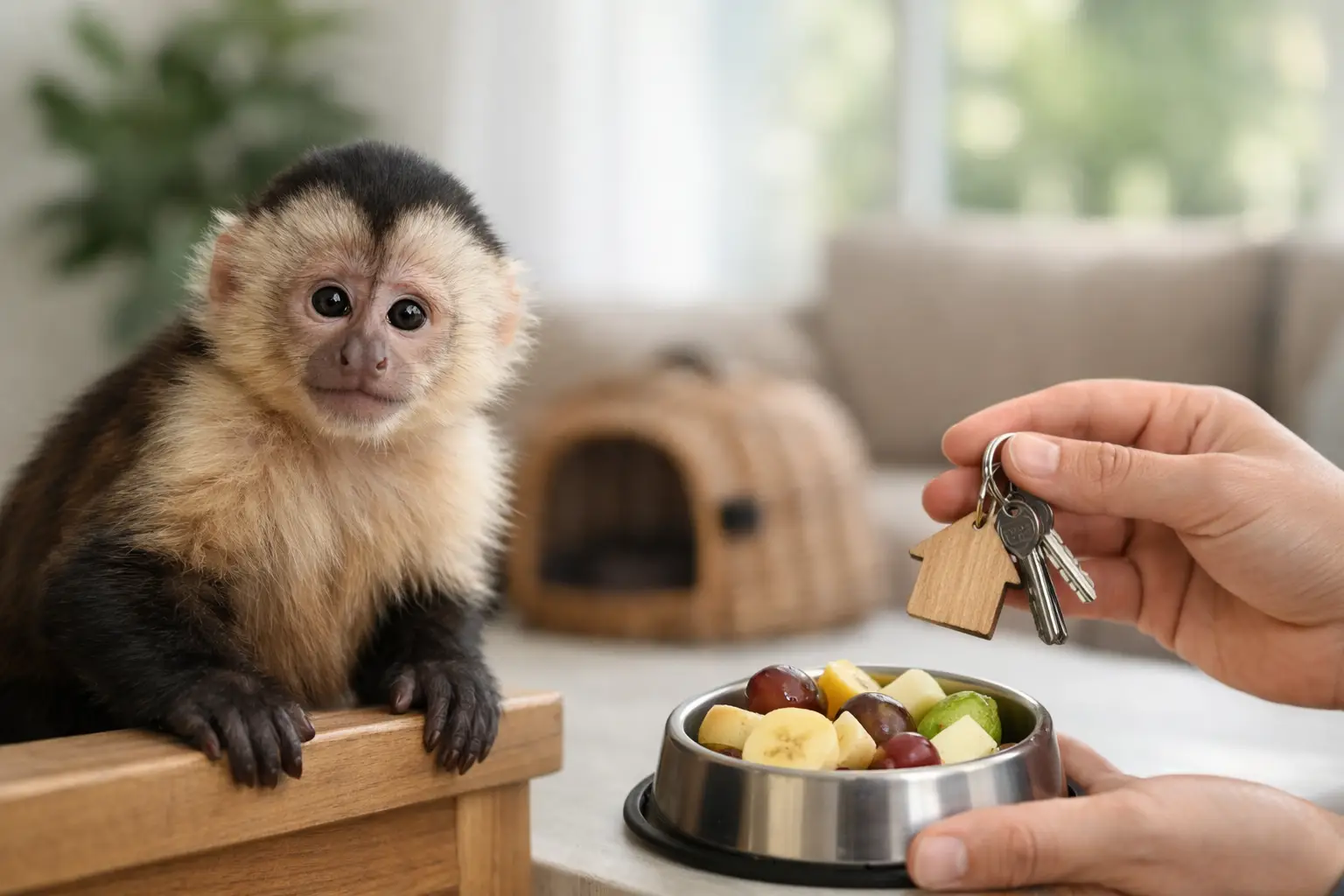
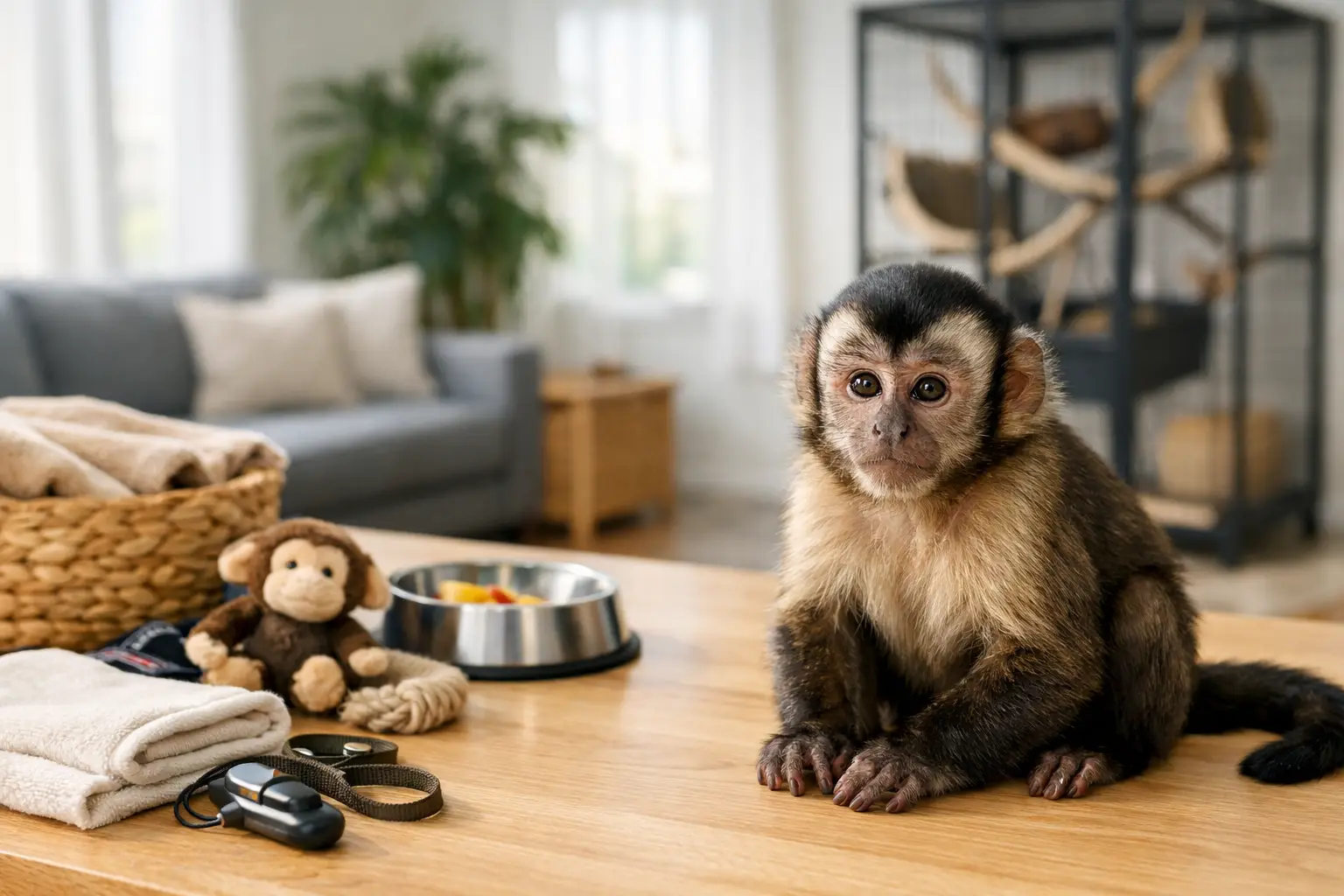
Capuchin Monkeys
Capuchins are intelligent, curious and physically capable primates. They need strong enclosures, structured routines, climbing opportunities, foraging activities and challenging enrichment.
Explore Capuchin Monkeys →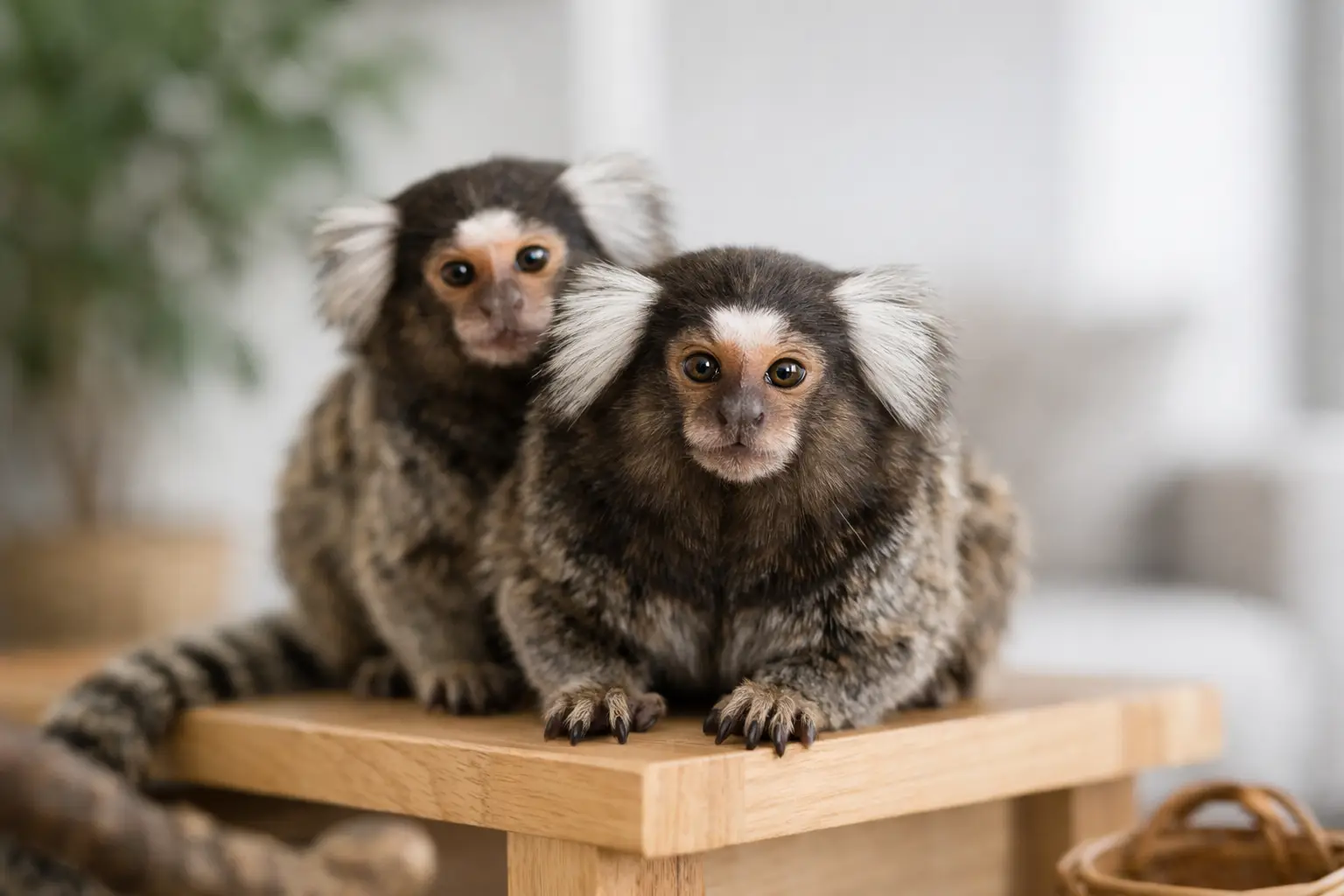
Marmoset Monkeys
Marmosets are small primates with specialized dietary, social and environmental needs. Their smaller size does not make them simple, low-maintenance companion animals.
Explore Marmoset Monkeys →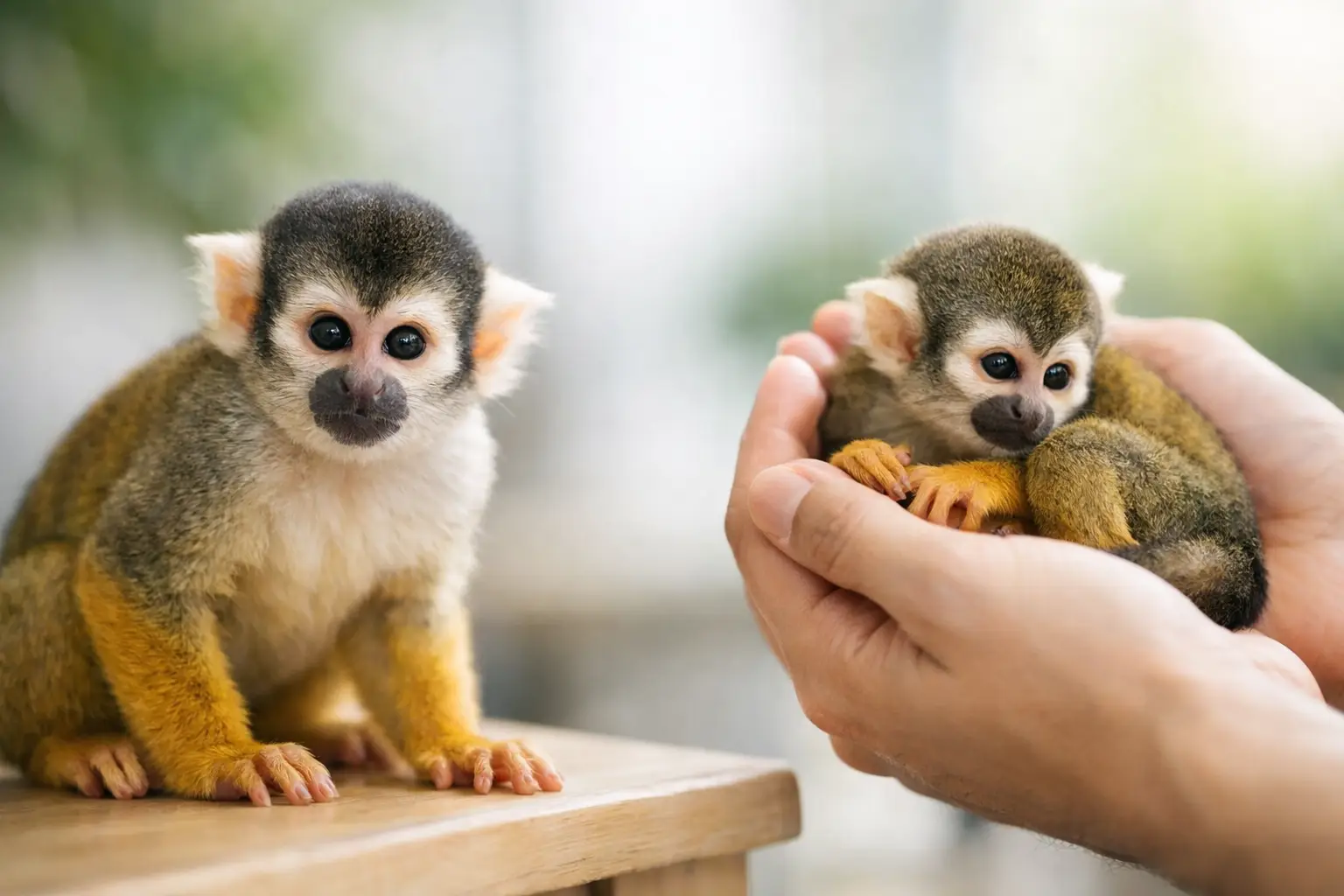
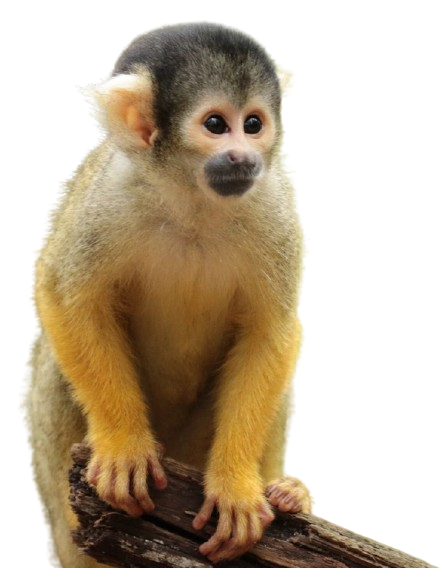
Squirrel Monkeys
Squirrel Monkeys are agile, energetic and highly social. They require substantial vertical space, secure climbing equipment and varied daily stimulation.
Explore Squirrel Monkeys →Are Monkeys Legal to Own in Alabama? - Primates for Sale in Alabama
Alabama maintains a restricted-species regulation that prohibits or regulates certain animals. The regulation includes nonnative venomous reptiles, mongooses, several specifically identified mammals and species classified as injurious wildlife under federal law.
Common Capuchin, Marmoset and Squirrel Monkey species are not expressly named in the regulation's general list. However, this should not be interpreted as automatic approval for every species, transaction or Alabama address.
Applicants should confirm the exact common and scientific name with the Alabama Department of Conservation and Natural Resources. They should also contact the Alabama Department of Agriculture and Industries regarding entry and animal-health requirements.
Local governments may impose stricter animal-control, public-safety, nuisance or zoning rules. Written confirmation should be obtained before making a reservation or payment.
Official Alabama wildlife resources
Review Alabama Administrative Code Rule 220-2-.26 concerning restrictions on the possession, sale, importation and release of certain animals.
You may also review the Alabama Department of Conservation restricted-species guidance and contact the agency about the exact species.
How to Verify Alabama Primate Ownership Rules
Complete these checks before discussing a reservation, transfer or transportation date.
Identify the Species
Obtain the animal's exact common and scientific name, not only the general term “monkey.”
Contact State Agencies
Ask Alabama wildlife and animal-health authorities whether restrictions or entry documents apply.
Check Local Ordinances
Contact city or county animal control and the zoning office responsible for the destination property.
Keep Written Records
Retain written approvals, health documents, ordinance copies and transportation records.
Alabama Animal Entry and Movement Requirements
Alabama maintains animal-health requirements for wild and semi-wild animals entering the state or being transported from one Alabama location to another.
State rules provide that the number of affected animals must be reported to the Alabama State Veterinarian before entry or movement. Authorities must also be given an opportunity to examine the animals and determine their health status.
Because the applicable requirements may depend on the species, origin, health status and purpose of movement, applicants should obtain current instructions directly from the State Veterinarian before transportation.
Review Alabama Administrative Code Rule 80-3-6-.23 and the Alabama Agriculture animal import requirements .
County, City and Property Restrictions
Local governments may regulate exotic animals through animal-control ordinances, zoning codes, nuisance laws, enclosure standards and public-safety requirements.
Contact the animal-control and zoning departments responsible for the exact destination address. Ask whether nonhuman primates are permitted and whether registration, inspections, setbacks, enclosure plans or special authorization are required.
Renters should obtain written authorization from the property owner. Homeowners should review homeowners association rules and confirm whether appropriate liability insurance is available.

Safe Primate Housing in Alabama
A primate enclosure should be designed for the animal's adult strength, intelligence, climbing ability and social behavior. Housing suitable for a young animal may become inadequate as the primate matures.
Doors, locks, mesh, service openings and climbing structures should be escape-resistant and regularly inspected. The animal should also have elevated resting areas, sleeping spaces and private retreat locations.
Alabama's hot and humid summers require shade, ventilation, clean drinking water and reliable indoor cooling. Owners must also prepare for thunderstorms, tornadoes, hurricanes and electrical outages.
A written emergency plan should identify backup power, evacuation arrangements, veterinary assistance and a qualified temporary caregiver.
Responsible Primate Ownership Checklist
Responsible ownership requires preparation for the animal's entire life. Behavior, strength, social needs and medical expenses may change significantly as a primate matures.
- Written confirmation of state requirements
- Verification of county and city ordinances
- Secure and escape-resistant enclosure
- Reliable indoor climate control
- Shade, ventilation and clean water
- Experienced nonhuman-primate veterinarian
- Species-appropriate nutrition plan
- Daily climbing and foraging activities
- Severe-weather emergency plan
- Long-term financial preparation
Learn more about our general health standards on the Primate Health Guarantee page and read about our approach on the About Premier Primates page.
Primate Nutrition and Daily Enrichment
Primates require carefully balanced diets. Feeding only fruit, table scraps or human snack foods can contribute to obesity, nutritional deficiencies and serious long-term health problems.
A feeding program should be prepared with guidance from an experienced veterinarian or qualified primate-care professional. A suitable plan may include a species-appropriate commercial primate food, vegetables, controlled fruit portions and other approved foods.
Daily enrichment is equally important. Suitable activities may include climbing structures, puzzle feeders, safe foraging opportunities, rotating objects and supervised problem-solving exercises.
Enrichment materials should be inspected regularly and removed when damaged. Avoid objects that create ingestion, entrapment, strangulation or escape risks.
Arrange an Alabama Primate Veterinarian Before Arrival
Prospective owners should locate a veterinarian who expressly treats nonhuman primates before reserving an animal. Not every clinic advertising exotic-animal care accepts monkeys.
Ask whether the clinic provides routine examinations, diagnostic testing, nutritional consultation, preventive care and emergency treatment for the selected species.
Maintain organized copies of identification records, veterinary examinations, laboratory results, treatment information and transportation documents.
Visit our Frequently Asked Questions page for additional information about availability, health preparation, care and transportation.
Primate Transportation to Alabama
Transportation should be arranged only after the recipient has verified legal eligibility, prepared suitable housing, confirmed veterinary care and completed Alabama's entry requirements.
Travel arrangements may depend on the species, destination, route, weather, health documentation and availability of a qualified transporter.
Visit our Primate Delivery page to learn about pickup, travel preparation, specialized ground transportation and arrival procedures.
Regulated commercial transportation must provide humane care during the journey. Review the USDA APHIS animal transportation guidance for current federal requirements.
Alabama Areas Receiving Primate Inquiries
Premier Primates may receive general inquiries from residents throughout Alabama, subject to legal verification and responsible placement standards.
- Huntsville
- Birmingham
- Montgomery
- Mobile
- Tuscaloosa
- Hoover
- Auburn
- Dothan
- Madison
- Decatur
- Florence
- Prattville
- Vestavia Hills
- Phenix City
- Gadsden
- Alabaster
- Opelika
- Enterprise
- Homewood
- Northport
Frequently Asked Questions About Primates in Alabama
Is it legal to own a monkey in Alabama?
Alabama does not expressly list every common small primate in its general restricted-species rule. Applicants must still verify the exact species, federal classification, entry rules and local ordinances.
Can I own a Capuchin Monkey in Alabama?
Capuchins are not expressly named in Alabama's general restricted-species list, but prospective owners should obtain confirmation from state and local authorities before reserving one.
Are Marmoset Monkeys legal in Alabama?
Marmosets may not be expressly listed by name, but animal-entry requirements, local ordinances, zoning rules and federal laws may still apply.
Can I own a Squirrel Monkey in Alabama?
Verify the exact species and destination with Alabama authorities before making a payment or transportation arrangement.
Must Alabama be notified before a primate enters?
Alabama rules concerning wild and semi-wild animals require advance reporting to the State Veterinarian. Obtain current instructions directly from the agency.
Do I need to check city or county ordinances?
Yes. Local restrictions may be stricter than statewide rules. Contact animal control and zoning officials for the exact destination address.
Can a primate be delivered to my Alabama home?
Transportation may be considered after legal eligibility, local approval, housing, veterinary care and entry requirements have been verified.
What should I include in my inquiry?
Include your name, Alabama city and county, ZIP code, selected species, ownership experience, legal verification status, enclosure plan and veterinary arrangements.
Explore Premier Primates
- Premier Primates Home
- Available Primates for Sale
- Capuchin Monkeys for Sale
- Marmoset Monkeys for Sale
- Squirrel Monkeys for Sale
- Primate Delivery
- Primate Health Guarantee
- About Premier Primates
- Primate Care Blog
- Frequently Asked Questions
- Contact Premier Primates
- Primates for Sale in Texas
- Primates for Sale in Florida
- Primates for Sale in North Carolina
- Primates for Sale in Michigan
- Primates for Sale in Ohio
- Primates for Sale in Pennsylvania
- Primates for Sale in Virginia
- Primates for Sale in South Carolina
Ask About Available Primates in Alabama
After verifying state and local requirements for your exact Alabama address, contact Premier Primates with your location, selected species, ownership experience, enclosure plan and veterinary preparations.
Submit an Alabama Inquiry Browse Available Primates