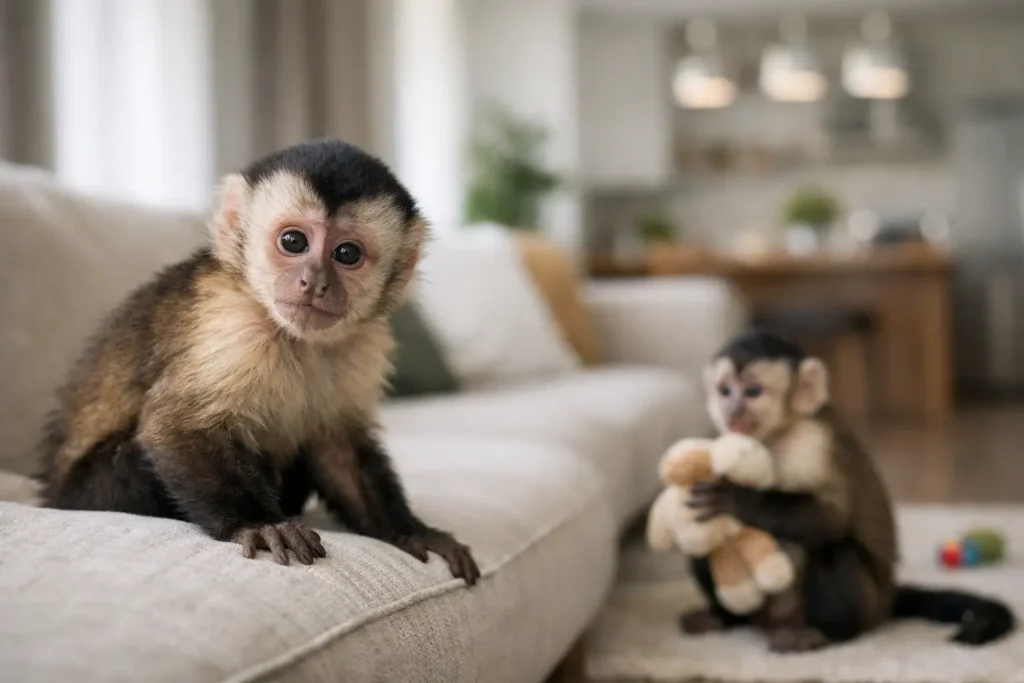
A baby capuchin may arrive small enough to cradle, curious enough to watch every movement you make, and social enough to seek your attention from the start. That early bond is meaningful, but hand-raised capuchin monkeys are not a short-term novelty or a pet that can adapt to an unprepared household. They are intelligent, emotionally complex primates whose well-being depends on the choices you make long before homecoming.
For the right approved owner, a capuchin can become a deeply engaging family companion. The path there requires legal readiness, a secure environment, specialized veterinary planning, daily interaction, and the financial ability to provide excellent care through every stage of life.
Why Early Human Care Matters
Hand-raised capuchin monkeys receive consistent nursery-based human interaction during their earliest development. Thoughtful early socialization can help a baby become comfortable with gentle handling, routines, and the people responsible for its daily care. A well-started infant may be more confident during transitions and more prepared to build a close relationship with its new family.
That does not mean an infant arrives “finished” or needs little guidance. Capuchins continue learning throughout their lives. Every household has a different rhythm, and the most successful placements are built around patient, consistent care rather than the expectation that a monkey will behave like a dog, cat, or child.
A responsible breeder should be able to discuss the individual animal, including age, personality, feeding routine, veterinary oversight, and care expectations. This is why choosing a baby is more personal than selecting from a photo. Temperament matters, and so does the fit between a capuchin’s needs and your household.
Hand-Raised Capuchin Monkeys Need a Prepared Home
A capuchin’s home should be planned as carefully as the decision to bring one into your family. A secure, species-appropriate enclosure is essential. It must provide room to climb, move, rest, explore, and safely separate when needed. It must also be designed to prevent escapes and protect the animal from household hazards, visitors, other pets, and weather conditions.
Inside the home, think beyond a cage. Capuchins are observant problem-solvers with active hands and strong curiosity. Cabinets, electrical cords, cleaning products, medications, windows, doors, fragile objects, and small items all require serious attention. A capuchin-proofed environment is an ongoing practice, not a one-time checklist.
Enrichment belongs in the daily schedule as well. Foraging activities, safe climbing opportunities, rotation of appropriate toys, training sessions, and supervised interaction help keep an intelligent primate mentally engaged. Repeating the same routine every day without challenge can lead to frustration and undesirable behaviors.
Your household schedule matters just as much as your enclosure. Consider who will provide care every morning and evening, what happens during travel or emergencies, and whether your work demands leave enough time for hands-on interaction. A capuchin should never be treated as an accessory to a busy lifestyle.
Legal Ownership Comes Before a Deposit
Primate laws vary widely across the United States. Some states allow private ownership with permits, some restrict certain species or counties, and others prohibit private primate ownership altogether. City and county ordinances, zoning rules, homeowners’ association policies, and landlord restrictions can add another layer.
Do not assume that an exotic-animal permit from one agency answers every question. Responsible buyers research requirements for their precise address before making a commitment. In some locations, the enclosure must meet specific standards before a permit is issued. Documentation, inspections, veterinary records, or liability coverage may also be required.
This is one of the clearest areas where experienced placement guidance can make a difference. Premier Primates helps approved buyers understand the permit-research process and the questions they should ask locally. Ultimately, the owner is responsible for confirming that ownership is lawful and maintaining all applicable requirements.
Veterinary Care Is Specialized Care
Before a capuchin comes home, identify a veterinarian experienced with nonhuman primates or exotic animals in your region. This should be arranged in advance, not after an urgent problem develops. Ask about wellness exams, routine testing, emergency availability, transport procedures, and the clinic’s comfort level treating capuchins.
A quality placement process should include veterinary examination and clear health-related documentation. It should also provide honest guidance about the reality that no living animal comes with a promise of a completely event-free future. Good care reduces risk, but it does not eliminate the need for an emergency fund, reliable transportation, and a relationship with a qualified veterinary team.
Nutrition deserves the same attention. Capuchins need a carefully managed diet appropriate to their age and health, supported by clean water and veterinary guidance. Human snacks, sugary foods, and casual feeding habits can create serious long-term problems. Families should be ready to follow a consistent feeding plan rather than improvising day to day.
The Emotional Commitment Is the Bigger Commitment
Capuchins can form strong attachments, recognize routines, and communicate needs with remarkable persistence. That connection is one reason people are drawn to them. It is also why impulsive ownership is unfair to the animal.
A capuchin’s behavior changes as it matures. An affectionate infant will grow into a powerful, independent primate with boundaries, moods, and species-specific behaviors. Owners must be willing to learn safe handling practices, read body language, reinforce appropriate routines, and adjust their expectations as the animal develops.
This is not an animal to pass from one caretaker to another when life becomes inconvenient. Marriage, moves, career changes, new children, aging parents, and financial shifts should all be considered before applying. A serious ownership plan includes trusted backup caregivers and a clear plan for long-term care if the primary owner becomes unable to provide it.
Households with young children or other animals need especially thoughtful screening. A capuchin’s needs, strength, and unpredictable responses in overstimulating situations demand careful supervision and realistic boundaries. The right answer is sometimes to wait, improve the home setup, or choose a different companion animal. Responsible placement means respecting that answer.
Questions to Settle Before You Apply
Before beginning the placement process, be candid about whether your household can meet the practical and emotional standard a capuchin deserves. You should have clear answers about legal ownership, enclosure construction, veterinary access, daily caregiving, travel coverage, and the cost of quality food, enrichment, supplies, permits, and medical care.
It also helps to ask what support continues after the animal arrives. First-time primate owners often have questions about routines, adjustment periods, feeding transitions, safe enrichment, and interpreting normal developmental changes. Lifetime mentorship and accessible guidance can be invaluable when you are building confidence as a new owner.
A careful application and screening process protects everyone involved. It gives the breeder a chance to understand your environment and allows you to ask direct questions without pressure. The goal is not simply to place a baby quickly. It is to create the best possible match for a companion who will rely on you for years.
A Homecoming Worth Preparing For
Bringing home a hand-raised capuchin is a major family decision, and it should feel deliberate from the first conversation through delivery day. Prepare the enclosure, confirm local compliance, stock the right supplies, establish veterinary care, and make sure every adult in the home understands the routine and responsibility.
The most rewarding capuchin relationships are built quietly: a consistent morning feeding, a new enrichment puzzle solved with determination, calm training sessions, and the trust that grows when an animal knows it is safe. If you can offer that kind of prepared, lifelong home, you are not just welcoming an unusual companion – you are making room for a family member raised with love and deserving of the same steady care in return.