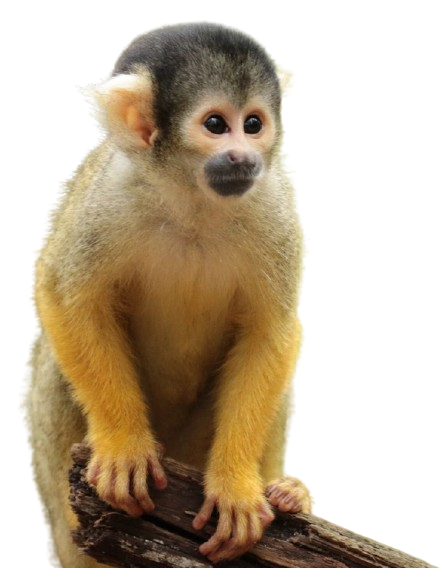
A squirrel monkey can be eager, expressive, and deeply engaged at mealtime, but feeding one is not a matter of setting out fruit and calling it a day. Meeting squirrel monkey diet requirements means building a consistent, species-appropriate nutrition plan around a quality primate diet, fresh whole foods, safe protein sources, clean water, and veterinary oversight. For a companion expected to be part of the family for many years, nutrition is one of the clearest daily expressions of responsible care.
Wild squirrel monkeys are adaptable omnivores. Depending on their habitat and season, they may eat fruit, flowers, nectar, insects, eggs, and other small animal matter. A home diet should reflect that natural variety without trying to copy the wild food menu ingredient for ingredient. The goal is nutritional completeness, healthy body condition, predictable digestion, and opportunities to forage and problem-solve.
The Foundation of a Squirrel Monkey Diet
A professionally formulated primate biscuit or chow should be the nutritional anchor of a squirrel monkey’s daily diet. These products are designed to provide a dependable balance of protein, fiber, vitamins, and minerals that fresh produce alone cannot reliably supply. Fruit is appealing and valuable in moderation, but it should not become the main course.
The specific formula, portion size, and feeding schedule should be selected with an experienced exotic-animal veterinarian. Age, body weight, activity level, reproductive status, medical history, and the foods already accepted by the monkey all matter. An infant or recently weaned squirrel monkey has different nutritional needs from a mature adult, and abrupt food changes can cause digestive upset or food refusal.
Many households offer primate biscuits dry, softened with warm water, or incorporated into supervised enrichment. The right approach depends on the individual animal and the veterinarian’s recommendation. What matters most is that the balanced diet is actually consumed, not picked around in favor of sweeter items.
Fresh Foods Add Variety, Not Empty Calories
Fresh foods make meals more interesting and can support natural foraging behavior. A thoughtful rotation of produce offers different textures, colors, and nutrients while preventing a squirrel monkey from becoming fixated on just one favorite food.
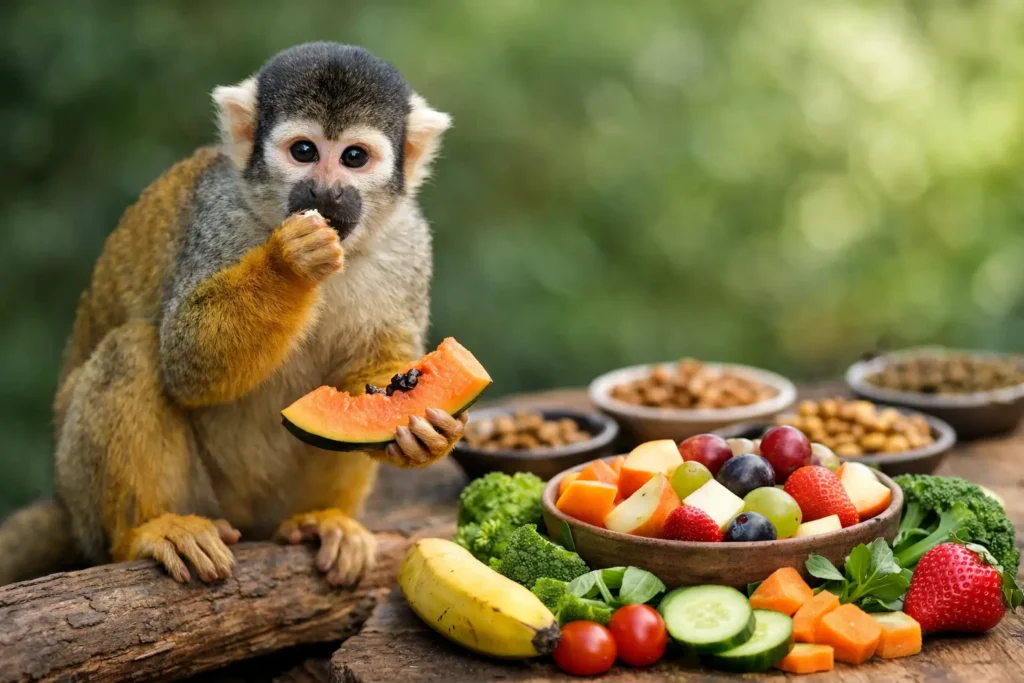
Vegetables should generally make up a meaningful part of the fresh-food selection. Leafy greens, bell peppers, green beans, squash, carrots, sweet potato, cucumber, and broccoli can be offered in appropriately prepared portions. Ripe fruits such as berries, melon, papaya, mango, banana, apple, pear, and grapes may be used more selectively as part of the rotation.
The trade-off is simple: fruit is highly motivating, but many fruits are naturally high in sugar. A squirrel monkey that fills up on bananas, grapes, sweet snacks, or juice may leave behind the fortified food that protects its long-term nutritional balance. High-sugar choices can also contribute to unwanted weight gain and make it harder to manage feeding behavior.
Wash produce thoroughly, remove pits, seeds, hard rinds, and choking hazards, and discard anything that has spoiled. Offer foods in manageable pieces based on the monkey’s size and eating habits. A veterinarian may advise different preparation for very young animals, seniors, or monkeys with dental concerns.
Protein and Animal-Based Foods
Squirrel monkeys naturally consume insects, so carefully sourced insects can be a useful part of a varied feeding program. Appropriate options may include gut-loaded crickets, mealworms, or other veterinarian-approved feeder insects. Cooked egg or other approved lean protein may also be included in limited amounts when recommended for the individual animal.
Protein additions are enrichment and variety, not a replacement for a complete primate formula. Too much animal protein, too many fatty treats, or a poorly balanced homemade menu can create nutritional problems that are not obvious at first. Keep records of what is offered and what is eaten, especially during the first months after a squirrel monkey comes home.
A Practical Daily Feeding Rhythm
Squirrel monkeys benefit from routine, but routine does not have to mean a dull bowl served once each day. Several smaller feeding opportunities can better match their active, curious nature while giving owners a chance to observe appetite, hydration, stool quality, and behavior.
A well-managed day may include:
- A morning serving of the veterinarian-approved primate diet, with part of the ration reserved for later enrichment.
- Fresh vegetables and a controlled amount of fruit offered in a clean feeding area.
- Supervised insects or another approved protein item on an individualized schedule.
- A later feeding or foraging activity that encourages movement, exploration, and natural food-seeking behavior.
Portions should be measured rather than guessed. A monkey that appears hungry may be seeking interaction, a preferred treat, or the stimulation of a food puzzle rather than needing more calories. Regular weigh-ins and body-condition assessments help your veterinary team adjust the plan before small changes become larger health concerns.
Fresh, clean water must be available at all times. Water containers should be checked frequently because active primates can tip, contaminate, or play with them. Many homes use more than one secure water source so access is not interrupted if one container becomes dirty.
Foods and Habits to Avoid
Some of the most serious diet mistakes begin with well-intentioned sharing. Human snack foods are not appropriate treats for squirrel monkeys. Avoid candy, chocolate, caffeinated beverages, alcohol, salty chips, fried foods, heavily seasoned leftovers, and sweetened drinks. Do not offer foods containing xylitol, and never assume a food is safe simply because a person can eat it.
Raw or undercooked animal products, wild-caught insects, moldy produce, and unverified supplements also create avoidable risk. Insects collected outdoors may carry pesticides, parasites, or other contaminants. Supplements can be equally problematic when added without a veterinarian’s direction. More calcium, vitamins, or protein is not automatically better, particularly when the monkey is already eating a fortified primate diet.
Avoid leaving food available all day in a warm enclosure. Fresh items spoil quickly, and uneaten foods can attract insects or create sanitation concerns. Remove leftovers promptly, clean bowls daily, and sanitize food-preparation surfaces just as carefully as you would for your own family.
Enrichment Belongs in the Feeding Plan
Nutrition and enrichment work best together. In nature, squirrel monkeys spend significant time searching, handling, and selecting food. A captive feeding program should provide safe ways to use those skills. Scatter-feeding approved foods, placing items in washable puzzle feeders, hanging produce in secure holders, or hiding part of the primate ration in veterinarian-approved enrichment materials can make meals more engaging.
Enrichment should never make it impossible to confirm how much the monkey has eaten. Start simply, supervise new devices, and make sure no item can splinter, trap fingers, or be swallowed. For a newly placed infant, familiar feeding routines often come first; more complex foraging can be introduced gradually as confidence and coordination grow.
Veterinary Guidance Protects Long-Term Health
A squirrel monkey’s diet cannot be separated from preventive veterinary care. Appetite changes, excessive thirst, weight loss, diarrhea, constipation, dental changes, or a sudden preference for soft foods all deserve prompt attention. These signs may relate to nutrition, but they can also point to infection, stress, pain, parasites, or another medical issue.
Before bringing a squirrel monkey home, identify a qualified exotic-animal veterinarian who is comfortable working with primates. Ask how they prefer diet histories, weight records, fecal testing, and nutritional changes to be handled. This preparation is especially valuable during transitions, when a monkey is adjusting to a new household, enclosure, daily schedule, and caregivers.
At Premier Primates, responsible placement begins with helping approved families understand that a healthy monkey is supported by more than affection. Proper food, a compliant enclosure, legal preparation, knowledgeable veterinary care, and daily interaction all belong in the same lifelong commitment.
The best feeding plan is one your squirrel monkey can thrive on consistently and your household can carry out carefully every day. Establish the right foundation before homecoming, keep treats in their proper place, and let your veterinarian help you make thoughtful adjustments as your companion grows.