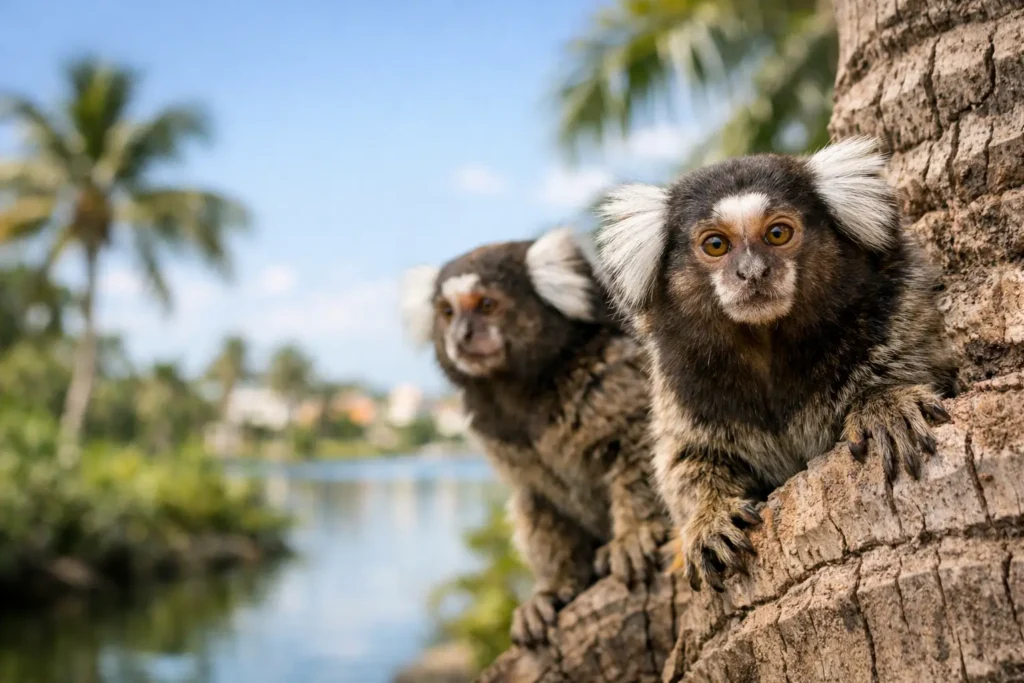
A marmoset’s tiny hands, bright eyes, and affectionate nature can make it easy to picture one curled up on your shoulder. But marmoset monkeys in Florida are not a casual exotic-pet choice. They are highly social, intelligent primates whose needs shape your home, schedule, budget, and travel plans for years to come.
For the right household, a hand-raised marmoset can become a deeply engaging companion. The decision deserves the same care you would give any long-term family commitment, with special attention to Florida regulations, specialized veterinary access, secure housing, and daily enrichment.
What Florida Ownership Really Requires
Florida has a long history with exotic-animal ownership, but that does not mean every resident can simply bring home a marmoset without preparation. Wildlife rules can differ at the state, county, and city level. A species that may be allowed under one set of rules can still face local restrictions, zoning limitations, registration requirements, or enclosure standards where you live.
Before choosing a baby marmoset, contact the appropriate Florida wildlife agency and your local animal-control or zoning office. Ask specifically about common marmosets, privately owned primates, required records, housing expectations, and whether your neighborhood or homeowners association has restrictions. Keep written copies of the guidance you receive. Regulations can change, and clear documentation is part of responsible ownership.
Legal ownership is only the first checkpoint. A responsible placement process should also confirm that you have an appropriate home environment, dependable exotic-animal veterinary care, and the financial capacity to provide lifelong support. A marmoset should never be purchased on the assumption that paperwork and care arrangements can be figured out later.
Why Marmosets Need a Different Kind of Home
Marmosets are small, but their care needs are not. These active New World primates climb, investigate, vocalize, and seek interaction throughout the day. A cage that looks large compared with the animal is not automatically an adequate habitat. They need room to move vertically, safely positioned branches and platforms, species-appropriate resting areas, and environmental variety that encourages natural behaviors.
A well-prepared enclosure should be secure, easy to sanitize, protected from weather extremes, and located where the marmoset can be part of household life without being overwhelmed by it. Florida heat, humidity, storms, and hurricane planning all matter. Outdoor time may be appropriate only when conditions, safety, supervision, and enclosure design support it. A marmoset should never be left exposed to direct heat, predators, escape risks, or unfamiliar animals.
Inside the home, think beyond the primary enclosure. You will need a safe routine for supervised interaction, cleaning, feeding, and transport to veterinary appointments. Windows, ceiling fans, toxic plants, open doors, other pets, small children, and unattended food can all create risks. Preparation means building habits around prevention, not reacting after an accident.
Enrichment Is a Daily Responsibility
Marmosets do not thrive on affection alone. They require mental activity, foraging opportunities, climbing structures, varied safe objects, and predictable interaction. Enrichment is not a decorative extra added when time allows. It is part of daily care and helps prevent boredom-related stress and unwanted behaviors.
The best routines balance consistency with novelty. Feeding can include safe foraging activities. Perches and climbing routes can be refreshed. Training can reinforce cooperation with handling, carrier time, and basic health checks. Gentle, respectful interaction builds trust, while forcing contact can damage it.
The Veterinary Plan Must Come First
Finding experienced veterinary care is one of the most important steps for prospective marmoset owners in Florida. Not every small-animal clinic treats primates, and not every exotic veterinarian has the equipment or experience needed for a marmoset. Establish your relationship with a qualified veterinarian before your marmoset arrives, not when an urgent concern occurs.
Ask the practice whether it sees privately owned primates, how emergency calls are handled, and what records it will need from the breeder or prior caretaker. Plan for routine wellness exams, diagnostic testing when recommended, nutritional oversight, and prompt evaluation of changes in appetite, energy, stool, behavior, or breathing.
A marmoset can mask illness, as many prey species do. Small changes can matter. Owners who know their animal’s normal routines are better positioned to notice concerns early. This is one reason a detailed daily care routine is so valuable: it allows you to recognize what is truly different.
Diet Is Specialized, Not Improvised
A marmoset’s nutritional needs are more complex than offering fruit and household snacks. Inappropriate diets can contribute to serious health problems, including metabolic and bone-related concerns. Their feeding plan should be built around species-appropriate primate nutrition, with the exact portions and supplemental items guided by an experienced veterinarian and knowledgeable breeder.
Fresh foods may have a place in a balanced program, but “fresh” does not always mean “safe” or “complete.” Sugary treats, processed human foods, and random internet diet plans can create long-term problems. Clean water, careful food handling, and regular monitoring of body condition are equally important.
Expect feeding to take thought and time. It is also an opportunity for enrichment. Presenting appropriate foods in ways that encourage natural searching and handling can make daily care more engaging for your marmoset.
A Family Companion With Real Boundaries
Hand-raised marmosets can form close bonds with their caregivers. That closeness is meaningful, but it should not be confused with low-maintenance behavior. Marmosets communicate through vocalizations, body language, scent-related behaviors, and strong preferences. They may become distressed when routines abruptly change or when they are isolated for long periods.
Every household member should understand the care plan before a primate comes home. Decide who handles morning feeding, enclosure cleaning, enrichment, veterinary visits, and backup care during emergencies. Consider your work schedule, future moves, vacations, new babies, aging parents, and other changes that may affect the household.
Marmosets are not ideal for every home with children or other pets. Some families can create safe, calm systems with careful supervision and boundaries. In other situations, competing needs and unpredictable interactions make ownership unsuitable. Honest screening protects both the family and the animal.
The Cost of Responsible Marmoset Care
The purchase price is only one part of the commitment. Prospective owners should plan for a professionally designed enclosure, climate considerations, species-appropriate food, enrichment materials, veterinary exams, emergency treatment, transport equipment, cleaning supplies, and possible permit or compliance costs.
Emergency care deserves special consideration. Exotic veterinary treatment can be expensive, and the nearest qualified provider may not be minutes away. A dedicated emergency fund is a practical safeguard, not a luxury. The same is true of a reliable backup caregiver who has been introduced to your marmoset and trained on the household routine.
The right question is not simply, “Can I afford a marmoset today?” It is, “Can I provide excellent care through changing seasons of life?” A marmoset may live for well over a decade, so the commitment extends beyond an initial burst of excitement.
Choosing a Responsible Placement Partner
A reputable source should welcome thoughtful questions and take your questions seriously. You should expect clear information about the animal’s age, temperament, socialization, health history, feeding routine, and transition needs. A responsible breeder or placement professional should also discuss legal preparation, enclosure expectations, veterinary planning, and the realities of lifelong care.
At Premier Primates, the goal is not to rush a family into a decision. It is to help approved owners prepare for a safe, loving homecoming through careful screening, hand-raised socialization, veterinary-focused preparation, delivery coordination, and ongoing mentorship.
Be cautious of anyone who minimizes the work involved, promises that permits do not matter, or cannot provide meaningful guidance after the sale. The best placement experience begins with transparency and continues with support when real-life questions arise.
Preparing for the First Weeks at Home
The first days should be quiet and structured. Have the enclosure ready, supplies organized, veterinary contact information available, and household expectations established before arrival. Give your marmoset time to observe, settle, and build trust at its own pace.
Keep routines steady. Follow the feeding and care guidance provided for the animal’s transition, limit unnecessary visitors, and avoid introducing new animals or major changes right away. Your patience in these early weeks helps create the security that a social primate needs.
A marmoset can bring remarkable personality and connection into a prepared Florida home. Give that possibility the respect it deserves: verify the rules, build the right support system, and make each decision with the animal’s lifelong well-being at the center.