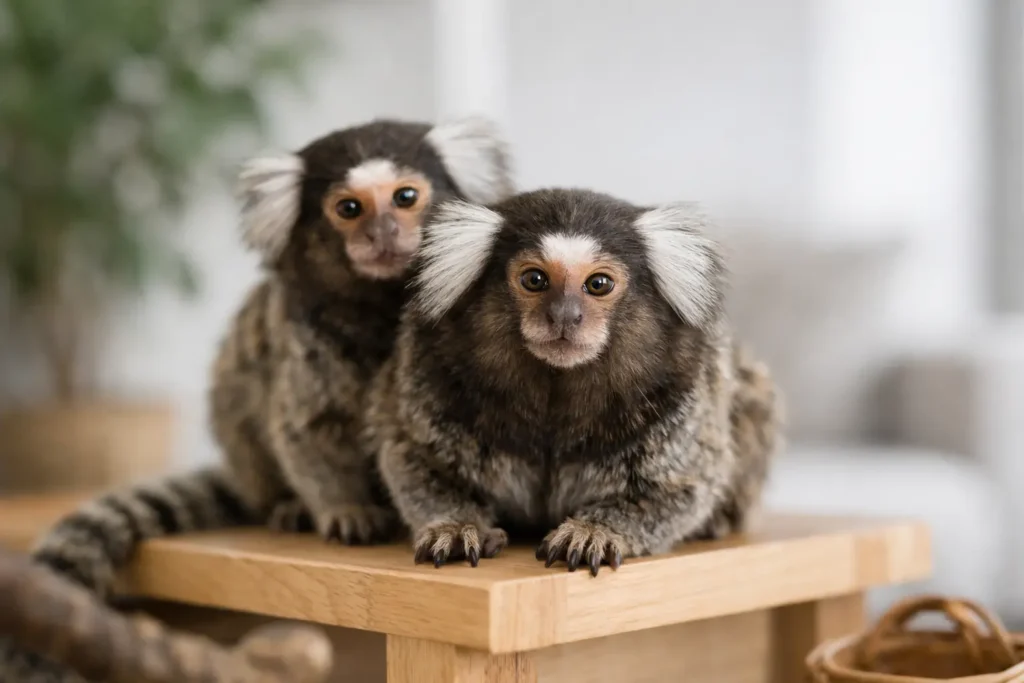
A search for marmoset monkeys for sale should lead to far more than a price, a photograph, and a quick decision. A marmoset is a bright, highly social little primate with daily needs that do not pause for weekends, travel, or changing routines. For the right approved home, a hand-raised infant can become a deeply engaging family companion. For an unprepared home, the same qualities that make marmosets extraordinary can become overwhelming.
That is why responsible placement begins before you choose an infant. It starts with an honest look at legality, household readiness, veterinary access, financial planning, and the time required to care for a primate raised to trust people.
What Responsible Marmoset Monkeys for Sale Should Include
A marmoset should never be treated like an ordinary pet purchase. Responsible breeders and placement programs evaluate prospective homes, discuss the animal’s individual personality, and help families understand what ownership will require over the years ahead.
The first question is not, “Which baby is available?” It is, “Can our household provide a stable, legal, enriched life for this animal?” Marmosets are sensitive to change and thrive on consistent interaction, gentle handling, appropriate nutrition, and a secure environment built around their natural behaviors.
A well-supported placement process should include clear information about the infant’s age, socialization, veterinary examination, and care expectations. It should also address health documentation, transport planning, enclosure preparation, and the realities of long-term ownership. A breeder’s role is not finished when an animal leaves the nursery. Ongoing guidance matters, especially during the adjustment period when new families are learning an individual marmoset’s habits and communication style.
At Premier Primates, approved families are guided through that preparation with a focus on responsible placement, legal readiness, and lifetime mentorship. The goal is a confident homecoming, not a rushed transaction.
Start With State and Local Ownership Rules
Before falling in love with a particular baby, verify whether private marmoset ownership is permitted where you live. Exotic-animal rules can differ by state, county, city, neighborhood association, and rental agreement. Some areas allow ownership with permits, inspections, records, or enclosure requirements. Others prohibit primates entirely.
Rules also change. A permit requirement that applied several years ago may not reflect current local regulations, and a state approval does not automatically override county or municipal restrictions. Responsible buyers confirm every applicable rule before placing a deposit or arranging delivery.
Permit research is not paperwork to handle at the end of the process. It shapes every other decision, including where the enclosure will be located, what documentation must be kept, whether inspections are required, and whether a particular property is suitable. Families should also consider what happens if they move. A legal arrangement in one location may not transfer to another.
Your Home Needs More Than a Cage
Marmosets are small, but their care footprint is not. A suitable habitat must be secure, cleanable, temperature-conscious, and designed to encourage climbing, movement, rest, and exploration. It should protect the marmoset from household hazards while allowing the animal to remain connected to daily family life in a safe, controlled way.
An enclosure is part of the home, not the entire home. Marmosets need supervised interaction, enrichment, and predictable routines outside of their primary habitat when appropriate. They are active, observant animals that can become stressed or frustrated when their environment lacks variety.
Before a baby arrives, families should have the enclosure assembled and tested, supplies organized, and a quiet transition area prepared. Consider the practical details: Who will clean and refresh the space each day? How will you manage children, visitors, other pets, loud appliances, and open doors? Is there a reliable plan during storms, power outages, or household repairs?
The best setup depends on your property, local rules, household activity, and the individual animal. What does not change is the need for safety, consistency, and enriching daily care.
Daily Care Is a Long-Term Family Commitment
Marmosets can form close bonds with their caregivers, which is one reason families are drawn to them. That bond also creates responsibility. A marmoset needs regular attention from people who understand that primate behavior is not the same as dog or cat behavior.
Diet is specialized and should be planned with knowledgeable veterinary input. Fresh foods, appropriate protein sources, species-appropriate nutrition, clean water, and feeding routines all matter. Infant care can be particularly demanding, with a schedule that requires close attention during the early transition into a new home.
Enrichment is equally essential. Climbing structures, safe branches, foraging opportunities, rotating activities, and positive interaction help support healthy behavior. Enrichment is not an occasional treat for a bored afternoon. It is part of everyday responsible care.
Families should talk openly about who will provide that care when work becomes busy, a caregiver is ill, or a vacation is planned. A marmoset cannot simply be boarded at a conventional kennel. You need qualified backup care from someone who understands primates and can follow the animal’s established routine.
Veterinary Planning Cannot Wait
Specialized veterinary access is one of the most overlooked parts of preparing for a primate. Before bringing a marmoset home, identify a veterinarian who is experienced with or willing and qualified to work with nonhuman primates. Ask about routine wellness visits, emergency protocols, diagnostic capabilities, and after-hours care.
A veterinary check before placement is valuable, but it is only the beginning. New owners need a relationship with a local professional who can help guide preventive care throughout the marmoset’s life. Keep health records organized, follow veterinary recommendations, and do not wait for a concern to become urgent before seeking help.
Financial readiness belongs in this conversation as well. The investment in a marmoset includes far more than the initial placement fee. Families should budget for habitat construction, nutritious food, enrichment, veterinary care, supplies, permits where applicable, transport, and unexpected needs. A realistic budget gives your companion the stable care it deserves.
Choosing the Right Placement Partner
When comparing marmoset monkeys for sale, look beyond polished photos and broad promises. Ask how infants are raised and socialized, what veterinary oversight is provided, what health-related assurances are explained in writing, and how the breeder screens prospective homes.
You should also ask what support is available after homecoming. A trustworthy placement partner welcomes thoughtful questions about feeding, behavior, adjustment, habitat preparation, and the normal learning curve of bringing home a young primate. If someone pressures you to skip legal verification, dismisses the need for a specialized veterinarian, or treats the process as a simple shipment, consider that a serious warning sign.
A responsible breeder may ask difficult questions about your home, work schedule, experience, finances, and local regulations. That is not an obstacle to ownership. It is a sign that the animal’s welfare is being treated with the care it deserves.
A Decision That Deserves Time
The right marmoset home is built on patience. Take time to confirm the law, prepare the habitat, establish veterinary care, and talk as a household about the daily commitment ahead. The most rewarding primate relationships begin with families who understand that love is shown through preparation, consistency, and responsible choices.
When your home is truly ready, welcoming a hand-raised marmoset can be the beginning of an extraordinary relationship – one supported by thoughtful care from the very first day.