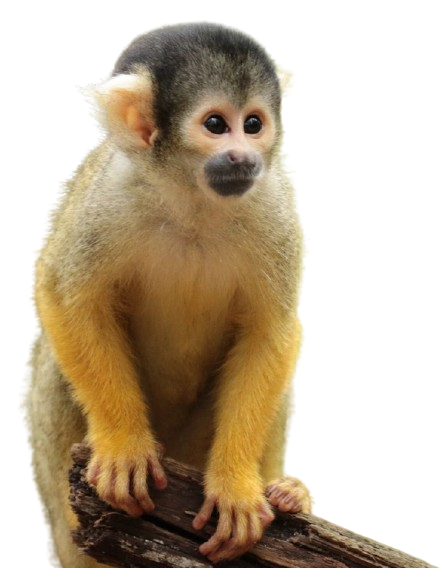
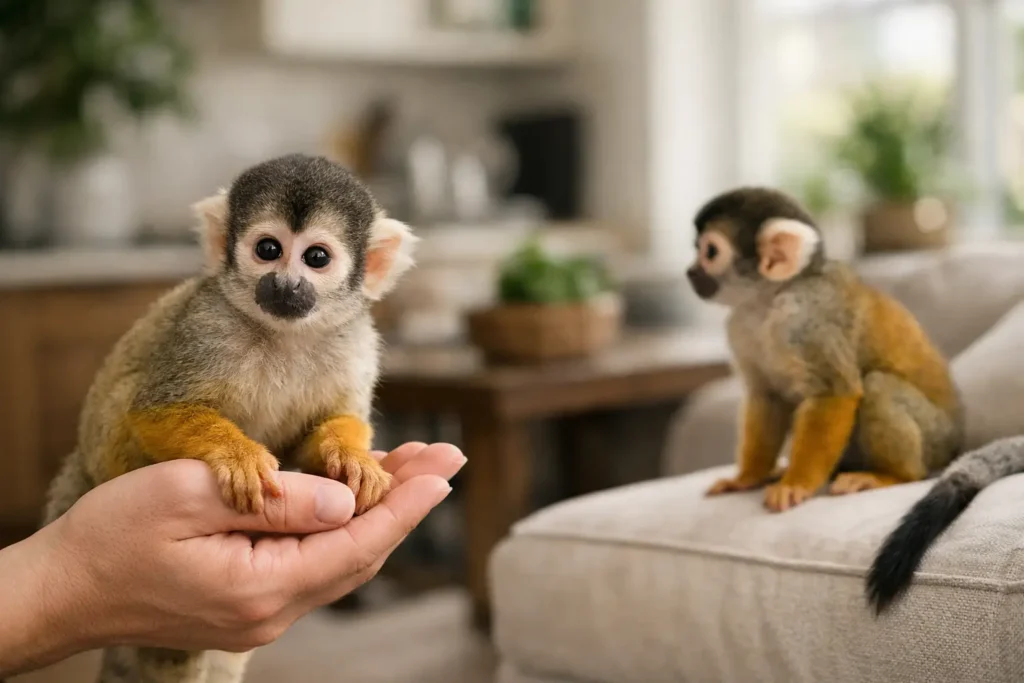
A baby squirrel monkey may fit in your hands, but the decision to welcome one home should never be small. Hand-raised squirrel monkeys are known for their bright expressions, lively curiosity, and strong interest in human interaction. They can become deeply engaging companions in the right setting, yet they remain intelligent, active primates with needs far beyond those of a typical household pet.
For a prepared owner, the reward is a relationship built through daily care, trust, enrichment, and consistency. For an unprepared owner, even the sweetest infant can become overwhelmed by an environment that does not meet its social, medical, and behavioral needs. The best homecoming begins well before a monkey arrives.
What Hand-Raised Really Means
A hand-raised squirrel monkey has received close, structured human interaction during its earliest stage of life. This early handling can help an infant become accustomed to people, routine care, gentle touch, feeding schedules, and the sights and sounds of a home environment. It is one reason many prospective owners seek a nursery-raised baby rather than an animal without a known socialization history.
Still, hand-raised does not mean domesticated. A squirrel monkey is not a small dog, a child substitute, or a companion that can be left to entertain itself. Natural primate behaviors such as climbing, vocalizing, scent-related behaviors, testing boundaries, and seeking constant stimulation are part of the package. Early socialization gives an owner a stronger starting point, but lifelong care and respectful handling shape the relationship over time.
The individual matters, too. Personality can vary widely. One infant may be bold and eager to investigate every new object, while another may be gentler, more observant, or slower to accept unfamiliar routines. A responsible placement process considers temperament alongside age, health status, household experience, and the environment being prepared.
The Home Must Be Ready Before the Monkey
Squirrel monkeys are quick, agile, and intensely curious. A spare bedroom, basic cage, or occasional supervised time outside is not enough for a long-term setup. They need a secure primary enclosure designed to support movement, climbing, rest, feeding, and safe daily management.
A well-planned habitat includes ample vertical space, secure materials, climbing structures, resting platforms, protected feeding areas, and enrichment that can be rotated frequently. Locks and latches must be dependable. Doors, windows, vents, cords, medications, cleaning products, and small swallowable objects all need careful attention outside the enclosure as well.
The enclosure is not a punishment space. It should be the monkey’s safe base: a predictable place to sleep, eat, explore, and settle. Owners should also plan for supervised interaction in a primate-safe area where the animal can engage with people and enrichment without access to household hazards.
Noise and routine deserve consideration. Squirrel monkeys can be vocal, particularly when excited, seeking attention, or reacting to changes around them. A home with constant visitors, frequent travel, unpredictable activity, or neighbors who may object to animal sounds may not be the best fit. The right environment is calm, secure, and able to accommodate care routines every day of the year.
Enrichment Is Daily Care, Not an Extra
A bright primate needs reasons to think, climb, search, manipulate, and engage. Enrichment may include safe climbing elements, foraging opportunities, approved toys, changes in texture and layout, and supervised interaction. The goal is not to fill the enclosure with items. It is to create variety without creating stress or safety risks.
An owner should expect to clean, refresh, and observe the environment daily. Behavioral changes often offer early clues that something needs attention, whether it is boredom, a routine disruption, illness, or an issue with the enclosure itself.
Legal Preparation Comes First
Private ownership rules for primates differ dramatically across the United States. A monkey may be permitted in one location, restricted in the next county, or prohibited by city ordinance, zoning rules, homeowner association policies, or state law. Some areas require permits, inspections, specific enclosure standards, proof of veterinary care, or other documentation.
This is why legal research must happen before a deposit, travel plan, or enclosure purchase. A prospective owner should verify requirements at every level that applies to the property, including state, county, city, and neighborhood rules. Never assume that a nearby exotic-animal owner is operating under the same requirements.
Responsible breeders and placement teams can help approved buyers understand what questions to ask and what preparation may be required. Premier Primates approaches this step as part of responsible placement because a successful homecoming depends on legal readiness, not just enthusiasm.
Veterinary Care Needs a Real Plan
Finding qualified veterinary care for a primate can take more effort than finding care for a dog or cat. Before bringing home a squirrel monkey, identify a veterinarian experienced with primates or exotic animals, understand after-hours options, and establish a plan for transport if urgent care is needed.
Routine wellness exams, nutrition guidance, parasite prevention when appropriate, and careful monitoring are all part of responsible ownership. A young primate may appear energetic even when subtle changes are developing, so owners need to pay attention to appetite, stool, activity level, hydration, coat condition, and behavior.
Health records and veterinary examination information matter when selecting an infant. They provide important context, but they do not replace the owner’s future responsibility. Ongoing care, a trusted veterinarian, and prompt attention to changes are what protect a monkey’s welfare over the years ahead.
Feeding a Squirrel Monkey Is Specialized Work
A squirrel monkey’s diet should be guided by qualified veterinary advice and species-appropriate feeding practices, not internet trends or table scraps. These small primates need balanced nutrition, safe food preparation, reliable access to fresh water, and feeding routines that support both health and natural foraging behavior.
Diet also has a behavioral role. Thoughtful feeding can create opportunities for enrichment and problem-solving. At the same time, owners must avoid turning food into a source of overfeeding, poor habits, or constant demands for treats. Consistency matters more than novelty for novelty’s sake.
This is one area where an owner should be ready to learn. A responsible care program evolves with the animal’s age, health, activity level, and veterinary recommendations. The willingness to follow professional guidance is essential.
The Commitment Extends Well Beyond the Baby Stage
Baby squirrel monkeys are captivating, and their early bond with caregivers can feel immediate. But infants grow into adults with stronger preferences, more physical ability, and ongoing social needs. The novelty of the first few months cannot be the reason for ownership.
Prospective owners should honestly evaluate their work schedule, travel habits, family plans, budget, housing stability, and ability to provide daily attention over the long term. They should also consider who will provide trained care during emergencies, vacations, illness, or unexpected life changes. A backup plan is an act of care, not pessimism.
Financial readiness matters as well. The cost of ownership extends beyond initial placement. Secure housing, enrichment, quality nutrition, veterinary care, permits where required, and transportation planning all require continued investment. Cutting corners on any of these areas can compromise both safety and quality of life.
Is Your Household a Good Match?
The strongest candidates are patient, well-prepared adults who understand that a primate’s needs will shape their daily routine. They have the space for a compliant enclosure, the resources for specialized care, a clear legal path, and the willingness to keep learning. They are looking for a lifelong companion, not an unusual photo opportunity.
It also depends on the household. Young children, other animals, frequent guests, and demanding work schedules are not automatic disqualifiers, but they require careful planning. A placement conversation should be candid about the realities of the home, because the right match protects both the family and the monkey.
A hand-raised squirrel monkey can bring remarkable personality and connection into a prepared home. Start with the hard questions, build the right support system, and let readiness – not impulse – guide the moment you welcome a new family member home.