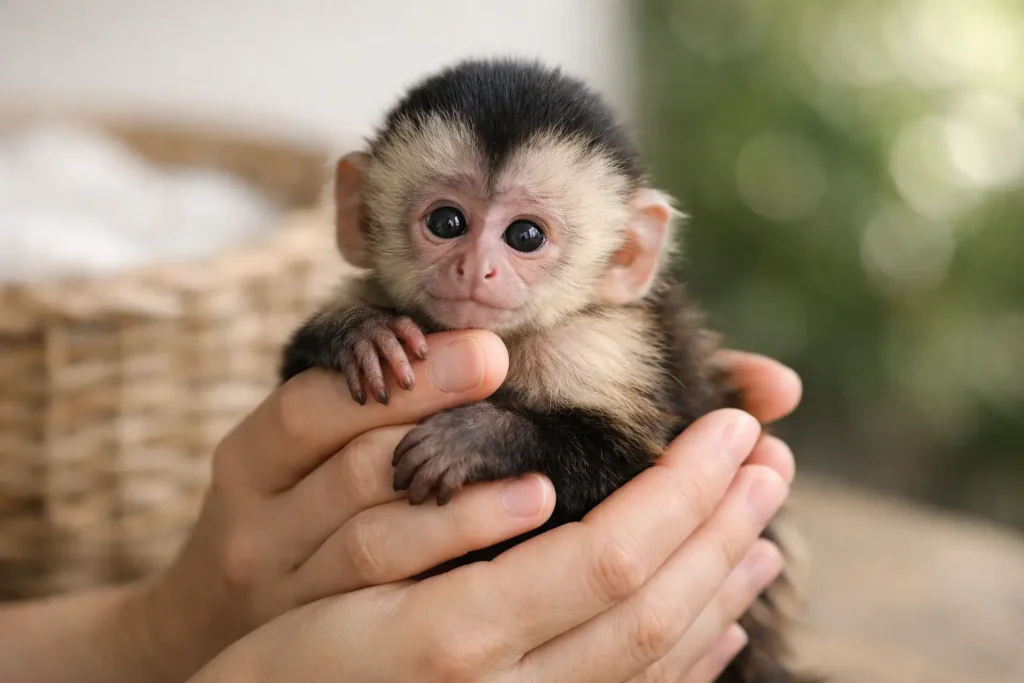
A baby capuchin can fit in your hands, but the decision to explore baby capuchin monkeys for sale should never be made on appearance alone. These bright, expressive infants form powerful bonds, need daily engagement, and grow into capable, long-lived primates with complex emotional and physical needs. The right home is not simply one that adores monkeys. It is one prepared to build an entire care plan around one.
For the approved owner, a hand-raised capuchin can become an extraordinary companion and a beloved member of the family. That relationship starts with honest preparation, careful screening, and a commitment that lasts long after the excitement of homecoming.
Baby Capuchin Monkeys for Sale Begin With Readiness
Capuchins are highly intelligent New World monkeys. Their curiosity, dexterity, and social awareness make them deeply engaging, but those same traits make casual ownership a poor fit. They need far more than food, affection, and a cage in the corner of the home.
Before applying for an infant, consider your household’s schedule, privacy, space, finances, and ability to adapt over time. A capuchin’s care is active every day. Meals must be prepared thoughtfully, living spaces cleaned, enrichment rotated, behavior observed, and social needs addressed. This is not an animal that can be left alone for long workdays or treated as a novelty for visitors.
A responsible placement conversation should also include the people who share your home. Everyone must understand the rules around handling, routines, sanitation, supervision, and guest access. Children, other pets, frequent travel, and major life changes can all affect whether a primate placement is appropriate.
Legal Ownership Comes Before a Deposit
Private primate ownership is regulated differently across the United States. Some states allow capuchin ownership with permits or specific facility standards. Others prohibit it outright. County, city, zoning, and homeowners association rules may add another layer, even when state law permits ownership.
Confirm every applicable requirement before moving forward. Do not rely on a social media post, a neighbor’s experience, or an outdated online answer. Regulations change, and local restrictions can be more limiting than state-level rules.
Depending on where you live, preparation may include obtaining a permit, submitting enclosure details, documenting veterinary arrangements, carrying liability insurance, or allowing an inspection. Responsible breeders and placement professionals can provide permit-research guidance, but the future owner is ultimately responsible for remaining compliant.
Legal approval is not paperwork to handle later. It is the foundation of a secure, permanent home. If your location cannot support lawful ownership, the kindest choice is to pause before becoming attached to a particular infant.
The Home Must Be Built for a Primate
A capuchin needs a secure, spacious, species-appropriate environment designed around safety and enrichment. A standard pet cage is not enough for an intelligent, agile primate who climbs, manipulates objects, and investigates every latch, gap, and loose item within reach.
Your enclosure plan should account for durable materials, secure locks, climbing opportunities, resting areas, feeding stations, and protection from weather when an outdoor component is used. The design should also make daily cleaning practical. A clean, organized habitat supports health while reducing stress for both the animal and caregiver.
Inside the home, primate-proofing is equally serious. Capuchins can open cabinets, pull cords, grab small objects, and reach areas most people assume are inaccessible. Medications, cleaning supplies, sharp items, electronics, food storage, and breakables must be managed deliberately. Supervised time outside the enclosure can be enriching, but it is not a substitute for a safe primary habitat.
Enrichment is part of the environment, not an occasional treat. Foraging opportunities, climbing structures, varied textures, puzzle feeders, and carefully selected toys encourage natural movement and problem-solving. Because capuchins are so perceptive, enrichment should be refreshed regularly rather than left unchanged for months.
Veterinary Care and Nutrition Are Ongoing Commitments
Before bringing an infant home, identify a veterinarian experienced with nonhuman primates and confirm how emergency care will be handled. A general small-animal clinic may be wonderful for dogs and cats yet not have the specialized knowledge, equipment, or willingness required for primate medicine.
Routine wellness exams, diagnostic testing when needed, preventive care, and prompt attention to changes in appetite, energy, stool, skin, or behavior are all part of responsible ownership. Establishing that veterinary relationship early is far easier than searching for help during an urgent situation.
Nutrition also requires consistency and education. Capuchins need a balanced diet developed for their species and life stage, supported by appropriate produce and feeding routines under qualified guidance. Treats should never become the main source of calories simply because a monkey enjoys them. Poor nutrition can create health concerns that are difficult and expensive to correct.
When evaluating a placement program, ask direct questions about veterinary examinations, health records, genetic-condition guarantees, weaning status, diet, and transition guidance. Clear answers help you understand not only the infant’s early care, but also the standard of care you will be expected to continue.
Choose a Relationship, Not a Transaction
The phrase “for sale” can make a life-changing decision sound simple. It is not. An ethical placement process should feel more like a partnership than a checkout page. The breeder or placement team should want to know about your experience, household, location, enclosure plans, veterinary access, and reasons for seeking a capuchin.
Individual temperament matters, especially with hand-raised infants. Some babies are especially bold and busy, while others may be more observant or comfort-seeking. Early human interaction can help an infant transition to an approved home, but it does not remove the need for patient, consistent care as the animal matures.
At Premier Primates, the goal is to help qualified owners prepare for the full journey through socialization, veterinary oversight, delivery coordination, and continued mentorship after placement. That level of support matters because questions do not end when your capuchin arrives. They often begin there.
Be cautious of any seller who pressures you to pay quickly, cannot discuss legal requirements, avoids questions about health history, or treats shipping as an afterthought. Safe, humane transport and a calm homecoming plan are essential for a young primate. The process should be organized, transparent, and centered on the animal’s welfare.
Plan for the Adult Capuchin, Too
A baby is only a baby for a short period. Capuchins may live for decades in human care, and their needs evolve as they grow. Strength, confidence, curiosity, and boundaries all change with maturity. The household that works for an infant must also be able to support an adult primate with a larger presence and an equally strong need for structure.
This is why experienced owners build a long-term plan before placement. Consider future housing changes, career demands, retirement, travel, caregiver backup, veterinary costs, enclosure maintenance, and who could responsibly assist if an emergency affects your ability to provide care. A primate should never be left without a secure plan because circumstances changed unexpectedly.
Financial preparation deserves the same candor. The initial placement cost is only one part of ownership. Permits, habitat construction, food, enrichment, veterinary care, insurance where applicable, transport, and ongoing supplies all require dependable resources. If the budget only works under ideal conditions, it is worth waiting.
A Thoughtful Homecoming Starts Long Before Delivery
The most successful capuchin homecomings are quiet, prepared, and unrushed. Have the enclosure finished, supplies in place, veterinary contacts confirmed, and household expectations established before delivery day. Limit commotion and allow the infant time to observe, settle, and learn the new rhythm of the home.
Welcoming a capuchin into your family is a rare privilege. Give that promise the preparation it deserves, and you create the kind of stable, loving foundation where a remarkable companion can truly thrive.