Bringing home a hand-raised baby primate is not a casual purchase. It is the beginning of a long-term relationship with an intelligent, highly social animal whose well-being depends on careful preparation. A meaningful primate health guarantee gives approved owners confidence that their baby has received appropriate early care, while also making clear where the breeder’s responsibility ends and the owner’s lifelong commitment begins.
For a prospective Capuchin, Marmoset, or Squirrel monkey owner, the strongest guarantee is not simply a reassuring sentence on a website. It is a documented process: veterinary attention before placement, honest disclosure, clear terms, and support when questions arise after homecoming. That level of clarity protects the baby primate and helps families make this serious decision with open eyes.
A Health Guarantee Starts Before Homecoming
A health guarantee should reflect the care a primate receives from its earliest days in the nursery. Early socialization, appropriate nutrition, clean housing, enrichment, and consistent human interaction all matter. A baby may appear bright and affectionate during a visit or video call, but responsible placement involves much more than a momentary impression.
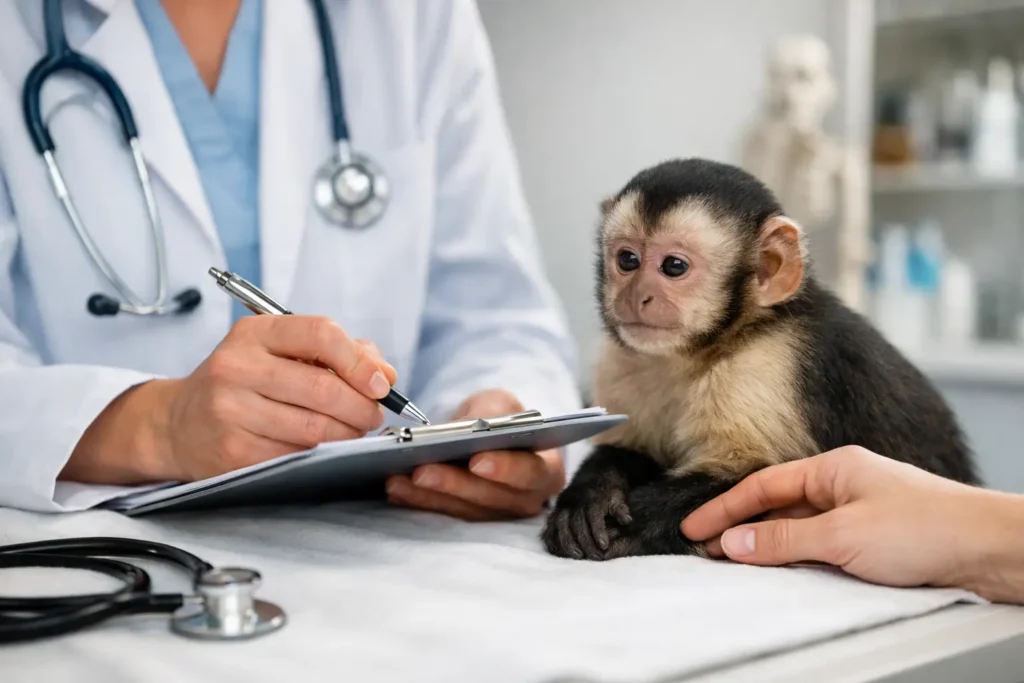
Before a primate leaves for its new home, a veterinary examination is a central part of responsible preparation. The exam helps establish the animal’s condition at the time of placement and provides a baseline for the new owner’s veterinary records. Ask how recently the exam occurred, what records will be provided, and whether the veterinarian has experience with nonhuman primates or exotic species.
A good program should also be willing to discuss the animal as an individual. Temperament, age, feeding routine, socialization progress, and daily care needs can affect how a baby adjusts to a new environment. No ethical breeder can promise that a living, growing primate will behave exactly the same way in every household. They can, however, offer honest insight based on the baby they have raised and observed.
What a Primate Health Guarantee Should Address
The written terms matter. A guarantee should be easy to review before a deposit or final payment, not introduced as an afterthought during delivery. Every breeder’s terms may differ, so buyers should read the actual agreement carefully and ask for clarification in writing when something is unclear.
Most health-related guarantees should address the primate’s condition at placement, the veterinary examination or health documentation provided, and any stated protections related to congenital or genetic conditions. It should also explain the time frame in which an owner must report a concern and what documentation is required if a veterinarian identifies a qualifying issue.
The remedy is equally important. Depending on the agreement and circumstances, a remedy may involve consultation, records review, a replacement option, credit, or another defined resolution. The exact outcome depends on the written contract, veterinary findings, and the welfare needs of the animal. Responsible buyers should be cautious of vague promises such as “perfect health guaranteed” with no dates, documentation requirements, or explanation of what happens if a problem is discovered.
A clear agreement also protects the breeder from claims caused by events outside its control after placement. Travel stress, a sudden household change, exposure to other animals, inappropriate diet, delayed veterinary attention, or an unsafe enclosure can all affect a young primate’s health. That is not a loophole. It is a practical recognition that good outcomes require a committed partnership between the placement program and the new family.
Genetic and Congenital Condition Terms
When a breeder references genetic-condition coverage, ask what that phrase means under the agreement. A genetic or congenital condition is not the same as every illness that may occur during an animal’s lifetime. Primates, like all animals, can develop health concerns despite excellent breeding, careful nursery practices, and attentive ownership.
The most useful terms identify the covered category of condition, the applicable period, the diagnostic evidence needed, and the process for notifying the breeder. Owners should understand that confirmation may require records from a qualified veterinarian and, in some cases, additional testing or specialist input. Clear documentation serves everyone involved, especially the primate.
Your Role in Protecting a Healthy Transition
A guarantee is only one part of a healthy homecoming. The first days and weeks in a new household can be a significant adjustment for a baby primate. Your preparation should be complete before transport is scheduled, not assembled after the animal arrives.
Start by identifying an exotic or primate-experienced veterinarian within reasonable travel distance. Confirm office hours, emergency options, appointment availability, and what records the practice needs before the first visit. Specialized veterinary access can vary greatly by region, so this step deserves attention early in the application process.
Your enclosure and indoor living space should also be ready. A primate needs secure housing, appropriate temperature conditions, safe climbing and enrichment opportunities, and a daily routine that supports healthy development. An enclosure is not simply a place to contain an animal. It is a core part of its physical and emotional care.
Follow the feeding and transition guidance supplied for your specific baby. Abrupt diet changes can be hard on young animals, even when the replacement food seems high quality. Keep fresh water available, use the recommended schedule, and ask questions before changing foods, supplements, or routines.
Finally, give your new companion time to settle. A baby primate may need calm, consistency, and patient interaction while it learns the rhythms of its new family. Limiting overwhelming visitors and maintaining a predictable routine can support a smoother adjustment.
Questions to Ask Before You Commit
The right breeder should welcome thoughtful questions. If you are comparing placement options, ask when the primate was last examined, what health records accompany the baby, and whether the health guarantee is available for review before you proceed. Ask how concerns are handled after delivery and who you can contact for guidance during the transition.
It is also wise to ask about transport planning. Safe delivery is more than moving an animal from one location to another. It requires timing, communication, appropriate travel arrangements, and a receiving household that is fully prepared. A health guarantee may include conditions related to transport and immediate post-arrival care, so review those details before scheduling.
Permit and ownership requirements belong in the same conversation. State, county, and city regulations can differ, and legal eligibility is the owner’s responsibility. A knowledgeable placement team can help you research the process and understand typical requirements, but no health promise can make an unprepared or noncompliant home suitable for a primate.
Why Support Matters After the Paperwork
The best placement experience does not end when the agreement is signed. New owners often have practical questions about bonding, routines, enrichment, feeding habits, or how to recognize when behavior calls for veterinary advice. Ongoing mentorship can make the transition feel less isolating and help owners respond thoughtfully rather than reactively.
At Premier Primates, we believe a baby primate should be raised with love and placed with families prepared to honor the commitment ahead. Health-related assurances, veterinary oversight, and careful screening are part of that standard, but they are not a substitute for daily responsible care. A primate becomes part of your family, and its needs will continue to evolve over many years.
Read every guarantee carefully, prepare your home and veterinary plan early, and choose a placement partner who is ready to have the honest conversations. That preparation gives your new companion the calm, capable welcome it deserves.