A capuchin will not fit into your life the way a typical pet does. This bright, expressive primate notices routines, reads your attention, needs meaningful engagement, and forms bonds that can shape every day for years. If you are researching how to buy capuchin monkeys, the right first question is not simply which baby is available. It is whether your home, schedule, resources, and local regulations can support a lifelong companion with highly specialized needs.
For the right approved household, a hand-raised capuchin can be an extraordinary family member. The path to that homecoming, however, should be thoughtful, legal, and carefully prepared from the start.
Before You Buy Capuchin Monkeys, Confirm What Is Legal
Capuchin ownership is regulated differently across the United States. Some states allow private ownership with permits, inspections, or registration. Others prohibit primates outright, and city or county rules can be stricter than state law. Homeowners associations, zoning ordinances, and rental agreements can also create restrictions that deserve attention before you make plans.
Do not assume a permit is a formality or that a rule in a neighboring county applies to your address. Responsible ownership begins with researching the requirements that apply where the animal will actually live. You may need to show proof of a suitable enclosure, veterinary arrangements, experience, liability coverage, or other documentation. Regulations can change, so verify current requirements directly with the appropriate local and state authorities.
A responsible breeder or placement team can help you understand the questions to ask and the documentation commonly requested. Still, legal compliance is ultimately the owner’s responsibility. Bringing a capuchin home before approval is in place risks the animal’s stability as well as your investment and peace of mind.
Choose the Right Placement, Not Just a Baby Monkey
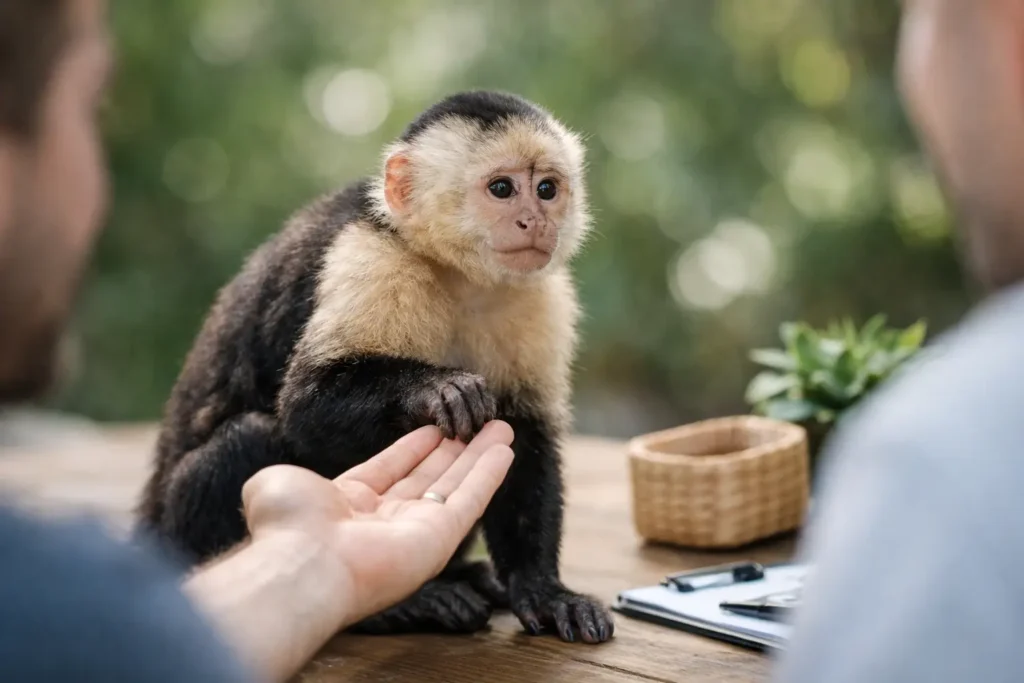
When people picture a capuchin, they often picture the charming infant phase: tiny hands, curious eyes, and an intense desire to be close to people. That connection matters. Early handling and consistent nursery interaction can help a young primate become comfortable with human care, transitions, and the routines of a prepared home.
But personality matters just as much as appearance. One infant may be especially bold and playful, while another is more observant or affectionate. A reputable placement process should discuss an individual animal’s age, temperament, socialization history, diet, veterinary status, and daily care needs honestly. This gives a prospective owner a clearer sense of the relationship they are preparing for.
It is also wise to ask how the animal has been raised, what veterinary examinations have been completed, and what health-related protections are offered in writing. Ethical breeders prioritize animal welfare, screening, and appropriate placement over rushing a sale. At Premier Primates, that concierge approach is designed to help approved families prepare before a baby is matched and transported.
Questions Worth Asking a Breeder
A serious conversation should cover more than price and availability. Ask about the capuchin’s current feeding routine, developmental stage, medical records, socialization practices, transport plan, and the support available after placement. Clarify exactly what is included, what preparations must be complete before delivery, and what happens if a legal or logistical issue delays the homecoming.
You should also ask direct questions about the long-term reality of ownership. Capuchins are intelligent, socially complex animals. They need structure, patient handling, enrichment, and care from people who understand that their needs will evolve as they mature. A trustworthy professional will welcome those questions rather than promise an effortless exotic pet experience.
Build a Home Around Capuchin Care
A capuchin needs more than a large cage placed in a spare room. Safe housing requires secure, species-appropriate space with room for climbing, resting, moving, and engaging with changing enrichment. The enclosure must be designed to prevent escape and protect the animal from household hazards, weather extremes, other pets, and unauthorized access.
The best setup also supports a full daily routine. Capuchins benefit from supervised interaction, foraging opportunities, climbing structures, puzzle-based enrichment, and quiet time. Their environment cannot stay static. Rotating safe activities and thoughtfully changing the space helps keep an active mind occupied while reducing boredom-related stress and destructive behavior.
Your household should have a clear plan for cleaning, feeding, handling, visitor boundaries, travel, emergency care, and periods when work or family obligations become demanding. A capuchin may become deeply attached to its caregivers, but attachment is not the same as low maintenance. These animals require daily attention and dependable consistency.
Plan for the Real Cost of Lifelong Ownership
The purchase price is only one part of preparing for a capuchin. Prospective owners should budget for a compliant enclosure, enrichment materials, species-appropriate nutrition, routine veterinary care, diagnostic testing when needed, permit-related expenses, insurance where applicable, and secure transport. Emergency veterinary needs can be significant, particularly because qualified exotic-animal care is not available in every community.
Before committing, identify a veterinarian experienced with nonhuman primates or exotic animals and ask about after-hours options. Distance matters in an emergency. If the nearest qualified provider is several hours away, your household needs a realistic transportation and contingency plan.
Long-term finances matter, too. Capuchins can live for decades with proper care, which means this decision should account for future moves, career changes, family changes, and estate planning. The right owner is not simply able to afford an animal today. They are prepared to protect its care through the unexpected seasons of life.
Understand the Commitment as Your Capuchin Grows
A capuchin is not an infant forever. As maturity approaches, behavior, boundaries, strength, and social needs can change. Even a well-socialized primate may test limits, become territorial, or require adjustments to handling and household routines. This is why early education, careful expectations, and ongoing access to knowledgeable guidance are so valuable.
Responsible ownership means respecting the animal for what it is: a primate with instincts, intelligence, and needs that cannot be treated like a novelty. It may not be appropriate to bring a capuchin into homes with unpredictable schedules, frequent unfamiliar visitors, unsafe animal interactions, or caregivers who cannot maintain consistent rules. Being honest about fit is an act of care, not a missed opportunity.
Families should also decide who will be responsible for daily care if the primary owner is unavailable. A backup caregiver needs more than affection for animals. They need training, legal clearance where required, and a genuine understanding of the capuchin’s routine and behavior.
A Better Way to Prepare for Homecoming
The strongest placements are built in stages: confirm legality, evaluate your readiness, prepare the enclosure, establish veterinary support, complete screening, and coordinate a safe delivery. This process can feel detailed because it is detailed. Each step exists to reduce avoidable stress for both the new owner and the young primate.
As you prepare, focus on the life you can offer after the excitement of homecoming settles. Can you provide consistent companionship, a secure environment, qualified medical care, meaningful enrichment, and patient guidance for the long term? If the answer is yes, you are not just preparing to purchase an unusual animal. You are preparing to welcome a remarkable companion into a safe, committed family life.