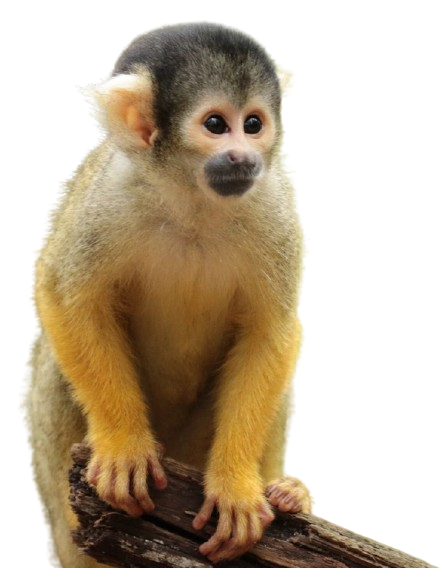
A squirrel monkey’s bright eyes, quick hands, and affectionate interest in people can make one unforgettable. But seeing squirrel monkeys in Florida, whether in a professional animal setting or through a local sighting, is very different from being prepared to welcome one into your home. This is a highly social, intelligent primate with daily needs that cannot be met by affection alone.
For the right household, thoughtful primate ownership can be deeply rewarding. It also requires legal preparation, specialized housing, access to qualified veterinary care, and a long-term plan that puts the animal’s welfare first. The best time to ask hard questions is before you fall in love with an individual infant.
Are Squirrel Monkeys Native to Florida?
Squirrel monkeys are native to parts of Central and South America, not Florida. Florida’s warm climate can lead people to assume that any monkey they see outdoors belongs there naturally. That is not necessarily the case. A monkey seen outside may be part of a managed animal facility, an escaped animal, or a population with a complicated history.
Never approach, feed, or attempt to capture a monkey you see outdoors. Even a small primate can bite when frightened, and human contact can create serious safety and disease concerns for both the person and the animal. Report the sighting to the appropriate local animal-control or wildlife authority and give responders space to handle the situation.
For prospective owners, the more relevant question is not whether Florida’s weather suits a squirrel monkey. It is whether your property, local rules, daily schedule, and resources can support a captive primate responsibly for years to come.
Florida Rules Come Before a Deposit
Florida has a reputation for exotic-animal ownership, but that reputation can create a dangerous misunderstanding: legal in one setting does not automatically mean legal for every private home. State-level rules, permit classifications, county ordinances, municipal zoning, homeowners association restrictions, and landlord policies may all affect whether you can keep a squirrel monkey.
Requirements can change, and local rules may be more restrictive than state rules. Start with the agencies responsible for wildlife and animal regulations where you live, then verify zoning and neighborhood restrictions in writing. If a permit, inspection, recordkeeping requirement, or enclosure standard applies, complete those steps before arranging placement.
A responsible breeder or placement partner should encourage this process, not rush you past it. Legal preparation protects you, your community, and the monkey. It also prevents the heartbreaking situation in which a family bonds with an infant before learning that ownership is prohibited at their address.
Questions to resolve early
Before moving forward, be ready to answer a few practical questions: Is private ownership permitted at your exact address? Does the rule change if you move? Is there a required permit, inspection, or proof of experience? Are there minimum enclosure, insurance, veterinary, or transport requirements?
Keep copies of approvals and any required records in a secure location. Regulations are only one part of responsible ownership, but they are the first gate to clear.
A Florida Backyard Is Not an Enclosure
Florida sunshine may offer opportunities for supervised outdoor time, but it does not replace a purpose-built primate enclosure. Squirrel monkeys need secure, spacious housing that protects them from escape, weather, predators, insects, and unauthorized contact. They also need a comfortable indoor area for nighttime, severe weather, temperature changes, and recovery when ill.
An appropriate environment is designed around movement and choice. Squirrel monkeys climb, leap, investigate, and manipulate objects throughout the day. Their space should provide secure vertical areas, sturdy branches or climbing structures, resting places, shifting enrichment, and zones where they can move away from activity when they need quiet.
Florida adds its own planning challenges. Heat, humidity, heavy rain, hurricane conditions, mosquitoes, and power interruptions all need to be part of the enclosure plan. A screened patio or decorative outdoor cage may look substantial but may not provide the security, weather protection, or controlled access a primate requires. Build for the animal’s full life, not just for the first months when an infant is small.
A written emergency plan matters, too. Know where the monkey will be housed during a storm, how you will maintain safe temperatures during an outage, which carrier is ready for evacuation, and who can assist if you are away.
The Daily Reality of Squirrel Monkey Care
Squirrel monkeys are not low-maintenance pets. They are active, observant animals that rely on routine, enrichment, and attentive caregiving. A hand-raised infant may enjoy close human interaction, but no monkey remains a baby forever. As the animal matures, behavior, boundaries, vocalization, and needs can change.
Daily care includes preparing an appropriate species-specific diet, cleaning and sanitizing living spaces, refreshing water, monitoring appetite and stool, offering enrichment, and spending meaningful time on positive interaction and training. Enrichment is not an occasional treat. It is a daily welfare need that helps encourage natural movement, problem-solving, and engagement.
Expect noise, mess, and unpredictability. Squirrel monkeys may vocalize loudly, throw or scatter food, and become distressed if routines shift abruptly. They can form strong attachments, yet they are still primates with instincts and communication styles that differ from a dog or cat. A household must be willing to adapt around the monkey, especially during adolescence and adulthood.
Children, frequent visitors, and other household pets require careful consideration. No primate should be treated as a party attraction or passed from person to person for entertainment. Calm, structured interaction and clear safety boundaries are far kinder than constant stimulation.
Veterinary Care Is a Non-Negotiable
Before bringing a squirrel monkey home, identify a veterinarian who is qualified and willing to provide primate care. Do not wait until an emergency to make that call. Exotic veterinary access can be limited, and travel to a specialist may be necessary depending on your area of Florida.
Plan financially for routine wellness visits, diagnostic testing, preventive care, emergency treatment, and safe transport. Ask practical questions ahead of time: Who handles after-hours emergencies? How far is the clinic? What happens if your regular veterinarian is unavailable? A realistic care budget includes more than food and an enclosure.
A healthy start matters as well. Ask clear questions about veterinary examinations, health documentation, genetic-condition guarantees where offered, feeding history, socialization, and the animal’s individual temperament. Trustworthy placement is built on transparency, not vague promises.
Choosing the Right Ownership Path
The most successful placements begin with an honest match between a particular animal and a prepared household. An infant’s personality, age, confidence, and handling history matter. So do your experience level, work schedule, ability to maintain a stable routine, and willingness to learn for the life of the animal.
This is why screening should feel detailed. Questions about permits, enclosure readiness, veterinary contacts, household members, and long-term finances are not obstacles. They are signs that the animal’s future is being taken seriously.
At Premier Primates, the goal is to help approved families prepare for more than a homecoming day. Responsible placement includes education about legal research, enclosure expectations, transport coordination, and the ongoing mentorship that helps families navigate real life with a primate companion.
A Commitment Measured in Years
A squirrel monkey may be small, but the commitment is not. Life changes can affect even well-intentioned owners: a move, a job change, illness, a new baby, a divorce, or a shift in local regulations. Responsible families think through these possibilities before placement, including who could provide care in an emergency and what happens if they can no longer keep the animal.
That planning is an act of love. A squirrel monkey deserves continuity, patient care, and a home that recognizes its intelligence and social needs every day, not only when it is young and novel. If you can meet that standard, begin with preparation, ask direct questions, and let the animal’s lifelong well-being guide every decision.