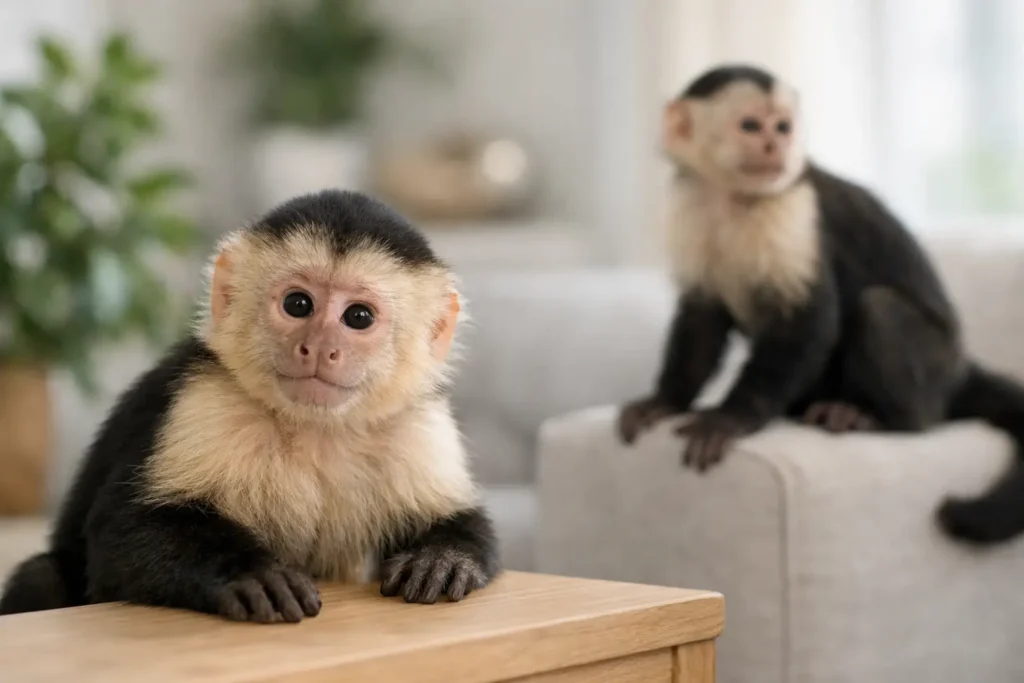
Available capuchin monkeys are not an impulse purchase, a novelty gift, or a companion to choose based on a photograph alone. A hand-raised capuchin can become deeply bonded with the people in its home, bringing remarkable intelligence, affection, curiosity, and personality into everyday life. That same intelligence calls for an owner who is ready to plan carefully, learn continuously, and provide a stable home for years to come.
For the right household, welcoming a capuchin is an extraordinary commitment. The best first step is not simply asking which baby is available. It is asking whether your home, schedule, resources, local laws, and support system are ready for one.
What Available Capuchin Monkeys Need From a Home
Capuchins are highly social, active primates. They notice routines, respond to the emotional energy around them, and need far more daily involvement than a conventional pet. A baby who has been gently socialized and raised with consistent human interaction may form a close relationship with its new family, but that relationship still requires patience and responsible boundaries as the animal matures.
A prepared owner has room in the day for feeding, supervised interaction, enrichment, training, cleaning, observation, and quiet rest. They also understand that a capuchin’s needs do not disappear during holidays, demanding work seasons, moves, or family changes. Before applying, every adult in the household should share the commitment and agree on who will handle daily care.
The physical environment matters just as much. A capuchin needs a secure, appropriately designed enclosure and a safe indoor area for supervised social time. The space must be built to prevent escape, protect the monkey from household hazards, and allow climbing, movement, and species-appropriate activity. A small cage placed in a spare room is not a long-term plan.
Start With Legal and Practical Readiness
Private primate ownership rules vary widely across the United States. Some states permit ownership with licensing or permits, while others restrict or prohibit it. Counties, cities, homeowners associations, and rental agreements can add another layer of requirements. Never assume that a state-level rule is the only rule that applies to your address.
Responsible placement begins with confirming what is permitted where you live. This may include researching state wildlife regulations, county ordinances, permit applications, inspections, veterinary documentation, or enclosure standards. Requirements can change, so prospective owners should verify current information directly with the agencies that govern their location.
Legal approval is only one part of readiness. Specialized veterinary care is another. Before a capuchin comes home, identify a qualified exotic or primate veterinarian within a realistic travel distance and discuss emergency arrangements. Routine wellness care, nutritional guidance, diagnostics, and unexpected medical needs should be anticipated in the household budget from the beginning.
It also helps to consider the people around you. Are children in the home old enough to respect rules and adult supervision? Are frequent visitors, other pets, or neighborhood conditions likely to create stress or safety concerns? A capuchin placement works best when the home is designed around thoughtful management, not constant improvisation.
Choosing the Right Baby Capuchin
Each baby capuchin is an individual. Age, early socialization, temperament, confidence level, and interaction style all shape the match between a monkey and a prospective owner. Some babies are especially outgoing and eager to engage. Others may be observant, gentle, or slower to warm up. The goal is not to choose the most entertaining personality in a short interaction. It is to find a placement that fits the family’s experience, lifestyle, and expectations.
A conscientious breeder should be transparent about the baby’s personality and development, as well as the care the animal has received before placement. Ask about veterinary examinations, feeding routines, socialization practices, records, and the transition process. If a seller pushes for a rushed deposit, avoids questions about permits, or treats an infant primate like a product that can be shipped without preparation, that is a reason to pause.
At Premier Primates, the placement conversation is designed to look beyond availability. Approved families are guided through readiness questions, home preparation, transport coordination, and the early stages of life together. That concierge-style support is valuable because bringing home a baby is only the beginning of the relationship.
Prepare the Home Before Homecoming
Preparation should be complete before travel is scheduled. The homecoming period is a major adjustment for a young primate, and a calm, organized environment can make that transition easier for everyone.
Your preparation plan should address four connected areas:
- Secure housing: Establish an enclosure that meets applicable requirements and supports safe climbing, resting, feeding, and cleaning. Check locks, latches, gaps, windows, screens, cords, vents, and access points before arrival.
- Daily nutrition: Follow professional feeding guidance and have appropriate food, storage, dishes, and clean water systems ready. A capuchin’s diet should be intentional and monitored, not built from table scraps or guesswork.
- Enrichment and routine: Gather safe climbing features, foraging opportunities, manipulable items, and training tools. Rotate enrichment and create predictable periods for meals, interaction, rest, and supervised activity.
- Care support: Confirm veterinary contacts, keep transport equipment available, and make sure every caregiver understands handling rules, sanitation practices, and emergency procedures.
Routine is reassuring for young capuchins. During the first days at home, keep introductions measured and avoid overwhelming the baby with visitors, noise, or too much handling. Give the capuchin time to observe, settle, eat, rest, and build trust at a comfortable pace.
The Lifelong Cost of a Capuchin Companion
The purchase price is only one part of the financial commitment. Quality enclosure construction, ongoing food, enrichment, veterinary care, permits where required, climate control, cleaning supplies, travel equipment, and emergency reserves all contribute to the true cost of ownership.
This is where thoughtful buyers distinguish themselves. Rather than asking, “Can I bring a capuchin home now?” ask, “Can I provide excellent care through changes in income, housing, health, and family life?” Capuchins can live for decades, and a responsible owner plans for the full lifespan rather than only the infant stage.
Long-term planning should also account for travel and contingencies. If you must be away, who is qualified to provide care? If you move, will ownership remain legal and practical in the new location? If illness or an emergency affects the primary caregiver, does another prepared adult know the routine and have access to the necessary records? These questions are not barriers to companionship. They are part of protecting it.
Why Ongoing Guidance Matters
Even experienced animal owners can find primate care different from what they expected. Capuchins are clever problem-solvers, and their emotional needs are real. Changes in behavior may reflect boredom, stress, a disrupted routine, environmental issues, developmental changes, or health concerns. Early guidance can help owners respond thoughtfully instead of reacting to a problem after it grows.
A knowledgeable support relationship is particularly useful during the first weeks, when families are learning feeding patterns, communication cues, enrichment preferences, and safe handling routines. It remains valuable later as the capuchin develops and the household’s needs evolve. Responsible ownership is not about having every answer on day one. It is about staying teachable and seeking qualified help when needed.
A Decision Built on Care
Available capuchin monkeys can bring profound companionship to homes that are truly prepared to welcome them. The right match is built on more than affection for an adorable baby. It is built on legal readiness, secure housing, veterinary planning, daily engagement, financial stability, and a promise to keep learning throughout the animal’s life.
If your household can offer that level of care, take the time to prepare with intention. A capuchin deserves a home where being welcomed to the family is not just a warm phrase, but a lifelong standard of love, safety, and responsibility.