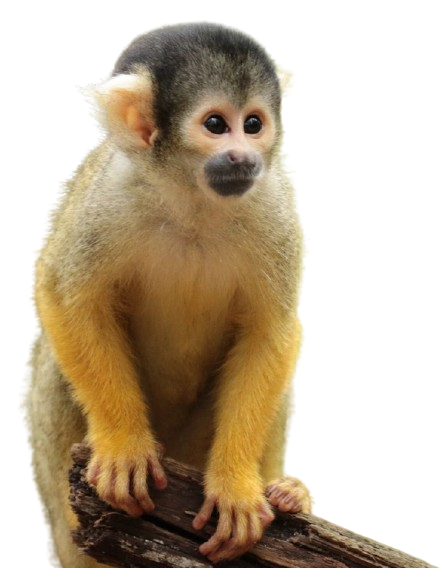
A baby primate can be irresistibly charming, but a photo, a quick video call, or a low price cannot tell you whether that animal has had a safe, healthy beginning. Learning how to assess a primate breeder means looking beyond the infant and evaluating the standards, records, guidance, and accountability behind the placement.
For the right household, a Capuchin, Marmoset, or Squirrel monkey can become a deeply bonded family companion. That relationship also comes with years of specialized care, daily enrichment, legal obligations, veterinary planning, and meaningful financial responsibility. A responsible breeder should welcome serious questions because thoughtful preparation protects both the primate and the family bringing them home.
Start With Licensing, Legality, and Transparency
A breeder should be able to clearly explain their licensing status and the regulatory framework under which they operate. In the United States, USDA licensing is a meaningful starting point for breeders who are required to meet applicable federal standards for animal care and facility oversight. It is not the only question to ask, but it is a basic credibility check.
Ask direct questions about the breeder’s experience with the species you are considering, how long they have raised primates, and who is responsible for daily nursery care. A knowledgeable breeder can explain the differences between species without treating them as interchangeable. A tiny Marmoset has different enclosure, nutrition, and handling considerations than a Capuchin, while a Squirrel monkey brings its own social and environmental needs.
Transparency matters just as much as credentials. You should receive clear answers about the animal’s age, sex, personality, feeding routine, socialization history, anticipated care needs, and placement process. Be cautious if someone pressures you to send money before discussing your state and local rules, your household setup, or your ability to provide long-term care.
Legal ownership is never a detail to handle later. State, county, and city rules can differ dramatically, and some locations prohibit private primate ownership entirely. Others require permits, inspections, liability coverage, veterinary documentation, or specific enclosure standards. A conscientious breeder will encourage you to verify the rules that apply to your exact address before moving forward.
How to Assess a Primate Breeder’s Animal Care
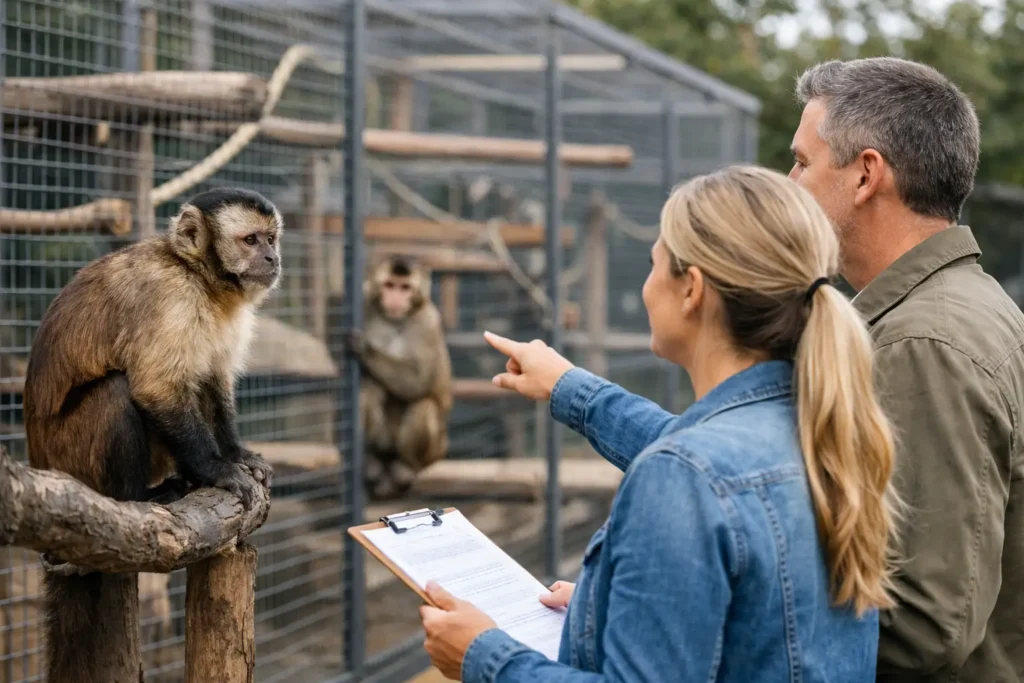
The breeder’s environment should reflect the reality that primates are intelligent, social animals, not novelty pets. Whether you visit in person where appropriate or review the breeder’s care practices through a detailed consultation, look for evidence of clean housing, age-appropriate nutrition, enrichment, safe handling procedures, and regular observation of each animal.
Ask how infants are raised and socialized. Hand-raising and consistent human interaction can help a young primate develop trust and comfort with people, but responsible socialization is more than cuddling for a camera. It should involve calm, routine handling; exposure to appropriate daily sights and sounds; feeding structure; and attention to the infant’s individual temperament.
A good breeder should be candid about personality. Some infants are especially outgoing, while others are more observant, sensitive, or slow to warm up. No ethical breeder can promise that a living animal will behave exactly the same way in every home or at every life stage. What they can do is share what they have observed and help match an approved family with an animal whose temperament and care needs make sense for that household.
Health oversight deserves equally careful attention. Ask whether the infant has been examined by a qualified veterinarian, what records will be provided, and how the breeder responds if a health concern is identified before placement. You should understand any health guarantee in writing, including its terms, timeframe, exclusions, and the process for receiving support.
Genetic history may also be relevant, particularly when breeders make claims about inherited conditions. The right questions are simple: What information is available about the animal’s lineage? What screenings or veterinary evaluations have been completed? What does the breeder guarantee, and what does that guarantee actually cover? Clear documentation is far more valuable than vague reassurance.
Look for a Placement Process, Not a Checkout Process
A responsible breeder screens prospective homes. That can feel personal, especially when you are excited about a particular infant, but it is one of the strongest signs that the breeder takes the animal’s future seriously. They should ask about your location, prior animal experience, household members, work schedule, planned enclosure, local laws, and access to qualified veterinary care.
Expect conversations about what happens after the baby stage. Primates can live for many years and require daily interaction, mental stimulation, specialized diets, secure housing, and a predictable routine. They may bond intensely with their primary caregivers. They can also become stressed, destructive, or difficult to manage when their social and environmental needs are neglected.
The breeder should not minimize those realities to close a sale. A caring placement partner will explain that primate ownership is not a casual experiment and may not fit every otherwise loving household. If your schedule is highly unpredictable, your local laws are unclear, or you do not yet have a secure enclosure and veterinary plan, the responsible next step may be preparation rather than immediate placement.
Before a deposit or agreement, ask what the process includes. You should know how the breeder handles applications, contracts, transport coordination, homecoming instructions, and post-placement communication. The strongest programs offer guidance before and after the animal arrives, because questions rarely stop on homecoming day.
Ask About Your Home, Enclosure, and Veterinary Plan
A breeder’s willingness to discuss your preparation is one of the clearest indicators of their standards. Secure, species-appropriate housing is essential. The specific size, materials, indoor and outdoor access, climate protections, and enrichment setup depend on the primate’s species, age, local requirements, and your home’s layout. There is no one-size-fits-all cage that solves every need.
Your plan should account for daily cleaning, food storage, climbing structures, toys and rotating enrichment, safe temperature control, and a protected area for supervised interaction. A breeder should help you understand the expectations without suggesting that a primate can spend its life in a small enclosure or be treated like a child in a diaper.
Veterinary access should be addressed early. Not every clinic treats nonhuman primates, and emergency care can be especially difficult to arrange if you wait until a crisis occurs. Ask the breeder what type of veterinary relationship they recommend you establish, what routine care may be needed, and how to prepare for urgent situations. A reliable breeder will not replace your veterinarian, but they should recognize how central veterinary planning is to a successful placement.
Notice the Warning Signs
Some concerns are obvious, while others are easy to overlook when a buyer is excited. Slow down if a seller refuses to discuss licensing, cannot provide meaningful health information, avoids questions about permits, or offers to ship an animal with little concern for your home preparation.
Be wary of sellers who use only stock images, will not provide current information about the specific animal, insist on unusual payment methods, or promise that ownership is legal everywhere. Other warning signs include claims that a primate needs little space, minimal veterinary care, or no long-term support. An infant may be small, but the commitment is not.
A breeder should also never make you feel rushed by an artificial deadline. Availability can change, and carefully raised infants may be reserved quickly, but a responsible decision still requires adequate time for legal research, enclosure preparation, and an honest household conversation.
Choose Guidance That Continues After Homecoming
The best breeder relationship does not end at delivery. Early weeks at home involve adjustment for both the primate and the family. Feeding transitions, sleep routines, bonding, transport recovery, enclosure acclimation, and normal behavior questions can all arise. Ongoing mentorship gives new owners a knowledgeable point of contact while they build a steady routine.
At Premier Primates, the goal is not simply to place a baby primate. It is to help approved families prepare for a responsible lifelong relationship through individualized information, legal-preparation guidance, veterinary-focused care, transport coordination, and continued support.
The breeder you choose becomes part of the foundation for your primate’s future. Take the time to ask difficult questions, verify what you are told, and prepare your home before making a commitment. When a placement is built on care, honesty, and long-term guidance, you give your future companion the kind of welcome home they deserve.