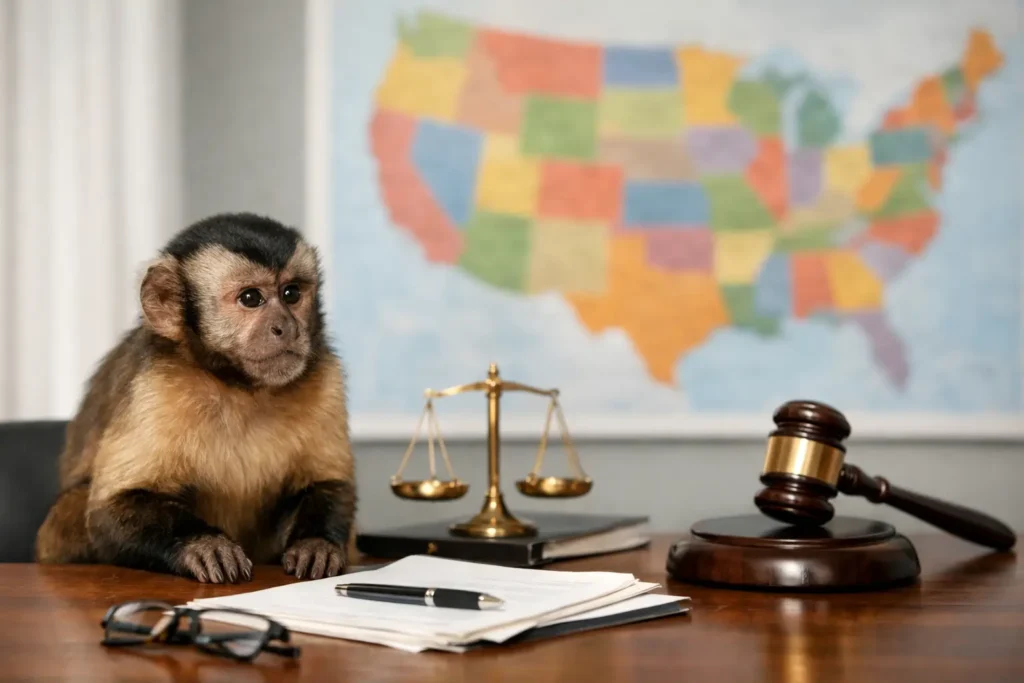
A baby primate may be raised with love, carefully socialized, and a wonderful fit for your household, but none of that changes the first question every prospective owner must answer: Is private ownership legal where you live? Monkey ownership laws by state are not one simple yes-or-no chart. They are a layered set of state, county, city, housing, and permit rules that must be confirmed before you choose a primate or prepare for homecoming.
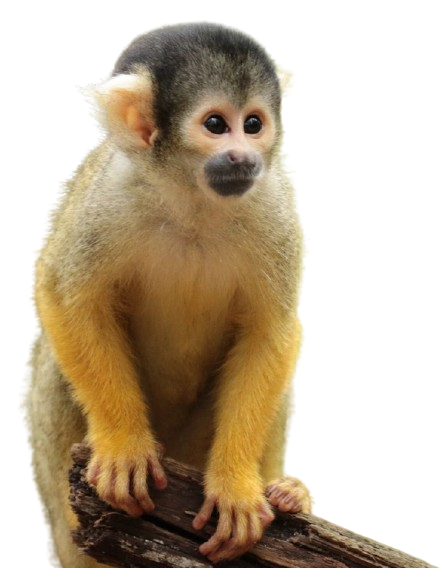
For the right approved family, a Capuchin, Marmoset, or Squirrel monkey can become a deeply engaging lifelong companion. Responsible ownership begins with respecting the law, building an appropriate environment, and making sure specialized veterinary care is available well before your new family member arrives.
Why State Laws Are Only the Starting Point
State law sets the broadest rule, but it is rarely the only rule that matters. A state may allow a particular nonhuman primate with a permit, while a county or city may prohibit primates entirely. Even when local animal codes are silent, zoning rules, homeowner association covenants, rental agreements, and insurance requirements can still make private ownership impractical or prohibited.
Rules also differ by species, animal age, purpose of ownership, and the owner’s qualifications. A small marmoset is not automatically treated the same way as a capuchin or squirrel monkey. Some jurisdictions distinguish between primates that are considered dangerous wildlife and those regulated as exotic pets. Others regulate all nonhuman primates under one category.
This is why a seller’s location or a friend’s experience in another state cannot answer the question for your address. The law that matters is the law in effect where the primate will permanently live.
Monkey Ownership Laws by State: The Main Patterns
Across the United States, private primate rules generally fall into four broad categories. Your state may prohibit private ownership outright, allow it only with a state permit, allow certain species while restricting others, or have limited statewide restrictions while leaving the decision largely to local governments.
States With Broad Private Ownership Prohibitions
Some states have strong restrictions that make private pet primate ownership unavailable to most households. California is a well-known example, with strict limits on possessing nonhuman primates as pets. New York also broadly restricts private possession of primates. In these states, exemptions are typically limited to qualified institutions, educational programs, research facilities, sanctuaries, or other specifically authorized entities.
A prohibition should be treated as final for private family ownership. Attempting to rely on an informal exemption, an outdated online post, or paperwork from another state can lead to confiscation, fines, and serious stress for the animal.
States That Use Permits and Inspections
Other states may allow ownership only after a permit application, fee, inspection, veterinary documentation, enclosure review, or proof of experience. Florida is frequently associated with this approach. Many privately owned primates there fall under wildlife rules requiring a Class III personal pet license, although exact requirements can depend on the species and current agency classification.
Permit systems are not merely paperwork. They are designed to show that an owner can provide secure housing, appropriate sanitation, knowledgeable handling, and ongoing care. Application lead times matter. A permit that is still pending is not permission to bring an animal home.
States With Species-Specific Restrictions
Some states regulate by the type of primate. A smaller species may be permitted under one set of rules, while larger or differently classified primates may be prohibited or require additional approval. Rules can also change when an animal is used for breeding, exhibition, education, or commercial activity rather than private companionship.
This is a critical reason to identify the exact species before researching regulations. Searching only for “pet monkey laws” can produce incomplete answers. Ask about the legal status of the specific primate you are considering, along with any required records for its captive-bred origin and lawful transfer.
States Where Local Rules Carry More Weight
A few states have fewer statewide barriers for certain primates, but that does not mean ownership is automatically legal. Local governments may enact their own exotic-animal ordinances, and those ordinances can be more restrictive than state law. Counties, cities, and even nearby municipalities in the same metro area can reach very different conclusions.
Texas and North Carolina are often mentioned in general discussions because local rules can play a substantial role. That makes address-specific research essential. Contact the animal control office, county clerk, city code enforcement office, and any applicable zoning authority. Request the answer in writing when possible, and keep copies with your ownership records.
What a Primate Permit May Require
Permit requirements vary widely, yet most agencies want evidence that a potential owner has prepared for the realities of primate care. Depending on your jurisdiction, that may include a secure enclosure description, photographs or diagrams, a veterinary care plan, emergency contact information, proof of lawful acquisition, and a completed application before possession.
Authorities may also ask for specific enclosure features. These can include secure barriers, double-door entry systems, durable materials, space for movement and climbing, protection from weather, and a plan that prevents contact with the public. A primate’s enclosure is not simply a cage. It is part of its daily safety, enrichment, routine, and legal compliance.
Do not assume a permit is permanent. Many licenses must be renewed, and some agencies can inspect after approval. Changes such as moving to a new county, remodeling an enclosure, breeding an animal, or transferring ownership may trigger new requirements.
Check These Details Before Selecting a Primate
The best time to research legality is before placing a deposit or making emotional plans around a particular baby. A responsible placement process should give you room to confirm the rules and prepare properly, not pressure you to solve legal questions after the fact.
Start by confirming your state wildlife agency’s current requirements for the exact species. Then check county and municipal ordinances for your home address, including any rules that apply to residential zoning. If you lease your home or live in a planned community, review your lease, HOA rules, and insurance policy as carefully as you would review a permit.
Next, identify an experienced veterinarian who is comfortable treating nonhuman primates. Emergency planning deserves equal attention. Ask who can see your animal after hours, what transport arrangements are available in an emergency, and whether the practice can provide routine wellness care, diagnostics, and preventive guidance.
Finally, think beyond the first year. Primates require daily interaction, enrichment, nutrition planning, sanitation, secure handling, and a long-term household commitment. They are intelligent, social animals, not occasional pets. Legal ownership is only the minimum standard. A genuinely prepared home must support the animal’s welfare for its entire life.
Interstate Transport Requires Its Own Review
A lawful purchase in one state does not automatically authorize transport into another. The destination state’s rules control whether the animal may come home with you. Some states also require health certificates, prior entry approval, particular records, or agency notification before an exotic animal crosses the state line.
Delivery planning should begin only after destination legality is confirmed. A knowledgeable breeder can help approved buyers understand the documentation and preparation commonly involved in a compliant placement, but government agencies have the final word. Regulations can change, so verify current requirements directly rather than relying on a general state-law list created years ago.
Questions Future Owners Often Ask
Can I own a monkey if my state has no statewide ban?
Possibly, but a lack of a statewide ban is not a green light. You still need to check permits, county and city ordinances, zoning, housing agreements, and veterinary access. In many cases, one local restriction can prevent lawful ownership.
Does a USDA-licensed breeder make ownership legal?
No. USDA licensing relates to regulated breeder and animal-care standards. It does not replace a buyer’s responsibility to meet state and local ownership laws. A reputable breeder should encourage legal preparation, careful screening, and an ownership plan that puts the primate first.
Can I move after bringing home a primate?
You can move only if the new location allows the animal and you meet all requirements there. Before relocating, research the destination well in advance. A move can involve permit changes, updated veterinary documentation, transport planning, and enclosure approval.
The most loving first step is not choosing the cutest photo. It is confirming that your home, your local rules, and your long-term care plan are ready to welcome a primate safely. When those pieces are in place, homecoming can begin with the confidence and care a lifelong companion deserves.