A primate can finish a familiar toy in minutes. That does not mean the activity failed. It means your companion is observant, quick, and ready for a new challenge. The best primate enrichment ideas at home are not about filling every hour with novelty. They are about creating a safe daily rhythm that gives an intelligent, social animal appropriate ways to search, climb, manipulate, learn, and connect with the people responsible for its care.
For a Capuchin, Marmoset, or Squirrel monkey, enrichment is a core part of responsible ownership, not an occasional treat. A well-designed routine can help reduce boredom and encourage natural behaviors. It must also fit the individual animal’s age, health, species, enclosure setup, diet plan, and comfort level. What is engaging for one primate may be frustrating or unsafe for another.
Start With Safe Primate Enrichment at Home
Before introducing a new activity, look at it through a simple safety lens: Can your primate swallow it, become tangled in it, break it into sharp pieces, or get possessive around it? If the answer may be yes, choose another option or modify the activity with guidance from an experienced primate professional or qualified exotic veterinarian.
Use only clean, non-toxic materials that can be inspected and replaced. Avoid small loose parts, fraying rope, painted wood, household chemicals, adhesive residue, and containers that can trap a hand or head. Any food-based activity should use items already approved within your primate’s individualized nutrition plan. Enrichment should never quietly become a source of excess sugar, inappropriate snacks, or skipped balanced meals.
Supervision matters, especially when introducing something new. Watch how your companion approaches it. Some primates solve a puzzle calmly. Others become excited, territorial, or overly focused. The goal is healthy engagement, not agitation. If an item causes frustration, guarding, fear, or unsafe climbing, remove it and make the next version easier.
Build a Rotation, Not a Toy Pile
Leaving every toy out all the time often makes the environment less interesting, not more. A smaller rotation gives familiar objects a chance to feel new again. Keep notes on what holds your primate’s attention and what gets ignored. Over time, those notes become one of the most useful parts of a personalized care routine.
A practical weekly rotation can include food-search activities, climbing changes, training sessions, sensory items, and quiet interaction. You do not need to overhaul the enclosure daily. Moving a perch, changing the route to a feeding station, or presenting a safe object in a different way can create a fresh problem to solve.
Make Mealtime More Thoughtful
In the wild, primates do not receive their entire diet in one predictable bowl. They travel, inspect, manipulate, and search. At home, appropriately designed foraging can bring some of that purposeful activity into daily care.
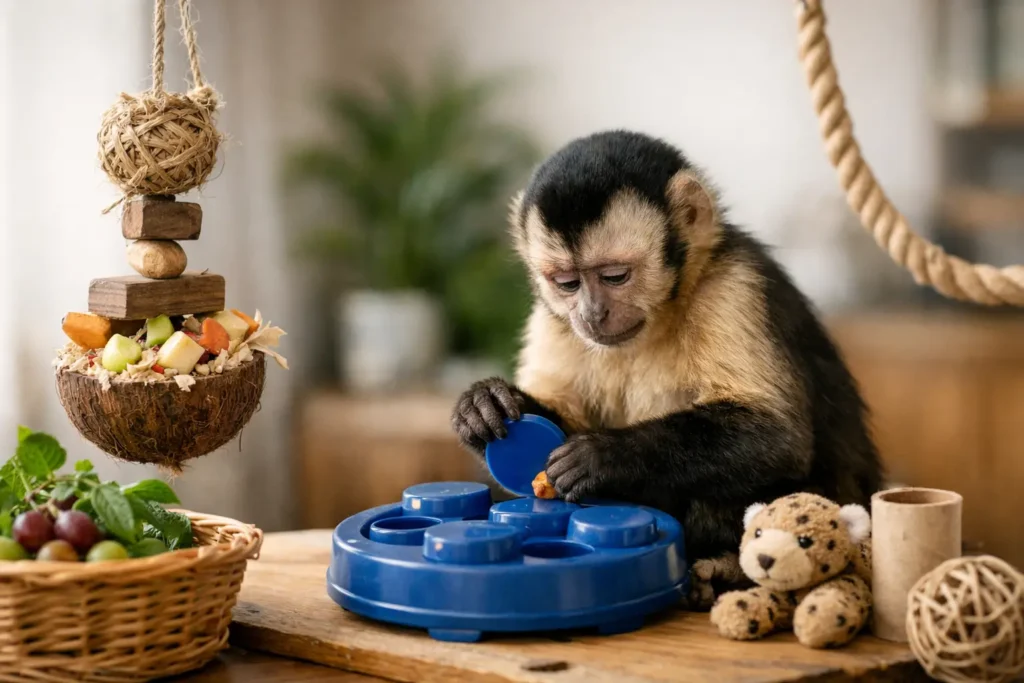
Try placing approved food portions in several safe locations rather than one spot, using sturdy puzzle feeders designed for the species, or tucking approved items into clean paper for supervised unwrapping. You can also offer browse or veterinarian-approved plant material when appropriate for your companion’s diet and your veterinary team has confirmed it is safe.
Keep the challenge fair. An infant, senior, or primate still learning a feeder should have an easy win first. Once the behavior is confident, slightly change the placement or method. A difficult puzzle that never pays off is not enrichment. It is simply discouraging.
Create Opportunities to Climb and Choose
Movement is essential, but the answer is not adding random furniture to a room. Enclosure and supervised activity areas should be planned for secure climbing, appropriate spacing, easy sanitation, and safe monitoring. Platforms, branches, ladders, hammocks, and elevated resting locations can encourage movement when they are correctly installed and maintained.
Change the route occasionally. A new branch angle or a different resting shelf can invite exploration without disrupting the entire environment. Give your primate choices when possible: a higher path and a lower path, a sheltered resting area and an open perch, or two approved places to investigate. Choice supports confidence because the animal can decide how to engage.
Never use unsupervised access to the home as enrichment. Kitchens, bathrooms, garages, open windows, electrical cords, houseplants, and other pets can create serious hazards quickly. A secure, primate-appropriate space is the foundation that makes enrichment possible.
Use Training as Relationship Enrichment
Positive, reward-based training is one of the most valuable enrichment tools available to private owners. Short sessions can give your companion a mental challenge while making daily care safer and less stressful. The best training plans build cooperation, not compliance through force.
Begin with simple, practical behaviors such as approaching a designated station, entering a carrier calmly, touching a target, or accepting a visual body check. These skills can support transport, enclosure cleaning, veterinary care, and emergencies. They also create clear communication between you and your primate.
Keep sessions brief and end while the animal is still successful. A few focused minutes can be more meaningful than a long session that leads to fatigue or irritation. Use approved rewards in portions that fit the daily diet, and do not withhold regular nutrition to make training more tempting.
Training is also a useful way to learn your primate’s communication style. A relaxed posture, voluntary participation, and steady interest tell you something different from avoidance, freezing, or escalating vocalizations. Respecting those signals is part of building trust with a lifelong companion.
Add Sensory Variety Without Overstimulation
Primate enrichment is not limited to objects and food. Safe sensory changes can encourage curiosity, particularly when used sparingly. Natural textures, fresh-approved browse, paper materials for supervised investigation, or a new scent associated with a safe object may offer something different to explore.
Novelty should be introduced one change at a time. A new feeder, unfamiliar sound, rearranged enclosure, and visiting household member all on the same day can be too much. This is especially true for young primates adjusting to a home, animals recovering from illness, or companions that have shown anxiety in the past.
Be cautious with music, television, and screens. Some primates ignore them, while others become unsettled by loud noises, sudden movements, or animal sounds. Quiet household interaction and predictable routines are usually more valuable than constant background stimulation.
Match the Activity to Your Primate
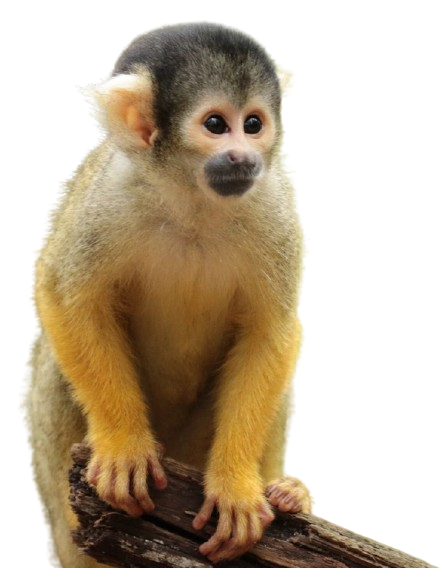
Species and personality both matter. Capuchins are known for remarkable problem-solving ability and may enjoy gradually more complex manipulation tasks. Marmosets are smaller and need enrichment scaled to their delicate size, movement style, and specialized nutritional needs. Squirrel monkeys are active, social, and often benefit from varied opportunities to move and forage within a secure environment.
Age changes the plan as well. A young primate may need short, simple activities and more rest between experiences. An adult may thrive on a familiar routine with carefully introduced challenges. Older companions may need easier access to platforms, softer movement options, and activities that do not require strenuous climbing or fine manipulation.
There is no single enrichment schedule that works for every household. Your primate’s veterinary care, behavior, appetite, sleep, and daily response should guide the plan. If behavior changes suddenly, do not assume boredom is the cause. Pain, illness, hormonal changes, environmental stress, or nutritional issues can all affect behavior and deserve prompt attention from a qualified exotic veterinarian.
Keep Enrichment Part of Responsible Ownership
The most successful homes treat enrichment as a daily care commitment alongside nutrition, sanitation, veterinary planning, secure housing, and legal compliance. It requires time, observation, supplies, and a willingness to adjust. That is one reason responsible primate placement begins long before homecoming, with honest conversations about permits, enclosure standards, veterinary access, and the real demands of lifelong care.
At Premier Primates, we believe a primate raised with love deserves a home prepared to keep learning with them. Start small, observe closely, and build on what your companion genuinely enjoys. The activity that looks simplest to you may become the moment that makes their day feel purposeful, secure, and wonderfully their own.