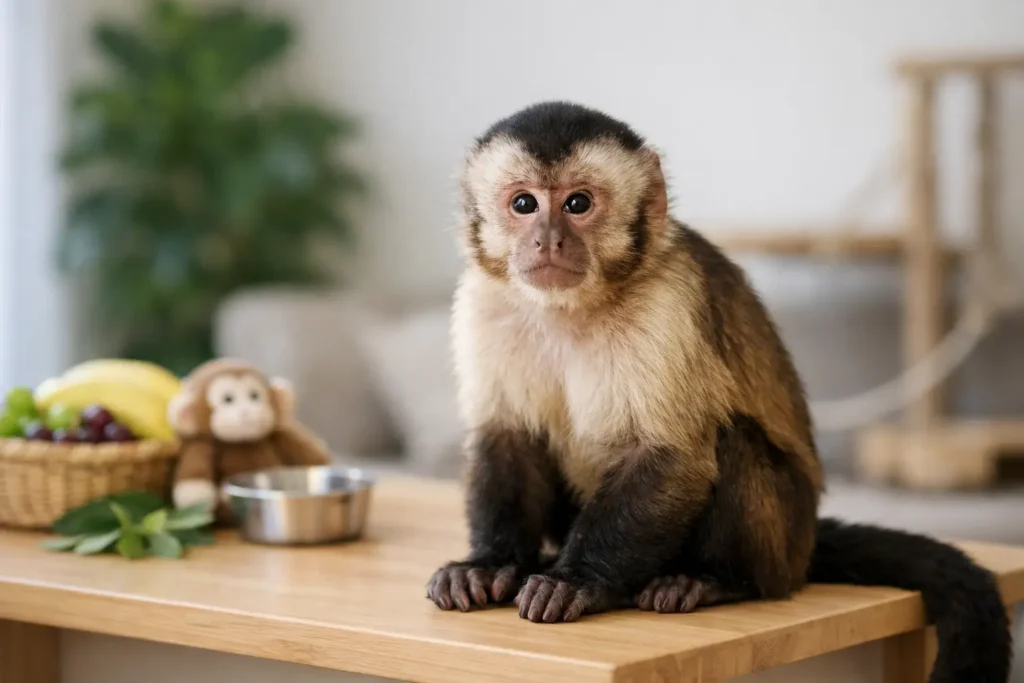
A capuchin’s small hands, bright expression, and strong interest in people can make the species feel immediately familiar. But capuchin monkey care requirements are closer to managing a highly intelligent, socially complex exotic animal than welcoming home a conventional pet. The right home is built around the monkey’s welfare, legal status, safety, and changing needs over decades – not around a moment of excitement.
For approved families, careful preparation creates a calmer homecoming and a healthier long-term relationship. It also helps prevent the most difficult outcome in private primate ownership: realizing after placement that the household, property, budget, or local regulations cannot support the animal.
Start With Legal and Household Readiness
Before selecting a capuchin, confirm what ownership means where you live. State, county, and city rules can differ dramatically. Some areas allow private ownership with permits, inspections, veterinary documentation, or enclosure standards; others prohibit primates outright. Homeowners associations, rental agreements, zoning restrictions, and insurance policies can create additional barriers even when a state permit is available.
Permit research should happen before a family commits emotionally or financially. Regulations can change, and the responsibility to comply stays with the owner throughout the animal’s life. Keep copies of permits, veterinary records, transfer documents, and any required identification in a dedicated file. A well-organized owner is better prepared for inspections, moves, emergencies, and future regulatory changes.
Household readiness matters just as much. Every adult in the home should understand that a capuchin is not a child, a novelty, or an animal that can be left to entertain itself. Young capuchins may be affectionate and highly people-oriented, while adolescents and adults can become stronger, more independent, territorial, and more difficult to manage. Reaching sexual maturity often changes behavior, which means a workable plan must account for the adult animal, not only the baby.
Capuchin Monkey Care Requirements for a Safe Enclosure
A suitable enclosure is the foundation of responsible placement. Capuchins need a secure, purpose-built living area that protects them from escape, household hazards, weather extremes, and unwanted contact with people or animals. It must also give them room to climb, move, forage, rest, and choose distance when they need it.
The exact enclosure requirements depend on local rules, climate, and the individual animal, but a small cage in a living room is not a lifelong answer. A thoughtfully designed setup usually includes secure climbing structures, elevated resting areas, durable locks, protected feeding stations, and materials that can be cleaned thoroughly. Outdoor access may be valuable where legal and climate-appropriate, but it must include shade, shelter, predator protection, and a safe way to bring the monkey indoors during heat, cold, storms, or poor air quality.
Temperature control deserves special attention. Capuchins are not equipped for the seasonal conditions found in many parts of the United States. Indoor climate-controlled space is essential, particularly during winter or intense summer heat. Families should also have a backup plan for power outages, severe weather, and evacuation.
Make the Home Safe Beyond the Enclosure
A capuchin that spends supervised time outside its primary enclosure needs close, active oversight. Curious hands can open cabinets, pull cords, grab hot items, ingest unsafe objects, and damage household fixtures in seconds. Dog and cat interactions can also be dangerous, even when the animals seem friendly.
Primate-proofing means securing medications, cleaning supplies, sharp objects, electrical cords, food, trash, and small swallowable items. It also means setting clear boundaries with guests. Not every visitor should handle a capuchin, and children should never be expected to manage one. Diapers, if used briefly for transport or a specific practical need, are not a substitute for sanitation routines, enclosure cleaning, training, or responsible supervision.
Nutrition Is More Than a Bowl of Fruit
One of the most misunderstood capuchin monkey care requirements is diet. Fruit alone is not a balanced feeding plan. Excess sugary fruit can contribute to poor nutrition and weight concerns, while random table foods can create dangerous imbalances or expose a monkey to ingredients that do not belong in its diet.
A qualified exotic or primate veterinarian should help guide an age-appropriate diet that may include a formulated primate food along with carefully selected vegetables, limited fruit, and other approved foods. The right balance varies with age, health, activity level, reproductive status, and veterinary findings. Fresh water should always be available and changed regularly.
Feeding should also provide mental work. Rather than placing all food in one predictable dish, owners can safely scatter approved items, use supervised puzzle feeders, and create foraging opportunities that encourage natural problem-solving. This is not just entertainment. It helps turn a daily necessity into meaningful activity.
Avoid sharing meals casually. Foods high in salt, sugar, fat, caffeine, alcohol, chocolate, or artificial sweeteners can be unsafe. Because a capuchin can be quick and persistent, the entire household needs consistent food rules.
Veterinary Care Must Be Planned Before Placement
Finding a veterinarian after an emergency is not a care plan. Capuchins need access to a veterinarian experienced with primates or exotic mammals, ideally within a manageable travel distance. Ask practical questions before bringing an animal home: Does the practice see capuchins? Who provides after-hours care? What is the protocol for injury, illness, quarantine, or routine diagnostics?
Regular wellness exams, weight tracking, dental assessment, parasite screening when recommended, and prompt attention to behavioral or appetite changes are all part of good care. Primates can hide illness, and subtle changes in grooming, stool, activity, posture, or food interest deserve attention.
Owners should also discuss zoonotic disease prevention with their veterinary team. Good hygiene, proper cleaning practices, careful handling of waste, and sensible visitor policies protect both the household and the animal. A capuchin should never be treated as risk-free simply because it was hand-raised and well-socialized.
Enrichment and Social Needs Cannot Be an Afterthought
Capuchins are intelligent, observant, and active for much of the day. Without purposeful enrichment, they can become bored, frustrated, destructive, or behaviorally distressed. Enrichment needs to change frequently enough that the environment remains interesting, while still providing predictable routines that help the animal feel secure.
Useful enrichment may include climbing routes, safe branches, rotating textures, hidden food items, approved manipulable objects, training sessions, and supervised exploration. The goal is not to fill every minute with stimulation. It is to give the capuchin appropriate choices, movement, problem-solving, and opportunities to express normal behaviors.
Human attention matters, especially for a capuchin raised with people, but human companionship does not erase the species’ complex social nature. Owners should be realistic about the time involved: daily interaction, cleaning, food preparation, enrichment setup, training, observation, and safe rest periods. A household that travels frequently, works long hours without reliable trained care, or expects the monkey to adapt to constant chaos may not be the right fit.
Training Supports Daily Care
Positive, reward-based training can make routine care safer and less stressful. With patience, a capuchin may learn cooperative behaviors related to entering a carrier, stepping onto a scale, accepting basic visual checks, or moving between spaces. Training is not about control or punishment. It is communication that supports veterinary care, transport, and everyday handling.
Physical punishment, intimidation, and inconsistent rules can damage trust and worsen defensive behavior. Capuchins are strong, fast, and capable of biting or scratching when frightened, overstimulated, possessive, or frustrated. Respectful handling and professional guidance are far safer than trying to force compliance.
Prepare for a Multi-Decade Commitment
A capuchin can live for decades in human care. That timeline affects career changes, moves, marriages, children, aging parents, retirement, and estate planning. The financial commitment includes far more than the initial placement: housing upgrades, secure transport, specialized food, routine veterinary care, emergency care, permits, enrichment, and qualified backup care all need room in the family budget.
Create a written contingency plan before homecoming. Name a trusted person who understands the legal and practical responsibilities, identify possible temporary care arrangements, and keep veterinary and permit information accessible. If a move becomes necessary, do not assume the next state or county will have the same rules.
For families who are prepared to meet these standards, capuchin ownership can be deeply rewarding because it is intentional. At Premier Primates, responsible guidance begins with honest conversations about the home, the law, the animal’s needs, and the commitment ahead. The best next step is not rushing to bring home a baby – it is building the kind of secure, informed environment where a capuchin can truly thrive.